World · India Bureau
European scientists guide endangered ibises home via microlight aircraft
In a groundbreaking conservation effort, scientists have successfully reintroduced northern bald ibises to Europe after a four-century absence, using microlight aircraft to teach the birds their ancestral migration routes.
LSN India ·
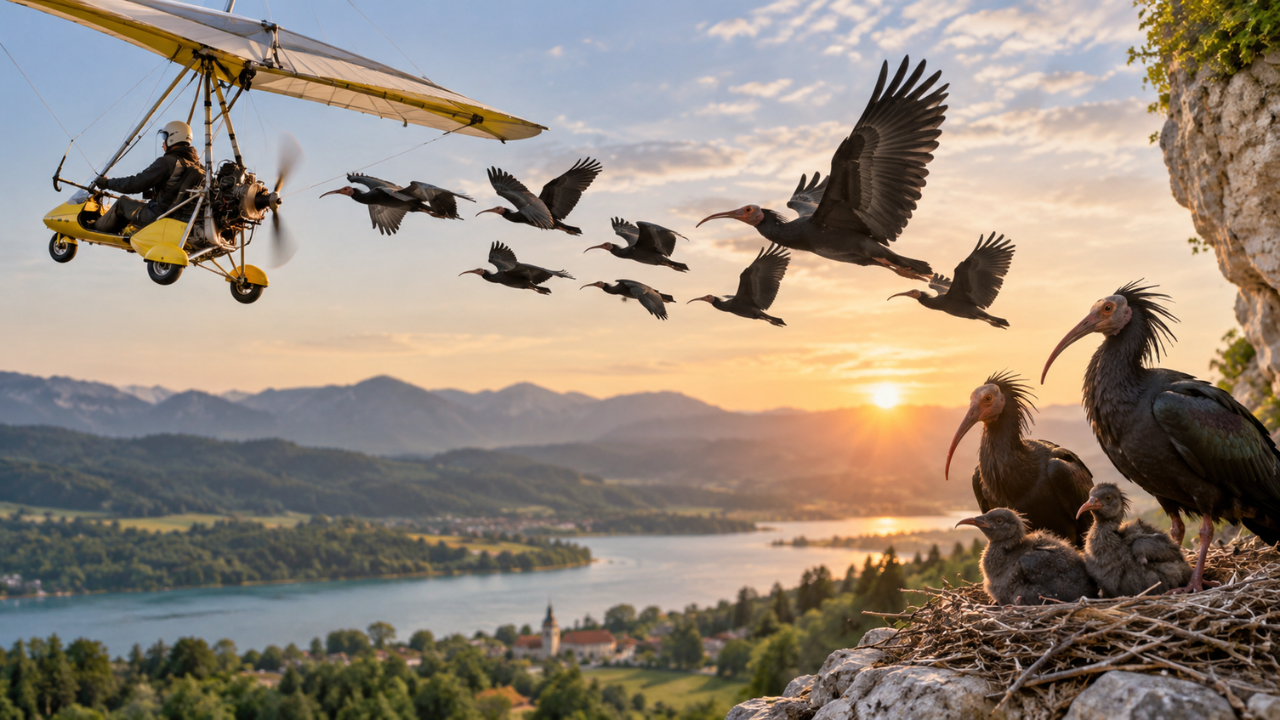
Conservationists have achieved a significant milestone in wildlife restoration by establishing the first breeding colony of northern bald ibises in Europe in over 400 years. The innovative reintroduction programme involved training young birds to follow microlight aircraft on their southbound winter migration to Italy, effectively reviving migration patterns the species had abandoned centuries ago.
The methodology proved remarkably effective, with researchers guiding successive generations of birds along the ancient routes their ancestors once travelled. By providing this crucial aerial instruction, scientists enabled the birds to navigate their migratory pathway and locate suitable wintering grounds, addressing a fundamental challenge in the species' survival in European habitats.
The project's success became evident by 2011, when birds began returning to their European breeding grounds without human intervention or guidance. This marked a turning point, demonstrating that the species could sustain independent migratory cycles and establish self-reproducing populations across the continent.
However, conservationists emphasise that the work remains ongoing. While the reintroduced population has proven its capacity for independent migration and reproduction, further management interventions will be necessary to ensure the species achieves long-term viability and remains established across European territories. The northern bald ibis, once hunted to near extinction in Europe, continues to require coordinated conservation efforts across the region.