Explainer: What is the Budget's Committee Stage that begins today, and how does it work?
The Committee Stage debate on the 2027 Budget begins today with the special spending units, such as the offices of the President and Prime Minister and the commissions, and ministry expenditure heads will follow in order over the coming days. It is Parliament's last detailed scrutiny of the Budget before it is implemented.
LSN Sri Lanka ·
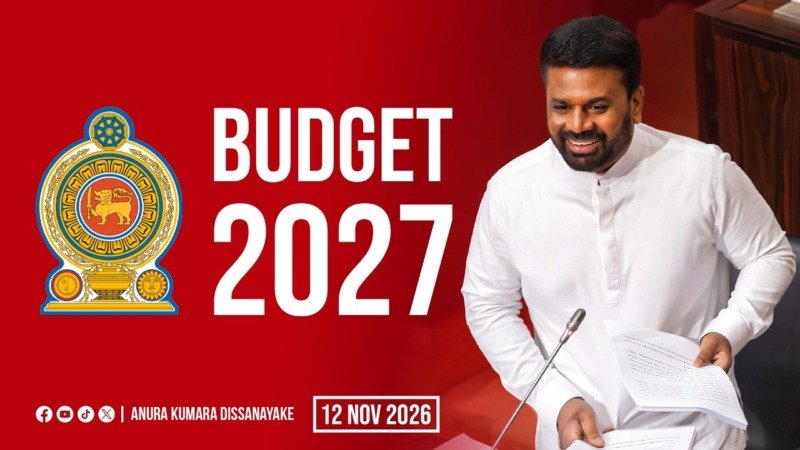
<p>The second reading of the 2027 Budget was passed in Parliament yesterday (20 November) by 157 votes to 60, and the Committee Stage debate begins today (21 November). The debate will run for 19 days until 14 December, when the final third-reading vote will be taken at 6pm.</p>
<p>What is the Committee Stage?</p>
<p>Once the Budget, formally the Appropriation Bill, passes its second reading, it is referred to the Committee of the Whole Parliament. This is treated as part of the third reading.</p>
<p>The Committee of the Whole Parliament, made up of every member of Parliament, is a special stage within parliamentary tradition for taking up the Budget. During the Budget debate, the entire Parliament sits as one large committee.</p>
<p>It differs from an ordinary sitting of Parliament in three main ways:</p>
<p>1. Who presides: At an ordinary sitting the Speaker presides, but at the Committee Stage the Chair of Committees (often the Deputy Speaker or the Deputy Chair of Committees) presides in place of the Speaker. The Speaker steps down from the official chair to a lower seat.</p>
<p>2. Placing of the Mace: When Parliament meets in the ordinary way, the Mace is placed on top of the table, but at the Committee Stage it is placed on a rest below the table. This symbolises that Parliament is now operating as a "committee".</p>
<p>3. Relaxed debating rules: In an ordinary debate a member may speak only once. At the Committee Stage that rule is relaxed, and members can rise several times to ask ministers questions and to respond.</p>
<p>Put simply, the whole Parliament becomes a "committee", temporarily relaxing its strict debating rules so that all members can question and discuss Budget spending together, openly and directly.</p>
<p>At the second reading, the Budget's broad policies, its revenue and expenditure framework and its overall vision are debated. At the Committee Stage, by contrast, each expenditure head is examined separately. The sums allocated to ministries, departments and special spending units, along with their programmes, projects and objectives, are discussed in detail.</p>
<p>Under the Standing Orders of Parliament (in particular Standing Orders 75 and 130), up to 22 days can be allotted to this stage, although in practice it varies from year to year between 17 and 19 days.</p>
<p>Main procedure and tradition</p>
<p>Debate by head: One or several expenditure heads are taken up for debate each day as scheduled. The minister concerned or a representative presents explanations, and opposition members question and criticise them. Ministries traditionally distribute their progress reports to members at this stage.</p>
<p>Amendments: Members can move amendments to expenditure heads, programmes or projects, but motions to reduce expenditure require prior notice. The government can also move its own amendments, and each expenditure head is passed together with any amendments that are approved.</p>
<p>Allocation of time: Although the government side gets more time at the second reading (60 per cent this time), the allocation is reversed at the Committee Stage, with 60 per cent of the time given to the opposition and 40 per cent to the government. This parliamentary tradition gives the opposition a greater opportunity to question the government.</p>
<p>Passing heads and reporting: Each expenditure head may be put to a vote after discussion. Most heads usually pass without a vote, and a division is held only when the opposition calls for one. Once all heads are passed, the committee reports this to the House.</p>
<p>The same members sit both when Parliament acts as the committee and when it acts as the House, but they play two different roles. The procedure followed at the Committee Stage and the powers of a committee differ from the way the House functions and the powers it holds.</p>
<p>Final vote: Once all expenditure heads are passed, the Bill is read a third time and the Budget is fully passed by the final vote. The Speaker then announces that the Bill has been passed "with or without amendments".</p>
<p>Why it matters</p>
<p>The Committee Stage is one of the most important moments of Parliament's financial oversight. It gives the opposition the chance to question ministers directly and demand accountability, and gives the government the chance to justify and defend its spending allocations. Changes to heads or minor amendments are sometimes made, and government amendments are usually passed because of its existing majority.</p>
<p>The Committee Stage debate on the 2027 Budget begins today with the special spending units (the President, the Prime Minister's Office, the commissions and others), and ministry expenditure heads will be taken up in order over the coming days. This stage serves as Parliament's final detailed scrutiny before the Budget is implemented.</p>
<p>Translated from the LSN Sinhala edition.</p>