World · India Bureau
Extra CO₂ boosts forest growth 39%, but air pollution erases gains
An 11-year Wisconsin forest study reveals that elevated carbon dioxide significantly enhances tree productivity and carbon storage, yet rising ozone levels counteract these benefits. The findings underscore forests' complex response to atmospheric changes.
LSN India ·
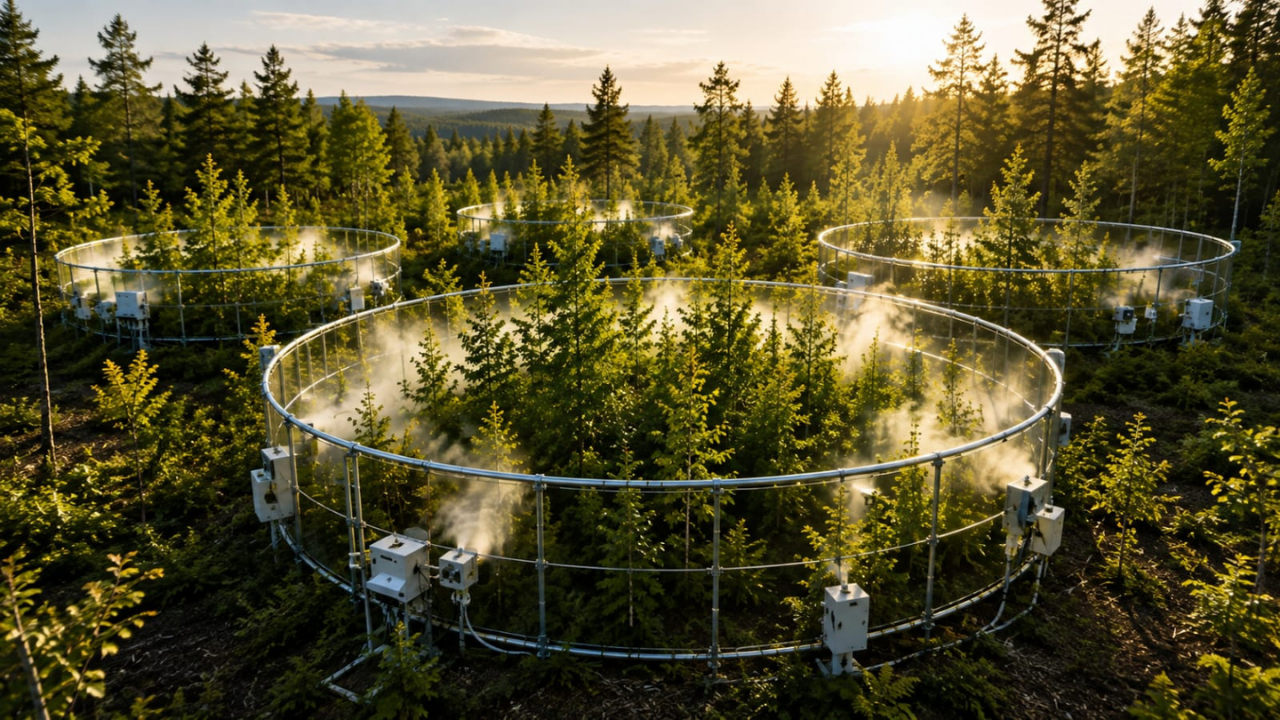
Researchers conducting a long-term forest experiment in Wisconsin have documented sharply divergent effects of two atmospheric changes on woodland ecosystems. When exposed to elevated carbon dioxide levels over eleven years, forest communities showed a 39 percent increase in productivity and enhanced carbon storage capacity, suggesting trees respond positively to higher CO₂ concentrations.
However, the benefits were substantially undermined by concurrent increases in ground-level ozone, a harmful air pollutant. Elevated ozone reduced forest productivity and decreased the ecosystem's ability to store carbon, effectively negating the gains from increased carbon dioxide.
The study demonstrates that forests operate within a complex atmospheric environment where multiple pollutants and gases simultaneously influence growth patterns. While carbon dioxide acts as a growth stimulus, ozone pollution functions as a limiting factor, constraining the potential benefits of higher CO₂ levels.
These findings have implications for understanding how forests may respond to future atmospheric conditions. As nations work to reduce carbon emissions, the persistence of ground-level ozone—a secondary pollutant formed from industrial and vehicular emissions—remains a significant challenge to maximizing forests' potential as carbon sinks and productive ecosystems.