World · India Bureau
Farriers burn horseshoes during fitting: Here's why the practice is necessary
The application of horseshoes involves a carefully controlled process that includes burning the hoof with heated metal. Understanding this equine practice sheds light on why farriers consider it an essential part of hoof care.
LSN India ·
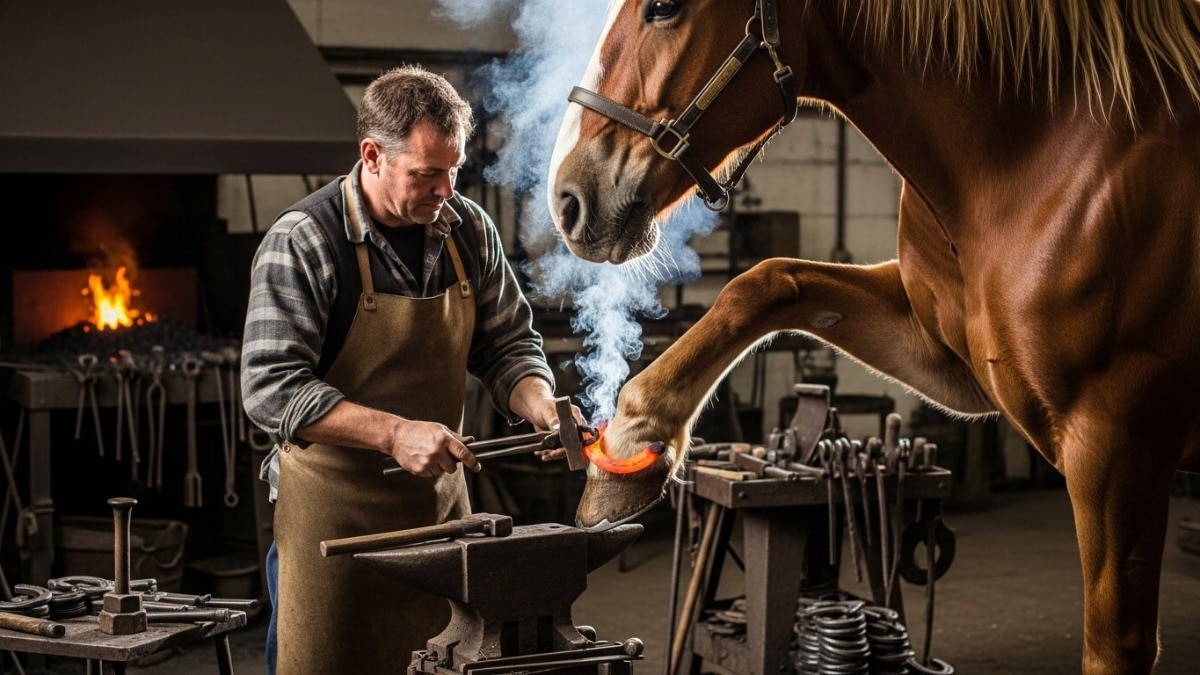
When a farrier prepares to fit a horseshoe, the process involves several critical steps designed to ensure proper attachment and hoof health. One of the most striking aspects of this procedure is the controlled burning of the horse's hoof with heated metal before the shoe is permanently affixed.
During the shoeing process, the farrier first shapes the horseshoe to match the contours of the horse's hoof. The shoe is then heated until it reaches a specific temperature, after which it is briefly applied to the hoof surface. This burning creates a perfect mold and ensures a precise fit between the shoe and the hoof wall.
The practice serves multiple practical purposes. The application of the hot shoe creates a seal that helps prevent moisture infiltration, which can lead to hoof deterioration and disease. Additionally, the burn marks act as a visual guide for the farrier to ensure even contact across the hoof surface, indicating where adjustments may be needed. The heat also sterilizes the contact area, reducing the risk of infection.
While the process may appear harsh, horses do not experience significant pain during this brief contact, as the outer hoof wall lacks nerve endings. Farriers undergo extensive training to ensure the procedure is executed safely and efficiently. The entire shoeing process typically takes 45 minutes to an hour, depending on the horse's cooperation and specific requirements.
Proper horseshoe fitting is essential for maintaining equine mobility, preventing injuries, and ensuring the overall health and performance of working horses. The centuries-old practice remains the gold standard in equine hoof care across the region.