World · India Bureau
Florida pythons display unexpected winter survival behavior, researchers find
A comprehensive tracking study of 356 invasive pythons in Florida has revealed surprising cold-weather survival strategies that could help wildlife managers better understand and combat the species' spread across the state.
LSN India ·
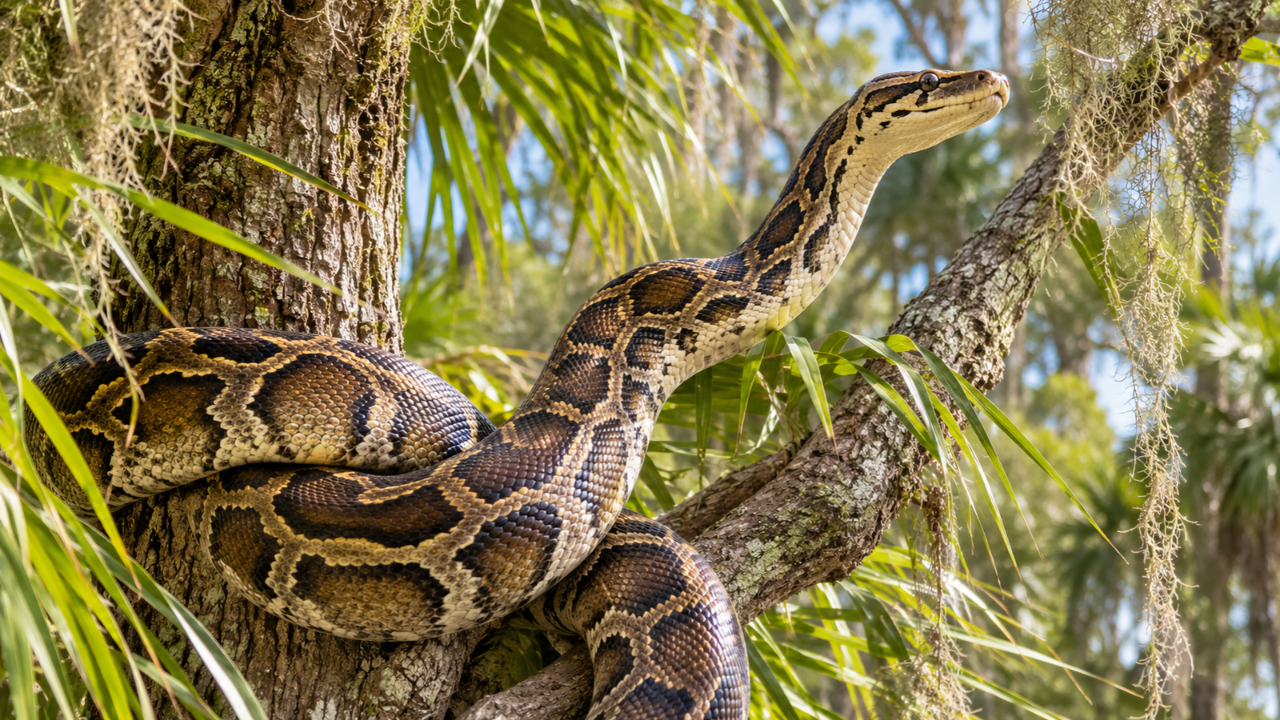
Researchers conducting an extensive tracking study of invasive Burmese pythons in Florida have uncovered previously undocumented behavioral patterns during winter months, offering new insights into how the species survives in cooler climates. The investigation, which monitored 356 individual pythons, tracked their movements and habitat use across the state to understand seasonal variations in their activity and survival mechanisms.
The study revealed that pythons employ unexpected strategies during Florida's winter months, when temperatures drop significantly. Rather than the dispersed patterns observed during warmer seasons, the reptiles demonstrated concentrated behaviors that enhance their chances of survival when conditions become challenging. These findings suggest the species possesses greater cold-tolerance capabilities than previously documented in scientific literature.
The research has important implications for invasive species management in Florida, where Burmese pythons have established a substantial population in the Everglades and surrounding areas. Understanding how and where pythons congregate during winter could provide wildlife authorities with improved targeting strategies for removal and control efforts. The data collected may also inform predictions about the species' potential range expansion in other parts of North America.
The invasive python population in Florida originated from escaped or released captive specimens and has become a significant threat to native wildlife populations. By comprehensively documenting python behavior across seasons, scientists can better anticipate ecological impacts and develop more effective management strategies to protect Florida's unique ecosystem.