World · India Bureau
Florida scientists revive oyster reefs using recycled shells in innovative restoration drive
Researchers in Florida are deploying recycled oyster shells to restore degraded reef ecosystems in Mosquito Lagoon, combining environmental conservation with waste reduction in a bid to revive coastal habitats.
LSN India ·
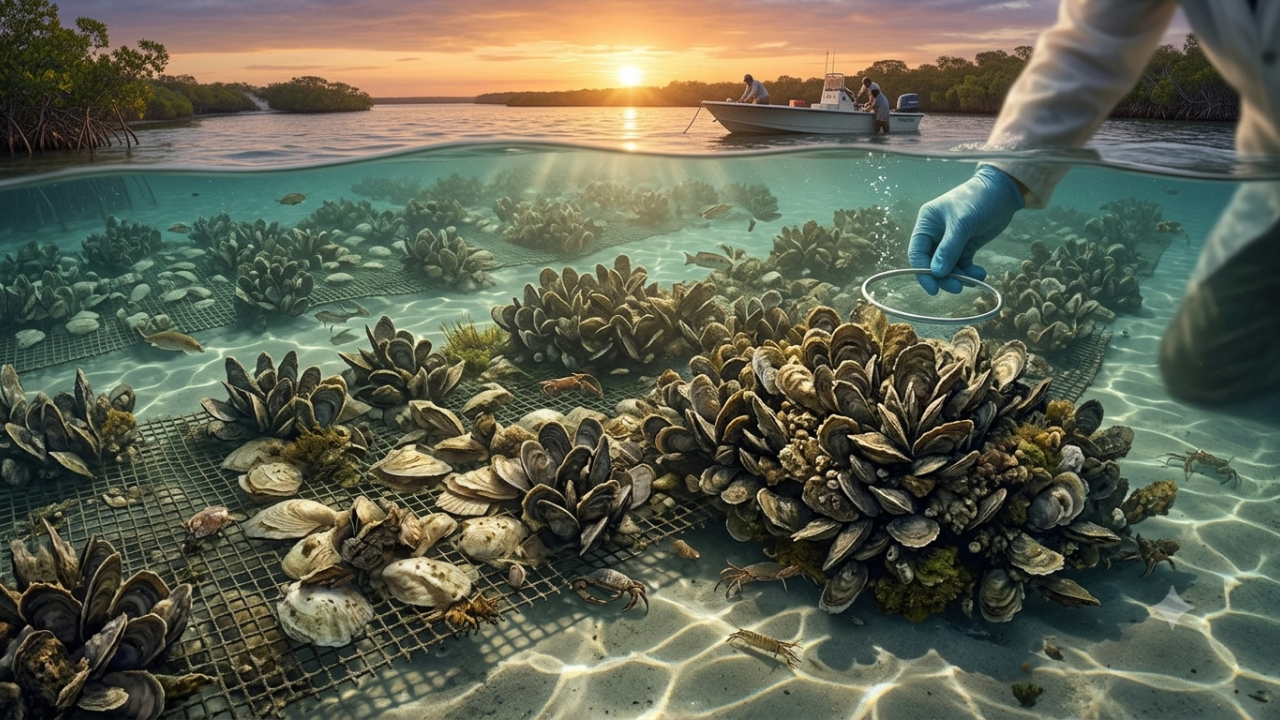
Scientists working in Florida's Mosquito Lagoon have launched an innovative restoration initiative that transforms discarded oyster shells into building blocks for reef recovery. The project represents a dual-benefit approach to environmental management, simultaneously addressing coastal ecosystem degradation while repurposing waste material that would otherwise end up in landfills.
Oyster reefs play a critical ecological role in coastal environments, providing habitat for numerous marine species, filtering water, and offering natural protection against storm surge and erosion. However, decades of overharvesting, pollution, and coastal development have severely depleted these vital ecosystems across many regions, including Florida's lagoon systems.
By recycling shells from the seafood industry and other sources, the research team creates suitable substrate for oyster larvae to attach and grow, effectively rebuilding reef structures layer by layer. This approach proves both cost-effective and environmentally sound, eliminating the need for artificial materials while giving new purpose to organic waste products.
The Mosquito Lagoon restoration effort forms part of broader coastal conservation initiatives aimed at enhancing marine biodiversity and strengthening ecosystem resilience. If successful, similar shell-recycling programs could be adapted for reef restoration projects in other coastal regions worldwide, offering a scalable model for addressing marine habitat loss.