Business · India Bureau
Former US gold mine becomes cutting-edge underground science facility
A decommissioned gold mine in South Dakota has been converted into one of America's most important underground research laboratories. Scientists now use the facility, located nearly a kilometre below the surface, to investigate dark matter and other cosmic mysteries.
LSN India ·
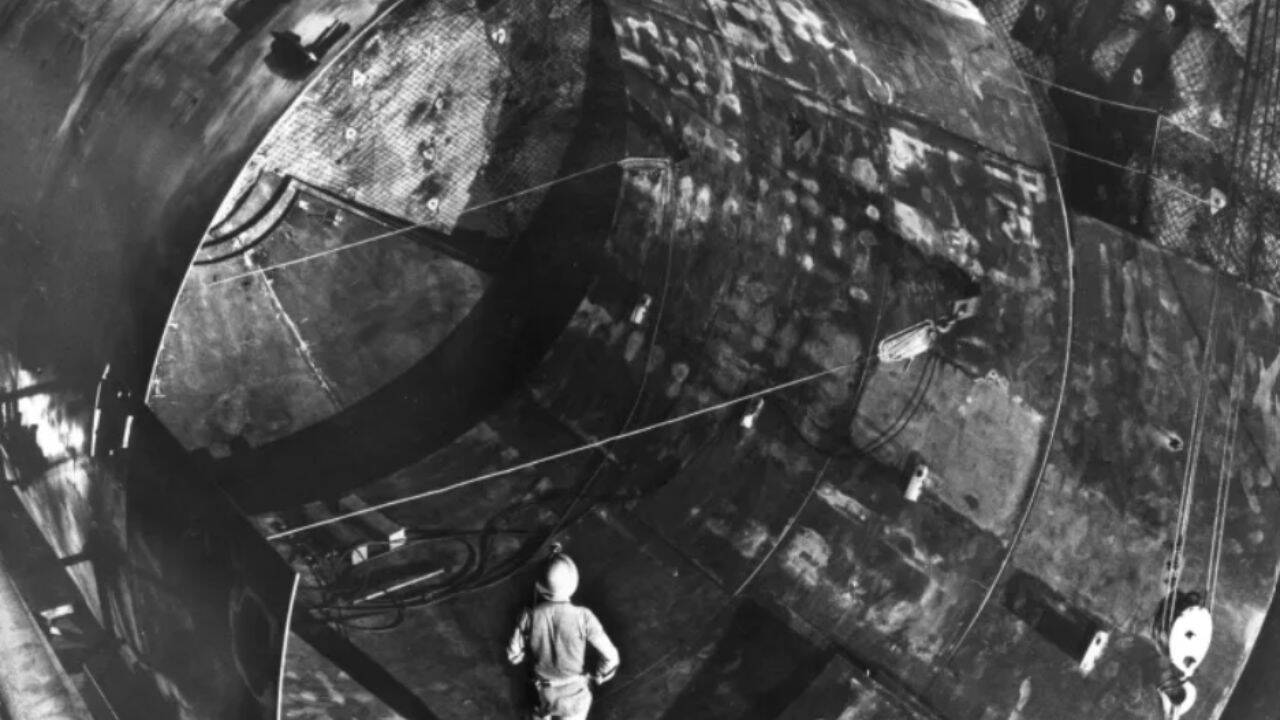
The Homestake Mine in South Dakota, once a prolific source of precious metals, has been reimagined as a frontier for scientific discovery. The facility, known as the Sanford Underground Research Facility, operates at a depth of 4,850 feet—making it ideal for experiments that require isolation from cosmic radiation and other surface interference.
Historically, the mine produced approximately 41 million ounces of gold and 9 million ounces of silver before mining operations ceased. Rather than allowing the extensive underground infrastructure to fall into disuse, researchers recognised the site's unique potential for advanced physics experiments.
Today, scientists utilise the facility's tunnels and chambers to conduct multiple research programmes simultaneously. Primary experiments focus on detecting dark matter and studying neutrinos—ghostly particles that pass through Earth virtually undetected. The depth of the facility provides crucial shielding for sensitive instruments that would otherwise be overwhelmed by cosmic rays at the surface.
Beyond particle physics, researchers also use the site to investigate rare radioactive decay processes, study extremophile microbes thriving in underground conditions, analyse geological formations, and explore geothermal energy potential. This multidisciplinary approach demonstrates how legacy industrial sites can be repurposed to advance scientific understanding of fundamental questions about the universe and our planet.