World · World News Bureau
France's divided nation reflected in charred Limoges town hall ruins
The destruction of Limoges' historic city hall during recent national protests has become a flashpoint revealing deep generational and ideological divisions within France over the costs and justifications of civil unrest.
LSN World News ·
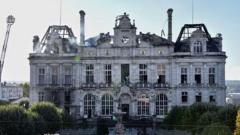
The blackened remnants of Limoges' municipal building stand as a potent symbol of the fractures widening across French society. What some view as unfortunate collateral damage in a larger movement for change, others condemn as an unacceptable assault on civic heritage and democratic institutions.
The fire that consumed the 19th-century structure occurred amid nationwide protests that have gripped the country. Younger residents of the industrial city have largely contextualized the destruction within the broader scope of the demonstrations, seeing it as regrettable but secondary to the movement's core objectives. This generational perspective reflects a willingness to accept property damage as an ancillary consequence of systemic change efforts.
Conversely, older residents and others in the community have responded with outrage, viewing the fire as a deliberate violation of shared civic space and historical continuity. For this segment, the burning of the town hall represents a crossing of moral and political lines that fundamentally delegitimizes the protest movement, regardless of its stated goals.
The dispute over Limoges' damaged town hall encapsulates tensions roiling France as it grapples with questions about acceptable forms of political expression, the value of institutional symbols, and the price of dissent. The ruins now serve as a daily reminder of how deeply the country remains divided over the nature and methods of contemporary protest.