World · India Bureau
Frozen optical fibre breakthrough could revolutionise quantum computing
Researchers have achieved a significant advance in photonic technology by cooling liquid-filled optical fibres to -196°C, dramatically amplifying interactions between light and sound waves. The discovery opens new pathways for energy-efficient computing and quantum information processing.
LSN India ·
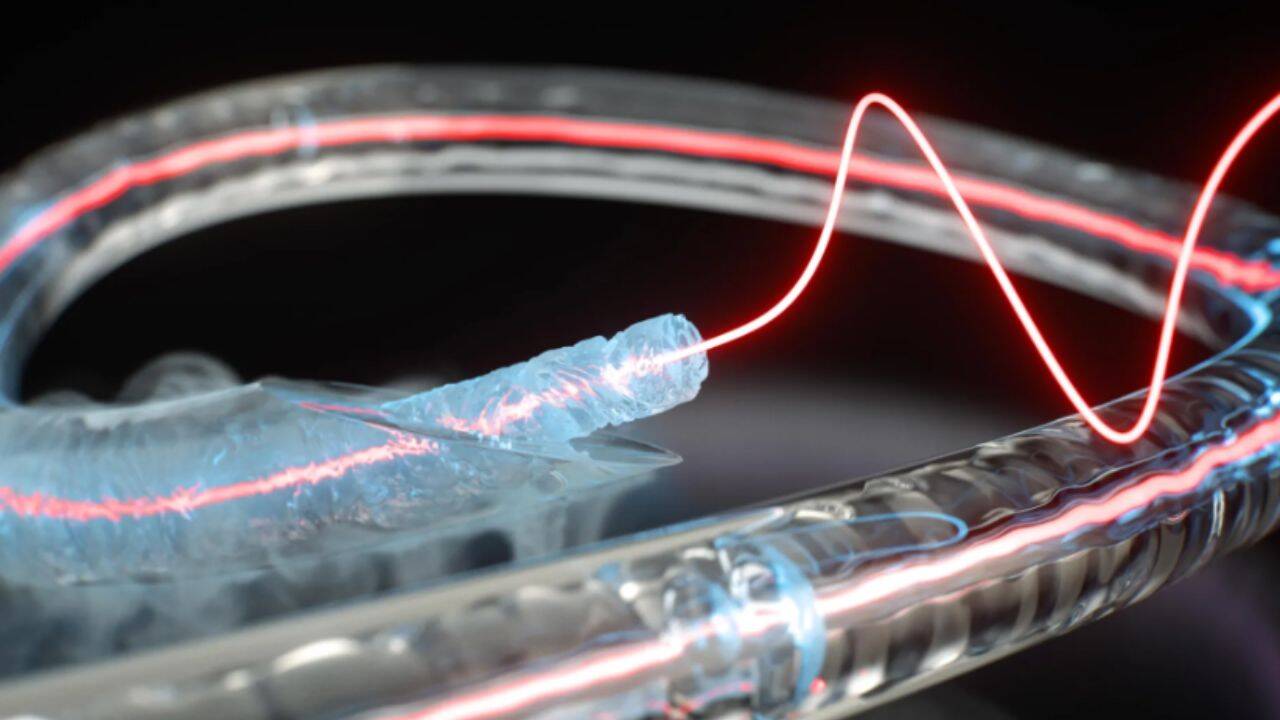
Scientists have successfully frozen the liquid core of specialised optical fibres to extremely low temperatures, creating conditions where light and sound waves interact over 1,000 times more powerfully than in standard fibres. The achievement represents a significant step forward in manipulating photonic materials at the quantum level.
The research team cooled the liquid-infused fibres to -196°C while maintaining their ability to guide both light and hypersonic sound waves simultaneously. This extreme temperature environment fundamentally altered the physical properties of the material, enabling unprecedented control over light-sound interactions that typically occur at far weaker intensities in conventional optical systems.
A key breakthrough from the work involves demonstrating optoacoustic memory—a phenomenon where information can be encoded through the interaction of optical and acoustic waves. The technology addresses a critical challenge in modern computing: reducing the substantial energy consumption required for data processing and storage.
The implications extend across multiple advanced technological domains. Researchers believe the frozen fibre approach could prove transformative for low-energy photonic computing systems, quantum information processing applications, and high-precision sensing devices. These fields have increasingly demanded better control mechanisms for manipulating light and sound at microscopic scales.