World · India Bureau
Fungus transforms beetles into unwitting disease vectors, study finds
Researchers have discovered a parasitic fungus that hijacks the behaviour of goldenrod soldier beetles, compelling them to grip flowers before death. The fungus then manipulates the insect's corpse to maximise transmission to the next generation.
LSN India ·
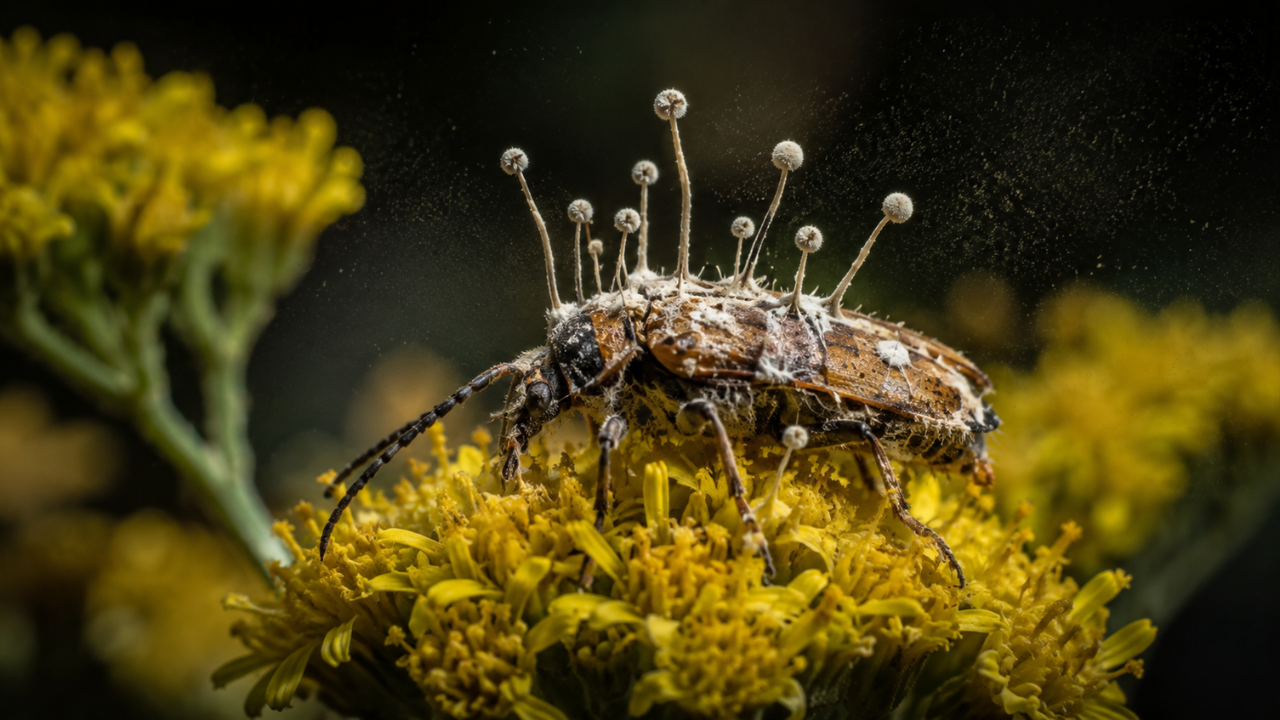
Scientists studying an unusual fungal infection have uncovered a macabre strategy employed by a parasite to ensure its survival. The fungus infects goldenrod soldier beetles, fundamentally altering their behaviour and body mechanics in the final stages of infection.
Once infected, the beetles are compelled to grip tightly to flowers, where they eventually succumb to the fungal infection. But the manipulation does not end at death. In a remarkable post-mortem phenomenon, the fungus alters the beetle's physical form, systematically raising the insect's wings between midnight and 7 am—approximately fifteen to twenty-two hours after death.
This timing appears deliberately orchestrated to maximise transmission to subsequent beetle generations. The elevated wing position likely increases spore dispersal and the likelihood of contact with healthy beetles visiting the same flowers. Researchers observed infected beetles on frost aster and common boneset plants during fieldwork in Arkansas.
The fungal outbreaks showed strong seasonal patterns, occurring primarily during autumn months when adult beetles congregate on flowering plants. The discovery offers fresh insights into how parasitic fungi evolve sophisticated mechanisms to control host behaviour, turning insects into biological delivery systems for pathogen transmission.