World · India Bureau
Fungus weaponises dead flies to spread infection among living insects
Scientists have discovered a remarkable survival strategy employed by a parasitic fungus that hijacks dead flies as biological artillery to launch infectious spores at nearby insects. The fungus uses pressurized liquid bursts to propel spores at speeds reaching ten metres per second.
LSN India ·
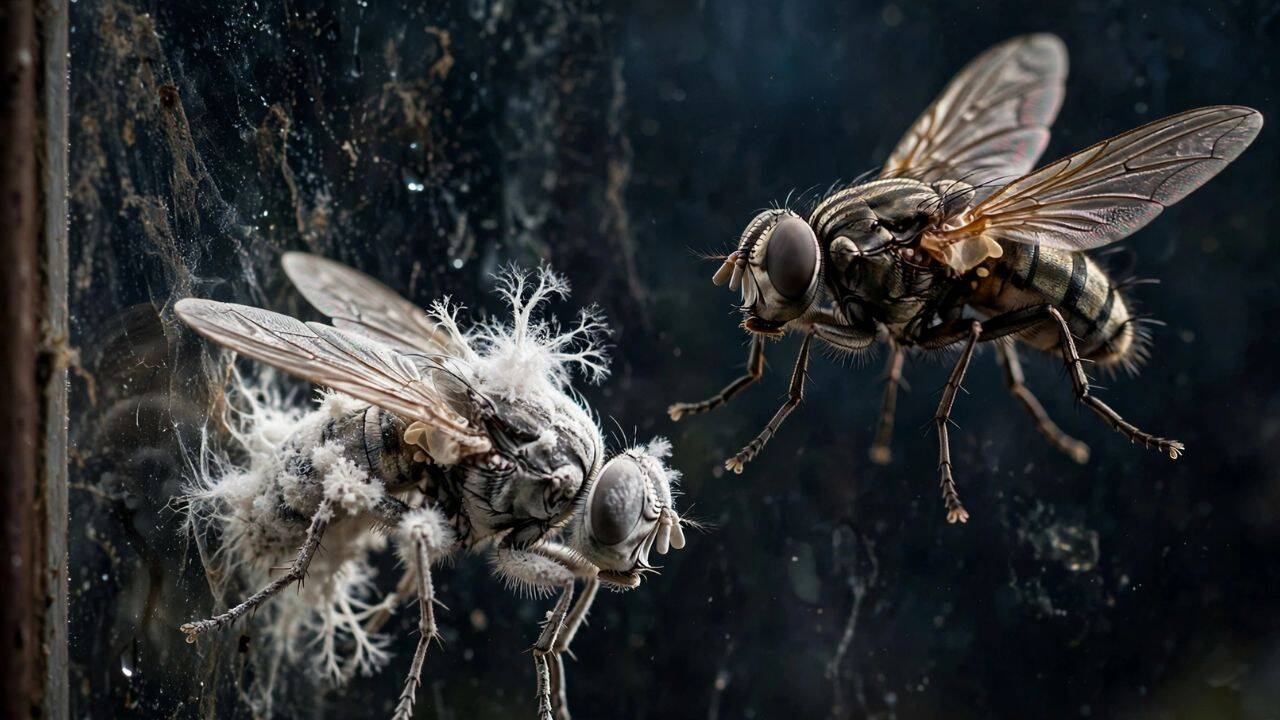
Researchers studying fungal parasites have uncovered an ingenious infection mechanism in which a pathogenic fungus converts the bodies of dead flies into weaponised dispersal systems. The fungus launches infectious spores through controlled, high-pressure liquid bursts that propel microscopic particles with significant force to reach nearby healthy insects.
The spore velocity, measured at up to ten metres per second, represents a critical evolutionary adaptation that balances multiple competing factors. Scientists note that spore size is particularly crucial, as it must remain large enough to maintain momentum during dispersal while remaining small enough to be transported by air currents to infect new hosts.
The fungus demonstrates additional strategic sophistication through its choice of hosts. Dead female flies prove particularly effective in spreading infection, as living male flies are attracted to the deceased females. This behavioural attraction increases contact between healthy insects and the fungal spores, facilitating transmission and perpetuating the parasite's life cycle.
The discovery reveals how parasitic fungi have evolved complex mechanisms to ensure their survival and propagation across host populations. Such biological strategies underscore the sophisticated evolutionary arms race between pathogens and their hosts, offering insights into disease transmission dynamics in natural ecosystems.