World · India Bureau
Gandhi's Legacy Resurfaces as India's Opposition Seeks Systemic Change
Mahatma Gandhi's political philosophy is experiencing renewed relevance in India's opposition movements, as citizens and activists increasingly demand greater accountability and structural reforms. The resurgence reflects a broader wave of grassroots mobilisation challenging the status quo across the country.
LSN India ·
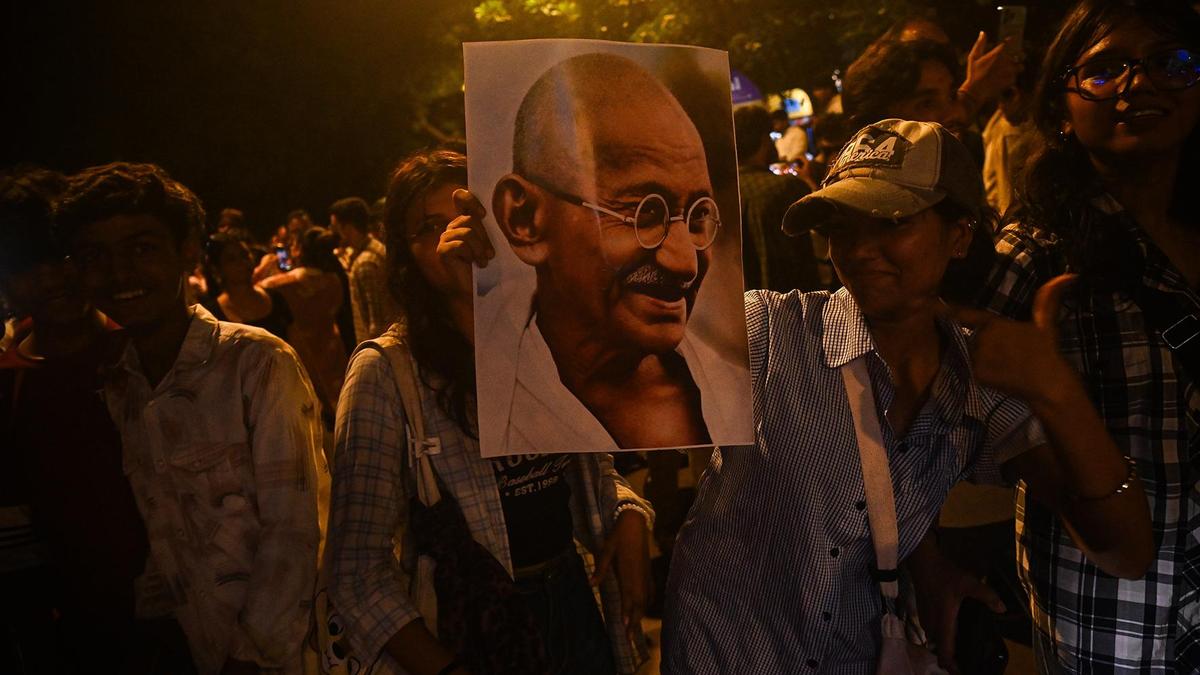
India's opposition politics is undergoing a significant realignment, with Mahatma Gandhi's principles of bottom-up political change finding fresh resonance among protest movements and civil society organisations. Despite sustained efforts to sideline his legacy from mainstream political discourse, Gandhi's emphasis on citizen-led accountability and systemic transformation has become central to how opposition forces are framing their challenges to the established order.
The renewed focus on Gandhian thought comes amid a wave of citizen-led activism across India, ranging from environmental campaigns to social justice movements. These varied initiatives share a common thread: a demand for greater institutional accountability and fundamental restructuring of power dynamics that Gandhi himself advocated through non-violent resistance and mass mobilisation.
Political analysts suggest this recalibration signals deeper churning within India's democratic space. New political movements, alongside established opposition parties, are increasingly adopting Gandhian concepts of decentralised decision-making and grassroots empowerment as they seek to articulate alternatives to prevailing governance models.
The resurgence underscores how foundational political philosophies can gain renewed currency during periods of institutional stress. As India grapples with questions of accountability and representation, Gandhi's framework—centred on ordinary citizens as agents of political change—appears to be offering a strategic and ideological anchor for diverse opposition constituencies seeking to challenge the political establishment.