Culture & Entertainment · Bangladesh Bureau
Gender gap persists in Bangladesh higher education and job markets
Women continue to face significant barriers in accessing higher education and securing employment opportunities across South and Southeast Asia, with Bangladesh among the regions grappling with persistent gender disparities.
LSN Bangladesh ·
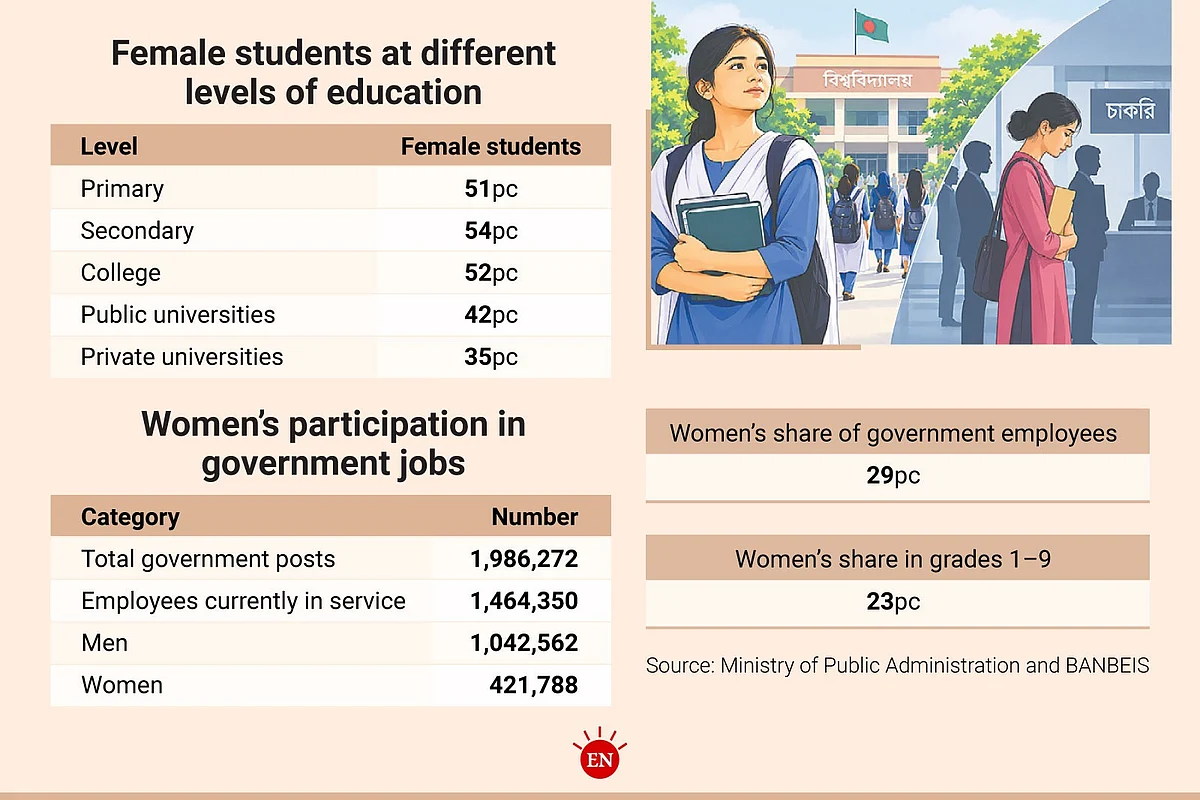
Data reveals that women remain underrepresented at tertiary education levels and in professional workforces throughout the region, despite incremental progress in recent years. The disparity reflects structural challenges ranging from limited access to quality secondary schooling to cultural and economic factors that constrain women's educational and career advancement.
In Bangladesh specifically, enrollment gaps in higher education institutions remain notable, with women significantly outnumbered in certain disciplines, particularly in technical and vocational fields. The situation is compounded by employment discrimination and limited workplace opportunities for female graduates, who often face barriers to career progression and equitable compensation.
Experts attribute the persistent gender gap to interconnected factors including inadequate infrastructure, insufficient financial support for female students, and societal expectations that prioritize domestic responsibilities over educational pursuits. Rural areas face particularly acute challenges, where girls encounter greater obstacles to continued schooling beyond secondary levels.
Policymakers and educational institutions across the region are increasingly recognizing the need for targeted interventions to bridge the gap. These include scholarship programs, improved school infrastructure in underserved areas, and workplace initiatives promoting gender equality and equal opportunity for women in the professional sphere.
Closing the gender gap in education and employment is considered essential for regional economic development and social progress, with international organizations emphasizing that women's full participation in higher education and labor markets strengthens overall economic productivity and sustainability.