World · World News Bureau
Global fuel prices resist quick fixes despite sanctions evasion efforts
Attempts to control surging energy costs through targeting shadow tankers and Russian oil supplies have proven ineffective, analysts say. Structural market forces continue to outweigh enforcement measures aimed at disrupting illicit fuel trade.
LSN World News ·
Efforts to rein in global fuel prices by targeting the so-called dark fleet and restricting Russian diesel imports have failed to deliver meaningful relief at the pump, according to energy analysts tracking commodity markets.
The shadow tanker network—aging vessels used to circumvent international sanctions and transport banned Russian oil—has expanded despite enforcement actions by Western nations. Similarly, restrictions on Russian diesel, a key supply source for Asian markets, have not translated into the price reductions policymakers anticipated.
Analysts attribute the persistence of high fuel costs to broader structural factors within global energy markets. Supply constraints, geopolitical tensions, refinery capacity limitations, and fluctuating demand patterns continue to exert upward pressure on prices regardless of regulatory interventions targeting specific supply routes or traders.
Energy experts suggest that addressing fuel price volatility requires comprehensive approaches rather than targeting individual market mechanisms. These could include investment in alternative energy infrastructure, strategic petroleum reserve management, and coordination among major consuming nations to stabilize demand.
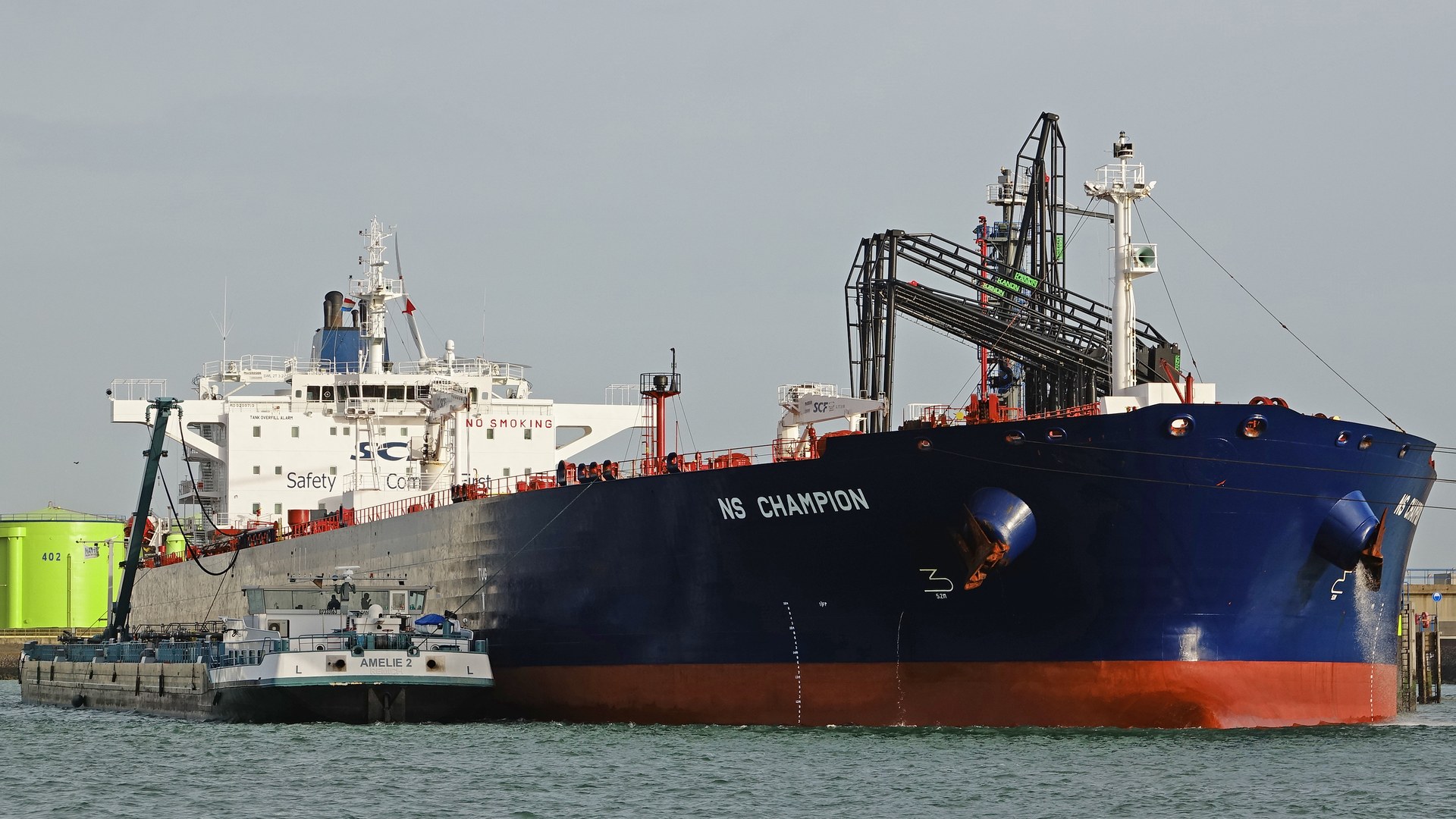
Photo: The tanker NS Champion (right) in the Port of Rotterdam, March 2021. Kees Torn via Wikimedia Commons (CC BY-SA 2.0).