Business · Vietnam Bureau
Gold's Quoted Price Masks Complex Trading Realities for Investors
While gold prices appear straightforward when quoted as single figures, the actual financial impact on traders varies significantly based on how positions are structured, their size, and associated costs. Understanding these nuances is critical for anyone navigating the precious metals market.
LSN Vietnam ·
Gold trading presents a paradox: the metal's headline price offers an easily comparable benchmark across time periods and markets, yet this single figure obscures the diverse financial outcomes experienced by different market participants.
The disconnect between quoted gold prices and actual trading results hinges on several factors that reshape the bottom line for investors and traders. The method through which gold is traded—whether through physical delivery, futures contracts, exchange-traded funds, or over-the-counter arrangements—fundamentally alters how price movements translate into gains or losses. A one percent rise in the headline price produces markedly different returns depending on the trading vehicle selected.
Position size compounds this effect. Larger holdings amplify both gains and losses relative to the same percentage price movement, while leverage arrangements available in certain trading structures can magnify these swings further. Simultaneously, the contractual terms and associated costs embedded in each transaction create additional layers of complexity that the headline price alone cannot capture.
These variables—trading method, position sizing, fees, financing costs, and contractual obligations—collectively determine whether a trader realizes gains or losses that align with headline price movements or diverge substantially from them. Professional market participants account for these factors when executing their strategies, recognizing that gold's quoted price tells only part of the trading story.
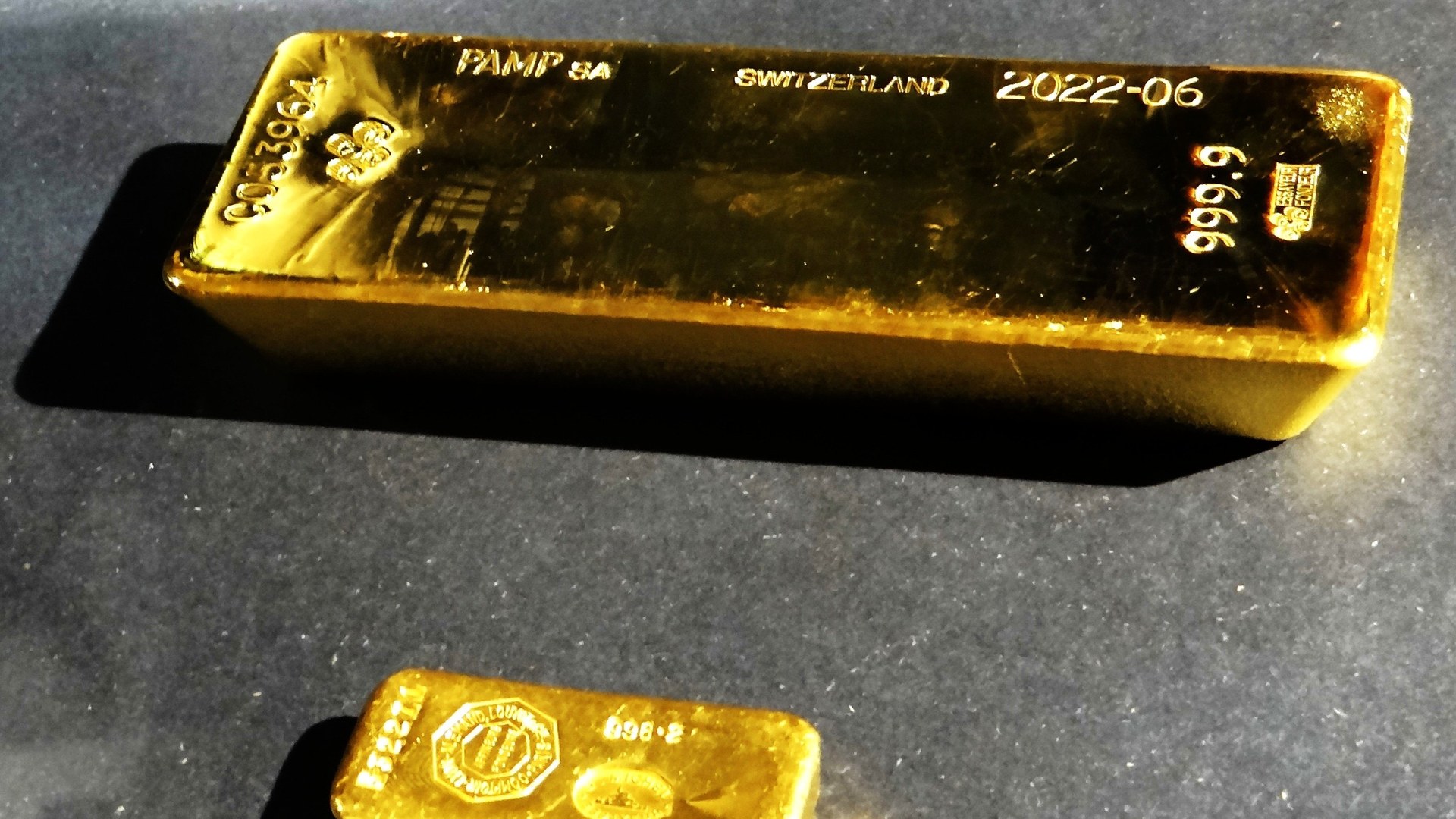
Photo: Gold bars on display at the Banque de France, Paris, September 2022. Ibex73 via Wikimedia Commons (CC BY 4.0).