Business · India Bureau
Google, TCS tackle data centre cooling challenge with competing technologies
As hyperscale data centres grow to gigawatt-scale operations, companies are grappling with the trade-offs between air-cooling and liquid-cooling technologies. While air-cooling avoids steep upfront costs, it carries significant penalties in performance and operational efficiency.
LSN India ·
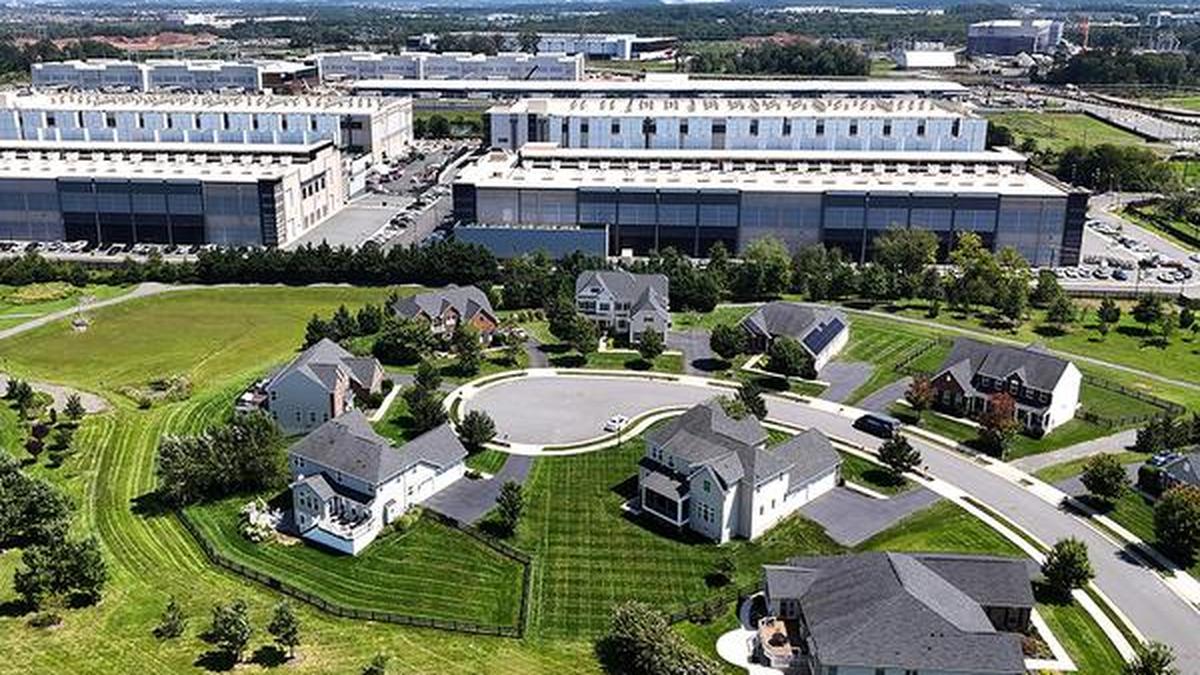
Data centre operators face a critical engineering challenge as facility power demands reach the 1-gigawatt threshold: how to cool massive computing installations cost-effectively without compromising performance. Traditional air-cooling systems, long the industry standard, struggle under such extreme thermal loads, forcing companies to evaluate liquid-cooling alternatives despite their higher capital expenditures.
Tech giants and infrastructure providers including Google and TCS are actively exploring both approaches. Air-cooling remains attractive from a financial perspective, avoiding the substantial initial investment required for liquid-circulation systems. However, this economy comes with hidden costs embedded in the physics of heat transfer at scale.
When pushing air-cooling to its limits in large data centres, operators must contend with reduced computational efficiency and increased energy consumption. The thermal dynamics of moving sufficient air volume through densely packed server racks creates bottlenecks that force processors to throttle performance and consume more power generating heat in the process—a circular problem that undermines the apparent savings.
Liquid-cooling bypasses many of these constraints by transferring heat more efficiently, enabling higher processing density and lower overall power consumption. The technology requires careful management of coolant circulation and system maintenance, but the operational advantages often justify the front-loaded investment over a data centre's multi-year lifecycle.
As India's digital infrastructure expands and demand for cloud computing capacity accelerates, the choice between these cooling paradigms will significantly influence the economics and environmental footprint of future data centre deployments across the region.