World · India Bureau
Greenland shark: Earth's longest-living animal faces conservation debate
A growing population of Greenland sharks, which can live for over 150 years and carry offspring for a decade, has become the subject of intense conservation discussions. The species faces mounting pressure as debate intensifies over population management in the world's coldest waters.
LSN India ·
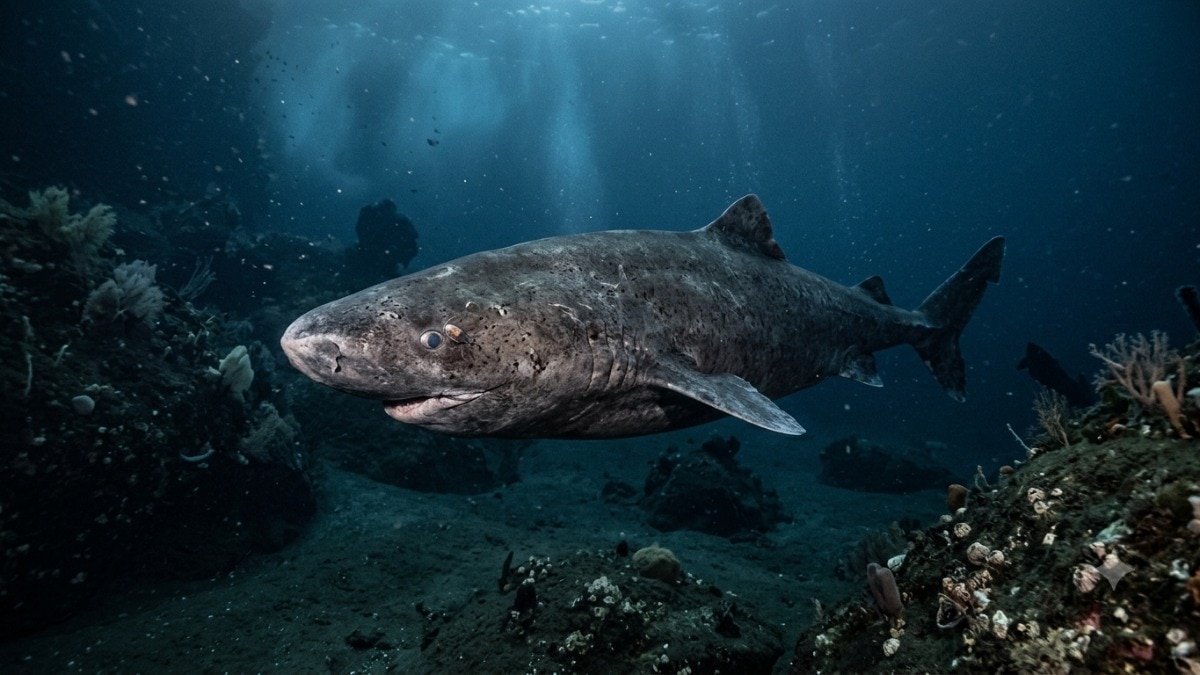
The Greenland shark, one of Earth's longest-living vertebrates, has emerged as the focal point of an escalating conservation debate. The species, capable of reaching sexual maturity around 150 years of age, represents a biological marvel with reproductive cycles unlike any other known animal. Female Greenland sharks carry their young for approximately ten years before giving birth, making them among the slowest-reproducing creatures on the planet.
These deep-sea predators inhabit the frigid waters surrounding Greenland, northern Canada, and Europe, thriving in some of the ocean's harshest environments. Their extreme longevity—with some individuals believed to live for several centuries—makes them invaluable to scientific research on aging and cellular biology. However, their slow reproduction rate creates significant vulnerability to population decline.
Conservationists and marine scientists are now grappling with strategies to manage and protect the species as commercial interests and environmental pressures mount. The debate centers on balancing human needs with species preservation, particularly given the Greenland shark's critical role in deep-sea ecosystems and its unique biological characteristics that continue to fascinate the international scientific community.
Experts emphasize that understanding the reproductive and longevity patterns of such species is essential for developing effective conservation policies in the Arctic and sub-Arctic regions where these sharks are found.