Business · India Bureau
Guinea grass invasion turns Hawaii's landscape into tinderbox
Introduced to Hawaii in 1883 as livestock fodder, Guinea grass has evolved into an ecological menace, reaching heights of 9 feet and producing thousands of seeds annually. The invasive perennial now amplifies wildfire risks across the Hawaiian islands, raising fresh concerns about introduced species management in vulnerable ecosystems.
LSN India ·
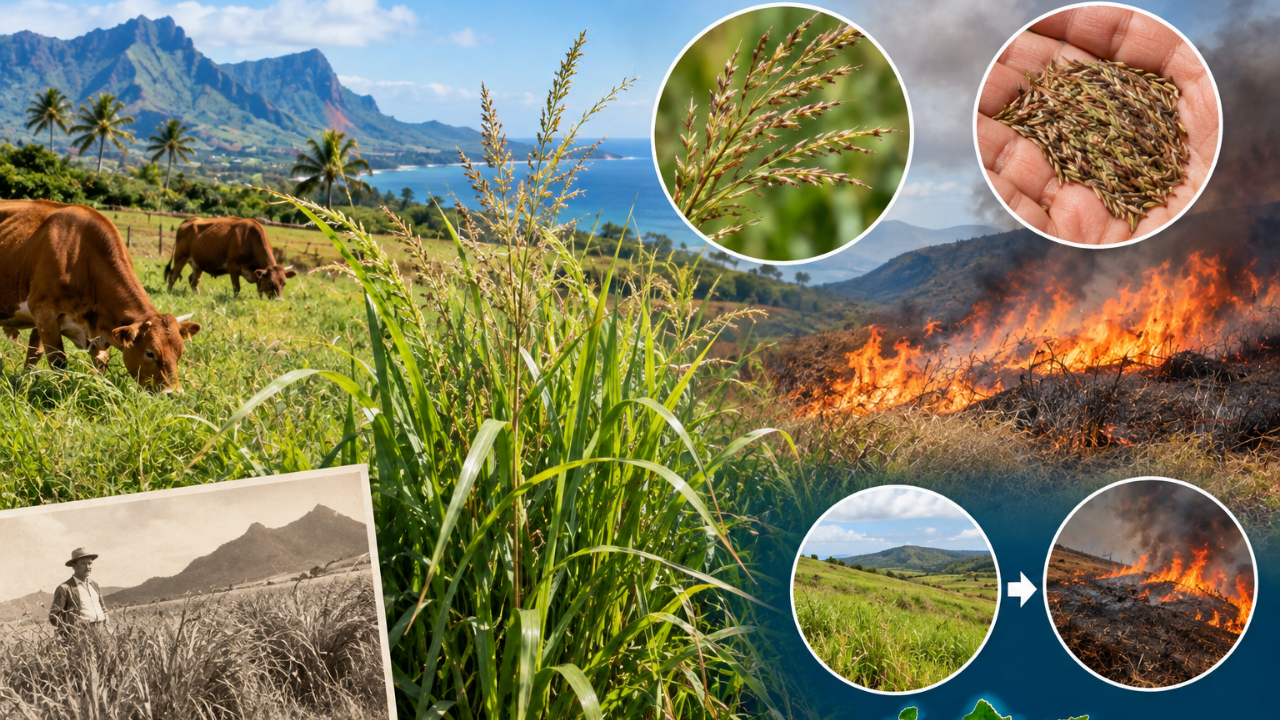
What began as an agricultural solution has become an environmental crisis for Hawaii. Guinea grass, brought to the islands 143 years ago to support grazing operations, has transformed into one of the archipelago's most destructive invasive species, threatening the delicate balance of native ecosystems.
The resilient perennial has adapted remarkably to Hawaiian conditions, growing to heights of 9 feet and generating approximately 9,000 seeds per plant. Its prolific reproduction and rapid growth cycle have enabled it to colonise vast stretches of landscape across multiple islands, displacing native vegetation and altering habitat structure.
Perhaps most concerning is Guinea grass's relationship with fire. The dense, dry vegetation provides abundant fuel for wildfires, which the plant has evolved to withstand. Rather than being eliminated by flames, Guinea grass rebounds quickly from fire damage, creating a destructive cycle that intensifies the frequency and severity of blazes across Hawaii.
Ecologists view Guinea grass as emblematic of the long-term consequences of introducing non-native species without adequate environmental assessment. Its establishment illustrates how well-intentioned agricultural practices can trigger cascading ecological damage that persists for generations. Resource managers now face the substantial challenge of controlling the species while protecting the islands' unique native flora and reducing wildfire vulnerability.