World · Bangladesh Bureau
Half of Bangladesh private universities occupy own campuses as quality concerns persist
Fifty-four of 117 private universities in Bangladesh have relocated to independent campuses, yet educators and regulators continue raising questions about institutional standards and academic quality across the sector.
LSN Bangladesh ·
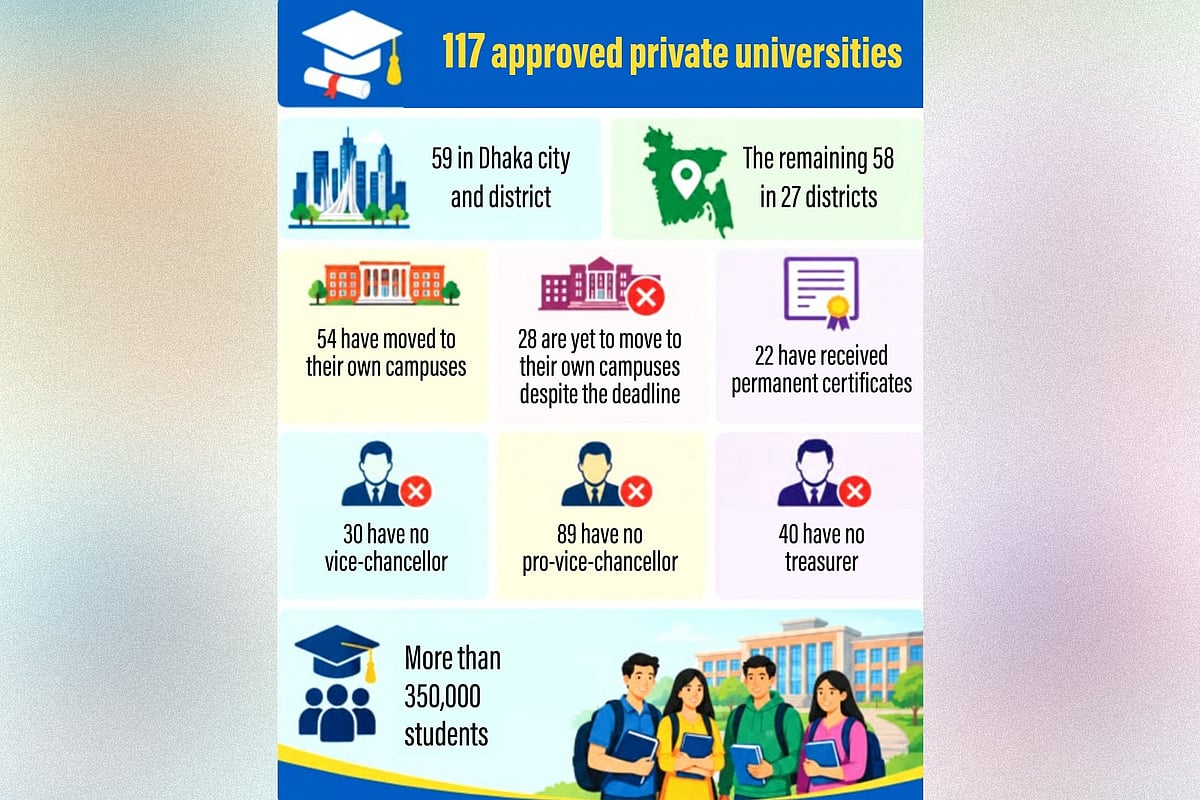
The relocation of private universities to dedicated campuses represents a significant shift in the higher education landscape, with just over 46 percent of institutions now operating from their own facilities rather than rented spaces. The transition reflects efforts by the sector to establish more formal educational infrastructure and improve operational independence.
However, the physical expansion has not fully addressed longstanding concerns about academic standards. Education officials and quality assurance bodies have highlighted inconsistencies in faculty qualifications, curriculum development, and research output across private institutions. The sector's rapid expansion over recent decades has outpaced regulatory oversight in some cases, creating gaps between infrastructure improvements and educational quality benchmarks.
The remaining 63 private universities continue to operate from rented or shared facilities, which some stakeholders argue limits their capacity to invest in laboratories, libraries, and other resources essential for quality education. Financial constraints and space limitations in urban areas have made independent campus acquisition challenging for smaller institutions.
Regulatory authorities have emphasized that campus ownership alone does not guarantee educational excellence. Oversight bodies continue to monitor accreditation standards, faculty development programs, and student outcomes to ensure private universities meet national educational requirements. Officials indicate that stricter enforcement of quality standards remains a priority alongside infrastructure development initiatives.