World · India Bureau
Harvard scientists sustain human brain organoids for five years in major breakthrough
Researchers at Harvard University have successfully maintained human brain organoids in laboratory conditions for over five years, demonstrating their ability to mature and replicate natural brain development patterns. The achievement opens new possibilities for studying neurological diseases and brain biology.
LSN India ·
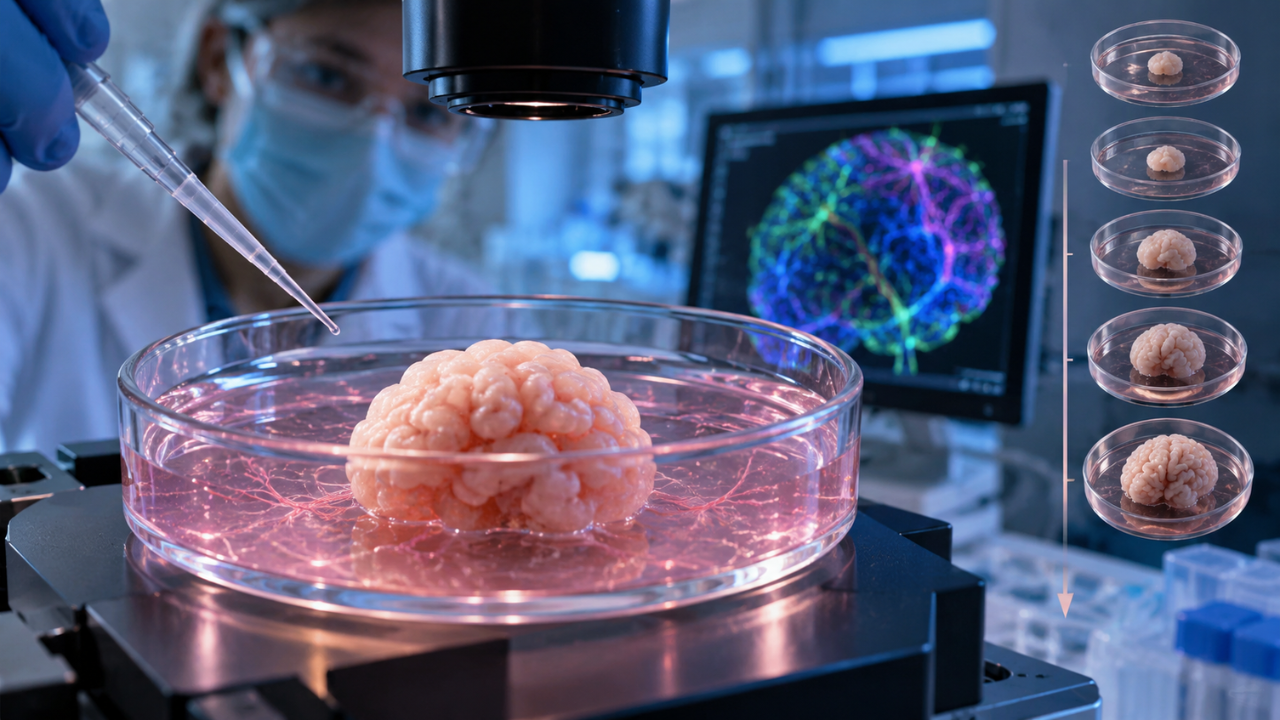
Scientists at Harvard University have achieved a significant milestone in neuroscience by keeping human brain organoids alive and functional for more than five years in controlled laboratory settings. The organoids—miniature, three-dimensional structures that mimic aspects of human brain development—matured progressively and followed the molecular patterns observed in natural human brain development, according to the research findings.
The extended survival of these organoids was made possible through improved culture conditions and enhanced nutrient supplementation protocols. Researchers discovered that older cells within the organoids retained developmental information, enabling them to accelerate neuron production without losing their developmental properties. This capability to skip ahead in the maturation process while maintaining developmental plasticity represents a notable advance in tissue engineering.
The ability to sustain brain organoids for such extended periods has significant implications for neuroscience research. Scientists can now study brain development over longer timescales and investigate disease progression in ways that were previously impossible. The model systems could facilitate the investigation of neurological conditions and potentially contribute to understanding how the human brain develops and functions at the cellular and molecular levels.
Harvard's breakthrough builds on previous efforts to culture brain organoids but extends the timeframe considerably, providing researchers with more time to observe complex developmental processes. The findings suggest that further refinements to culture techniques could extend the viability and complexity of these organoids even further, potentially enabling more sophisticated studies of human neural biology.