World · India Bureau
Hindu theology: Understanding Lord Kalki, the prophesied tenth avatar of Vishnu
According to Hindu scriptural traditions, Lord Vishnu is believed to incarnate as Kalki during the final age of Kali Yuga when unrighteousness reaches its peak. Sacred texts detail the circumstances and characteristics of this anticipated divine manifestation.
LSN India ·
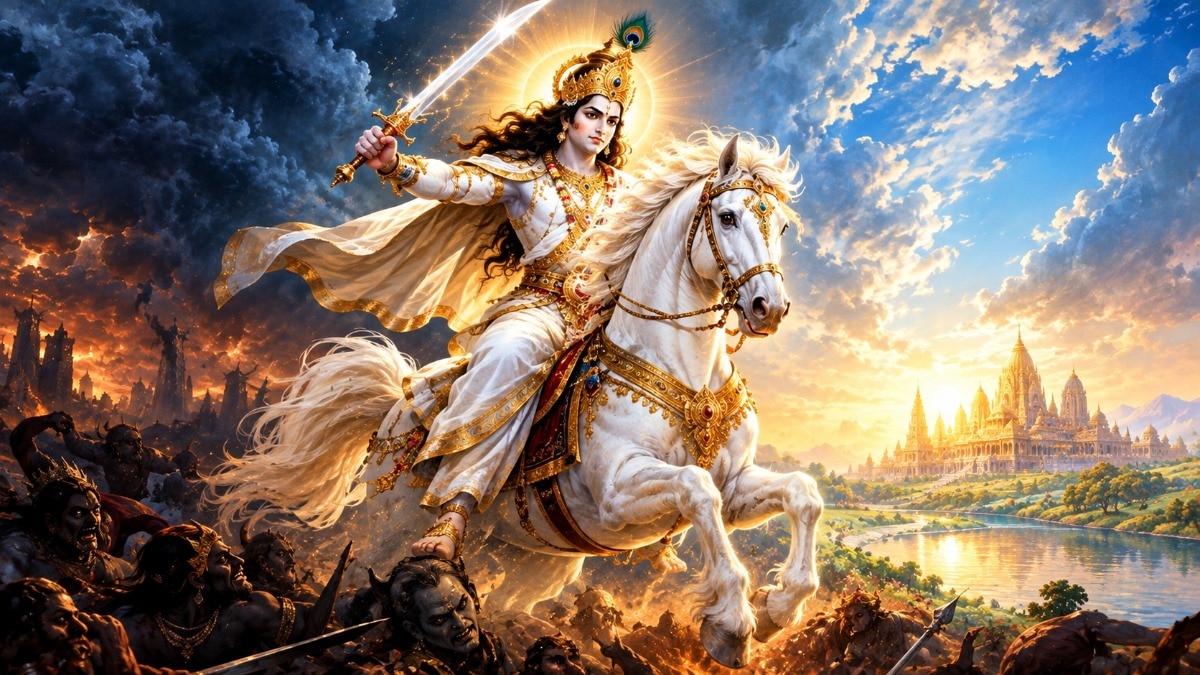
Hindu theological texts describe Kalki as the tenth and final avatar of Lord Vishnu, who is prophesied to appear at a critical juncture in the Kali Yuga, or the current age of darkness and spiritual decline. According to Hindu cosmology, Kalki's arrival will occur when adharma, or unrighteousness, and sin reach their zenith, necessitating divine intervention to restore cosmic order.
The Srimad Bhagavata Purana, one of Hinduism's most revered scriptures, provides specific details about Kalki's birth and origins. The text states that Kalki will be born in the village of Shambhala to Vishnu Yash, a distinguished Brahmin, and his wife Sumati. This anticipated incarnation is believed to possess divine powers to combat evil forces and cleanse the world of corruption.
According to Hindu philosophical traditions, Kalki's emergence marks the conclusion of the Kali Yuga and the beginning of a new spiritual epoch. The avatar is typically depicted as a warrior on a white horse, symbolizing swift action against adharma. While Hindu scholars debate the exact timeline of this manifestation, the concept of Kalki remains central to Hindu eschatology and represents the faith's belief in cyclical renewal and divine justice.
The Kalki narrative has influenced Hindu thought for centuries, shaping believers' understanding of cosmic cycles and moral evolution. Different philosophical schools within Hinduism interpret the timing and nature of Kalki's appearance in varying ways, reflecting the diverse interpretative traditions within the religion.