World · India Bureau
Hindu tradition links ancestral visits to animal appearances during Pitru Paksha
According to Hindu scriptures, ancestors are believed to visit homes in animal form during the 16-day Pitru Paksha period. The appearance of certain creatures is traditionally interpreted as a sign of ancestral blessings.
LSN India ·
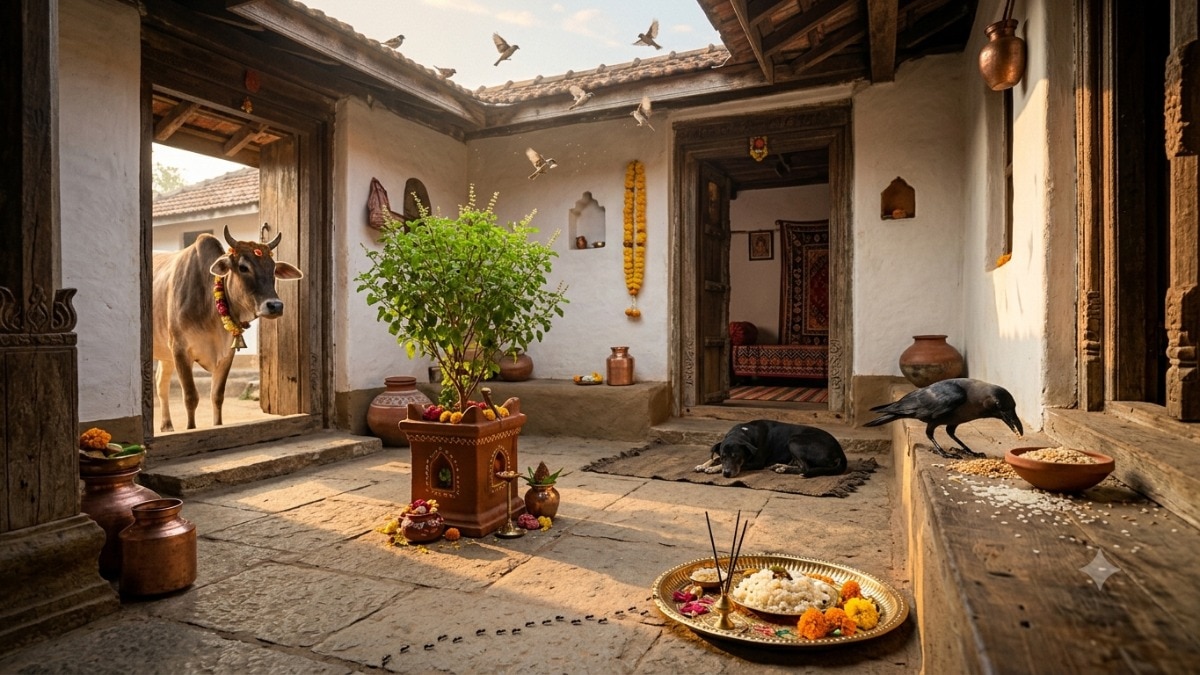
During Pitru Paksha, the Hindu lunar fortnight dedicated to honouring deceased ancestors, various animals are believed to serve as conduits for ancestral presence, according to traditional interpretations of the Garuda Purana. The sacred text suggests that ancestors may manifest in different animal forms to visit their living relatives during this period, which typically occurs in September or October.
Hindu tradition identifies specific creatures whose appearance at homes during Pitru Paksha is considered auspicious. These include crows, which have long held spiritual significance in Hindu rituals; black dogs; cattle; ants; and birds. Each of these creatures is traditionally viewed as a potential vehicle through which ancestors communicate their blessings to the living.
The belief system reflects broader Hindu philosophical concepts about the cyclical nature of life and the continued relationship between the living and their forebears. The 16-day observance involves rituals, offerings, and prayers intended to satisfy ancestral souls and seek their continued guidance and protection.
While these traditions remain deeply embedded in Hindu cultural practice, they vary significantly across regions and family lineages in India. Many practitioners view the appearance of such animals during Pitru Paksha not merely as coincidence but as meaningful spiritual occurrences deserving reverence and ritual response.