World · Vietnam Bureau
Ho Chi Minh City tackles traffic with four-level road interchange system
Vietnam's largest city is implementing a multi-level road infrastructure strategy to manage congestion across its sprawling metropolitan area. The innovative interchange design separates traffic flows to improve connectivity between critical transport hubs.
LSN Vietnam ·
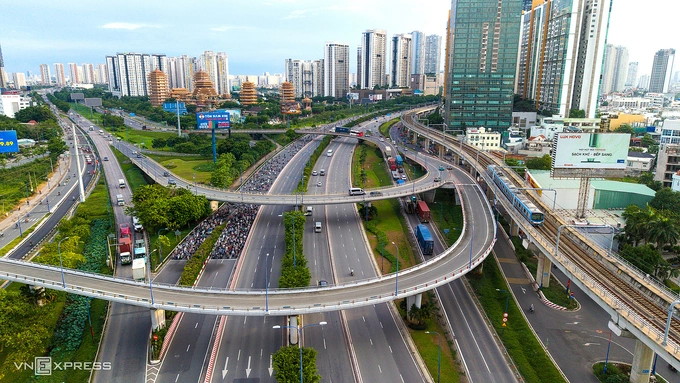
Ho Chi Minh City is deploying a sophisticated traffic management solution through the construction of multi-level road interchanges that rise three to four stories above ground level, paired with underground passages to eliminate cross-traffic conflicts.
The stacked interchange system represents a strategic response to congestion challenges facing a metropolis that hosts approximately 11.3 million motorbikes alongside cars and commercial vehicles. By separating traffic streams vertically rather than allowing them to intersect at ground level, the city aims to maintain smoother traffic flow on major arterial roads.
Key interchanges built to these specifications prioritize connectivity between the city's crucial economic arteries—particularly routes linking port facilities and Tan Son Nhat International Airport to the broader urban network. The multi-level design enables vehicles to transit these bottleneck areas without direct crossing conflicts that typically impede movement.
The infrastructure project reflects Ho Chi Minh City's ongoing efforts to modernize transportation systems amid rapid urbanization and motorization. As the city continues to expand, officials have identified vertical traffic separation as a practical solution to alleviate congestion on roads critical to the region's commercial operations.