Business · Bangladesh Bureau
Houthi Grip on Red Sea Strait Threatens Bangladesh Trade Routes
Yemen's Houthi movement's control of the Bab el-Mandeb strait poses significant risks to Bangladesh's maritime commerce and could drive up shipping costs for the nation's exports and imports. The strategic waterway's volatility has raised concerns among Bangladeshi traders and policymakers about supply chain disruptions.
LSN Bangladesh ·
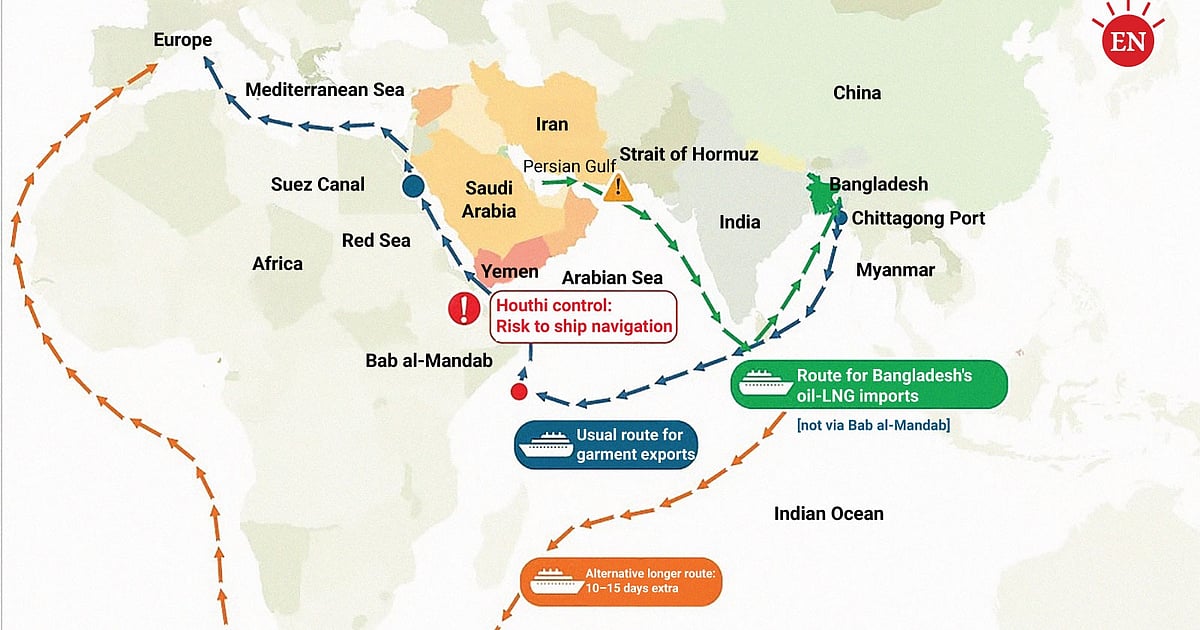
Bangladesh faces mounting pressure on its international trade as Yemen's Houthi movement consolidates control over the Bab el-Mandeb strait, one of the world's most critical shipping corridors. The narrow passage, which separates Yemen from Djibouti and connects the Red Sea to the Indian Ocean, handles roughly 12 percent of global maritime trade, including significant volumes of Bangladeshi goods destined for European and Middle Eastern markets.
For Bangladesh, one of the world's largest exporters of garments and textiles, disruptions to the Bab el-Mandeb route translate directly into higher transportation costs. Shipping lines have already begun imposing surcharges on vessels transiting the region, and some operators are rerouting cargo around Africa via the Cape of Good Hope—a journey that adds weeks to transit times and substantially increases expenses for Bangladeshi exporters already operating on thin margins.
The situation also affects Bangladesh's import bill. The nation relies heavily on imported fuel, raw materials, and machinery transported through the Red Sea. Any prolongation of shipping routes or additional security risks could inflate costs for essential goods and raw materials, potentially feeding inflation and straining the economy.
Bangladeshi business leaders and government officials have expressed concern about the geopolitical instability in the region. The government has called for international efforts to ensure freedom of navigation through the strait, while industry representatives have urged contingency planning to mitigate supply chain vulnerabilities. Some traders are already exploring alternative logistics arrangements and discussing increased inventory holdings to buffer against potential disruptions.