World · Sri Lanka Bureau
How FBI-listed drug lord 'El Chapo Isidro' was cornered inside his own stronghold
Born on 19 June 1982, Isidro began his criminal life at a very young age. According to Mexican investigative journalist Jesús Lemus Barajas, by the age of 10 or 11 he was already working as a lookout (halcón, or 'hawk') for the Juárez drug network.
LSN Sri Lanka ·
<p>The night of Friday 20 November 2026 was a terrifying one that residents of Guasave, a city in the northern Mexican state of Sinaloa, will never forget. Several ordinary families who had gone to a supermarket to shop that evening were unable to return home. The whole city shook to the sound of relentless heavy gunfire outside, and armed gangs had blocked all the main roads into and out of the city by setting vehicles on fire.</p>
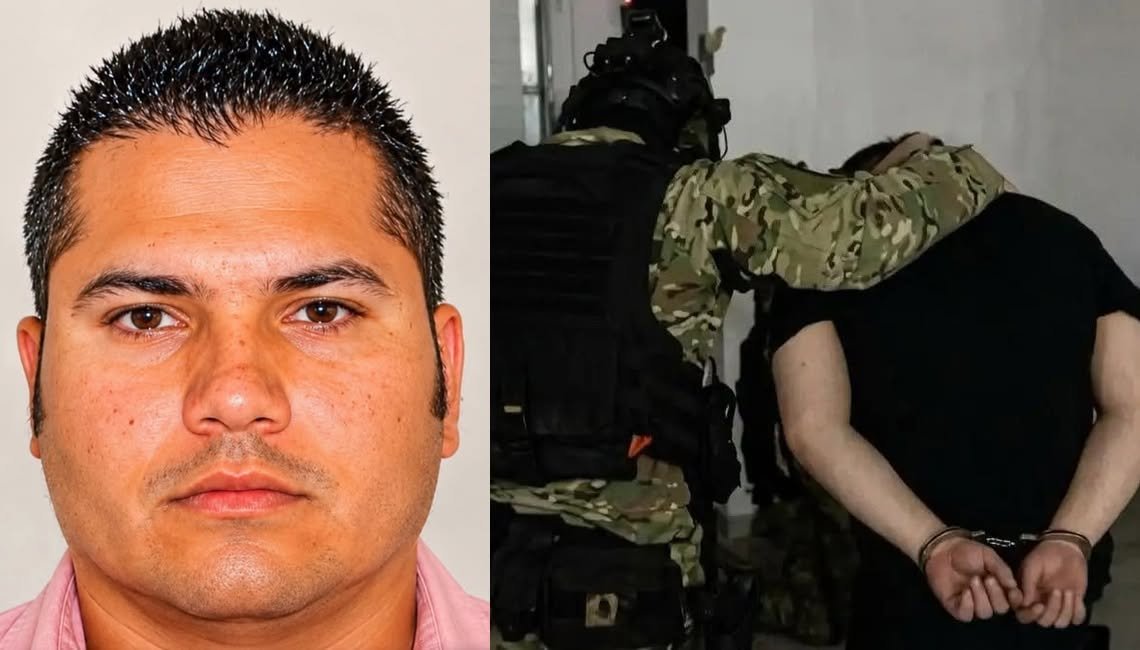
<p>Because stepping outside meant walking into death, supermarket staff locked the doors and provided dinner and shelter to the customers trapped inside. What was raging outside and paralysing the city was no ordinary gang clash. It was a massive operation to arrest 44-year-old Fausto Isidro Meza Flores, known worldwide as "El Chapo Isidro", who was near the top of the US Federal Bureau of Investigation's (FBI) Ten Most Wanted Fugitives list and had a bounty of millions of dollars on his head.</p>
<p>Who is "El Chapo Isidro"? How is he different from the world-famous "El Chapo"?</p>
<p>For many who have heard of the Mexican drug world, the name "Chapo" immediately brings to mind Joaquín "El Chapo" Guzmán, the former leader of the Sinaloa Cartel who is now serving a life sentence in a US maximum-security prison. ("Chapo" means "shorty" in Spanish.)</p>
<p>But Fausto Isidro Meza Flores is not him. In fact, he was neither a founder nor a member of the well-known Sinaloa Cartel, but its main rival, locked in a bloody war with that cartel for decades over power in the same state.</p>
<p>Born on 19 June 1982, Isidro began his criminal life at a very young age. According to the reports of Mexican investigative journalist Jesús Lemus Barajas, by the age of 10 or 11 Isidro was already working as a lookout (halcón, or "hawk") for the Juárez drug network. In Mexican cartel slang, "hawks" are lookouts who stand on street corners watching the movements of the police, the army and rival gangs and pass messages to their bosses. However, there is no official evidence that he turned to this because of poverty.</p>
<p>As an adult he entered the drug trade independently, and later rose to the top leadership of the Beltrán Leyva Organization, another powerful Mexican crime syndicate. After the deadly split between the Sinaloa Cartel and the Beltrán Leyva Organization, Isidro built his own independent drug empire, Meza Flores, centred on his home area of Guasave. The world came to know it as the "Guasave Cartel".</p>
<p>What is a "cartel", and why did Guasave matter?</p>
<p>It is important for Sri Lankan readers to understand that a "drug cartel" is far more complex than an ordinary underworld gang, with a structure similar to a multinational company. A cartel is a huge criminal network that handles drug production, wholesale supply, international transport and money laundering, and even maintains private armies to protect all of it.</p>
<p>The state of Sinaloa, facing Mexico's Pacific coast south of the southern US border, is the heart of the Mexican drug trade. Guasave, in its northern part, is a strategic area made up of fertile farmland and hundreds of villages. Guasave's location is crucial for controlling the main highways that carry drugs to the US border and the secret landing points on the Pacific coast.</p>
<p>The main customer of Isidro's network was the US market. Since 2000, his network has pumped tonnes of cocaine, heroin, cannabis, methamphetamine ("ice") and, more recently, fentanyl, an extremely deadly synthetic drug that has become a massive social disaster within the United States, into America.</p>
<p>A dirty-money network run through three family businesses</p>
<p>The most decisive revelation about how Isidro's criminal empire operated came in a special document issued by the US Treasury Department on 17 January 2013. According to that document, Isidro ran his trade with the direct involvement of seven of his closest relatives, including his wife, mother, father, sister and three of his mother's brothers.</p>
<p>The report also named three legitimate businesses in Guasave as belonging to the Meza Flores network:</p>
<p>1. A grain transport company<br>
2. A fuel station and vehicle service centre<br>
3. A construction company</p>
<p>He is suspected of laundering millions of dollars in drug money through these legitimate businesses to consolidate his power in the local economy.</p>
<p>Mercenaries and training: the dark side of Mexico's cartels</p>
<p>How do Mexican cartels become armed enough to challenge even government forces? Investigations into another of Mexico's most powerful drug networks, the Jalisco New Generation Cartel (CJNG), have revealed horrifying information about this. Those gangs recruit retired army and police officers on high pay and use them to give combat training to new gunmen.</p>
<p>An investigation in 2025 in which a ranch in the state of Jalisco was raided revealed that innocent young people lured with promises of jobs were forcibly given weapons training and recruited into the cartel's armed wing. Although no such specific evidence has been made public about who trained Isidro's gunmen, the strength of their firepower was made very clear by the counter-attacks launched against the Mexican army on the night of 20 November.</p>
<p>The bloody operation of 20 November</p>
<p>It was not as if the Mexican government did not know where Isidro was. Exactly three weeks before the arrest, on 28 October 2026, Mexico's Ministry of Public Security had publicly named Isidro as leader of the Guasave Cartel. In 2023 the US Treasury had also named him as one of the three main leaders of the Beltrán Leyva Organization, and the US State Department had announced a reward of US$5 million to informants for his capture.</p>
<p>As reported by the Mexican newspaper La Jornada, on the night of 20 November the Mexican army and the National Guard surrounded Isidro's house in Guasave, acting on direct information from US intelligence agencies.</p>
<p>Isidro's armed mercenaries launched a fierce attack to prevent their leader from being arrested and taken away. In the intense exchange of fire between the two sides, four members of the Mexican army were killed and seven attackers died. In the end, the security forces managed to arrest eight people along with Isidro, including "Serafín", regarded as his second-in-command, and the head of the network's financial operations.</p>
<p>The unresolved problem: 13 years of silence and the power that remains</p>
<p>With the arrest of El Chapo Isidro, two serious questions remain, not only in Mexico but also for international analysts.</p>
<p>The first is what steps the Mexican authorities took to freeze those assets and businesses during the 13 years between 17 January 2013, when the US specifically named Isidro's family members and his three Guasave businesses, and his arrest on 20 November 2026.</p>
<p>The second is how his network still retains armed power strong enough to block roads across the entire city of Guasave and keep ordinary people trapped inside supermarkets, even after its leader was taken into military custody. The history of Sinaloa shows that when one drug lord falls, another bloody power struggle begins to fill the vacuum. It is still uncertain whether a day will come when the people of Guasave can freely go to a shop and return home.</p>
<p>Translated from the LSN Sinhala edition.</p>