World · India Bureau
Hubble finds dwarf galaxies retain just 11% of stellar oxygen
NASA's Hubble Space Telescope has revealed that dwarf galaxies retain only a fraction of the oxygen produced by their stars, with roughly 89% escaping into space. The finding reshapes scientific understanding of how smaller galaxies lose their material over time.
LSN India ·
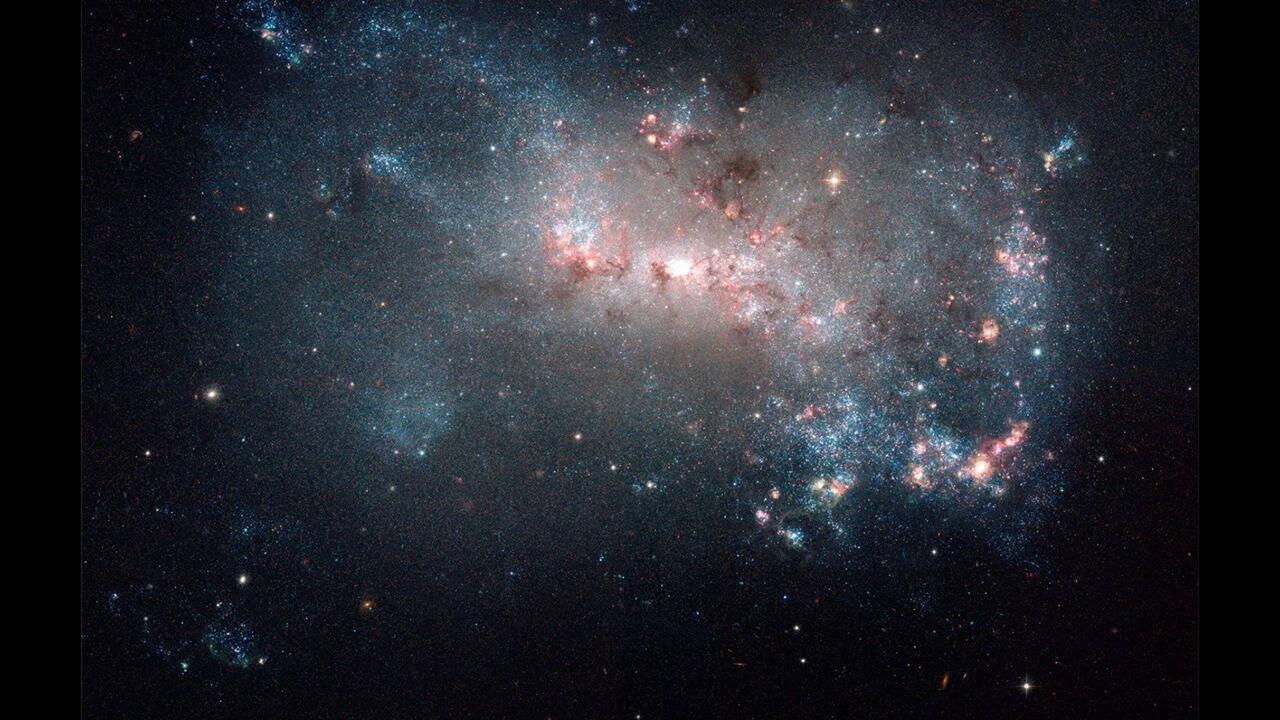
An analysis of dwarf galaxies using NASA's Hubble Space Telescope has uncovered a surprising limitation in their ability to hold onto the chemical elements forged within their stars. Researchers determined that these smaller cosmic structures retain approximately 11% of the oxygen generated by stellar processes, with the vast majority dispersing into the surrounding universe.
The mechanism behind this dramatic material loss appears to be tied to powerful supernova explosions that occur throughout dwarf galaxies. Unlike their larger counterparts, which possess stronger gravitational fields capable of containing stellar ejections, dwarf galaxies lack sufficient mass to anchor the heavy elements scattered by these violent cosmic events. This difference underscores a fundamental distinction in how galaxies of various sizes evolve and retain their contents.
The discovery challenges previous assumptions about the retention capabilities of smaller galactic systems and provides new insights into galactic evolution across the cosmos. Scientists acknowledge that the ultimate fate of the missing oxygen remains an open question, with the ejected material potentially enriching intergalactic space or being captured by neighbouring structures.
Research teams have announced plans for additional investigations to trace the dispersed oxygen and better understand the broader implications for galactic chemical evolution. The findings contribute to ongoing efforts to map how elements cycle through the universe over cosmic timescales.