World · India Bureau
Hunga Tonga eruption altered stratosphere with massive water vapour release
The 2022 underwater volcanic eruption in Tonga injected unprecedented quantities of water vapour into the stratosphere, fundamentally disrupting global atmospheric conditions. The phenomenon is expected to influence weather patterns and radiation levels across the planet for up to two years.
LSN India ·
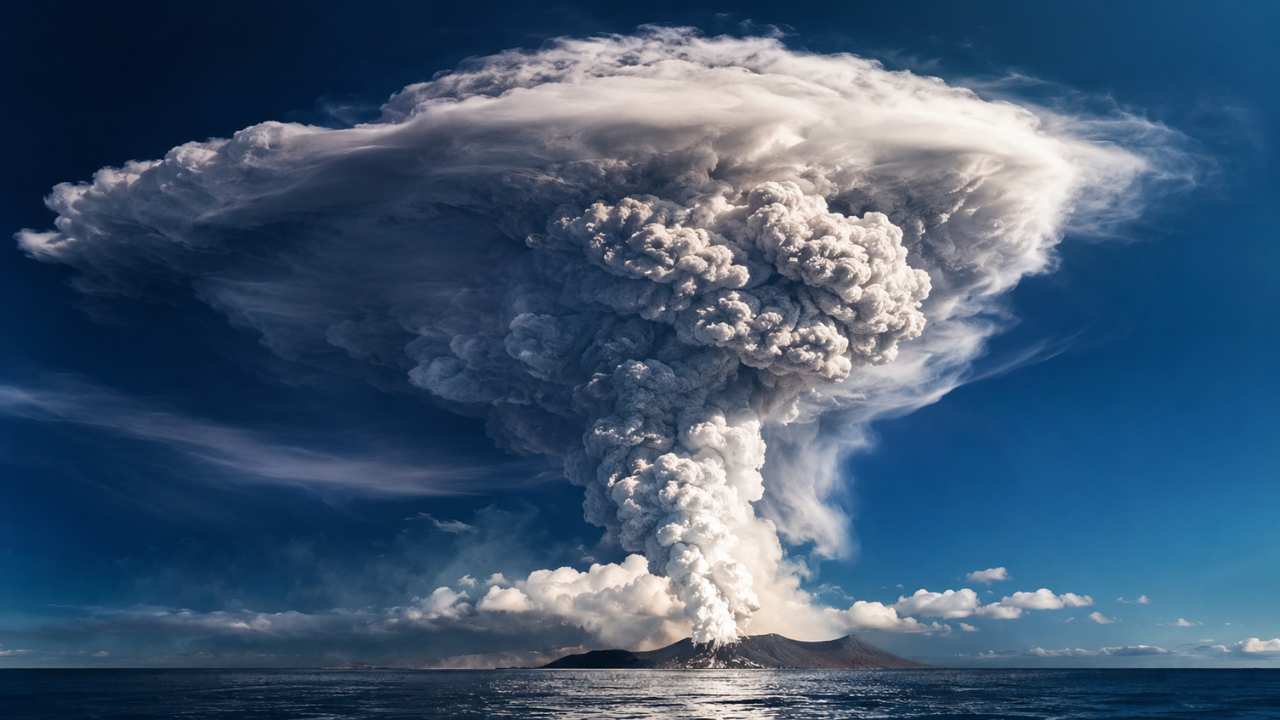
The catastrophic eruption of Hunga Tonga-Hunga Ha'apai volcano sent a colossal plume of water vapour into Earth's stratosphere, marking one of the most significant atmospheric disturbances in recent decades. The eruption's impact has extended far beyond the Pacific region, triggering measurable changes in global atmospheric dynamics and radiation balance.
Scientists tracking the aftermath have identified two competing thermal effects. The initial release of water vapour created a cooling influence on the stratosphere by absorbing and radiating heat. However, this cooling effect was substantially moderated by the presence of sulfate aerosols—microscopic particles that accumulated in the upper atmosphere and reflected incoming solar radiation back into space.
The sulfate aerosols proved instrumental in amplifying the overall cooling mechanism. By blocking sunlight from reaching lower atmospheric layers, these particles created a more pronounced cooling influence than the water vapour alone would have generated. This combined effect has reshaped atmospheric circulation patterns across both hemispheres.
Atmospheric researchers emphasize that the stratospheric changes triggered by Hunga Tonga represent a natural experiment with far-reaching implications for understanding climate systems. The injection of such massive quantities of material into the upper atmosphere has demonstrated the vulnerability of global weather systems to major volcanic disturbances, with consequences expected to persist throughout the current decade.