World · India Bureau
Hybrid Boundary Fencing Gains Popularity Among Indian Landowners
A cost-effective fencing solution combining cement slabs, barbed wire, and iron mesh is becoming increasingly common on vacant plots and agricultural land across India. Known as hybrid boundary fencing, the system offers property owners an affordable alternative to traditional boundary walls.
LSN India ·
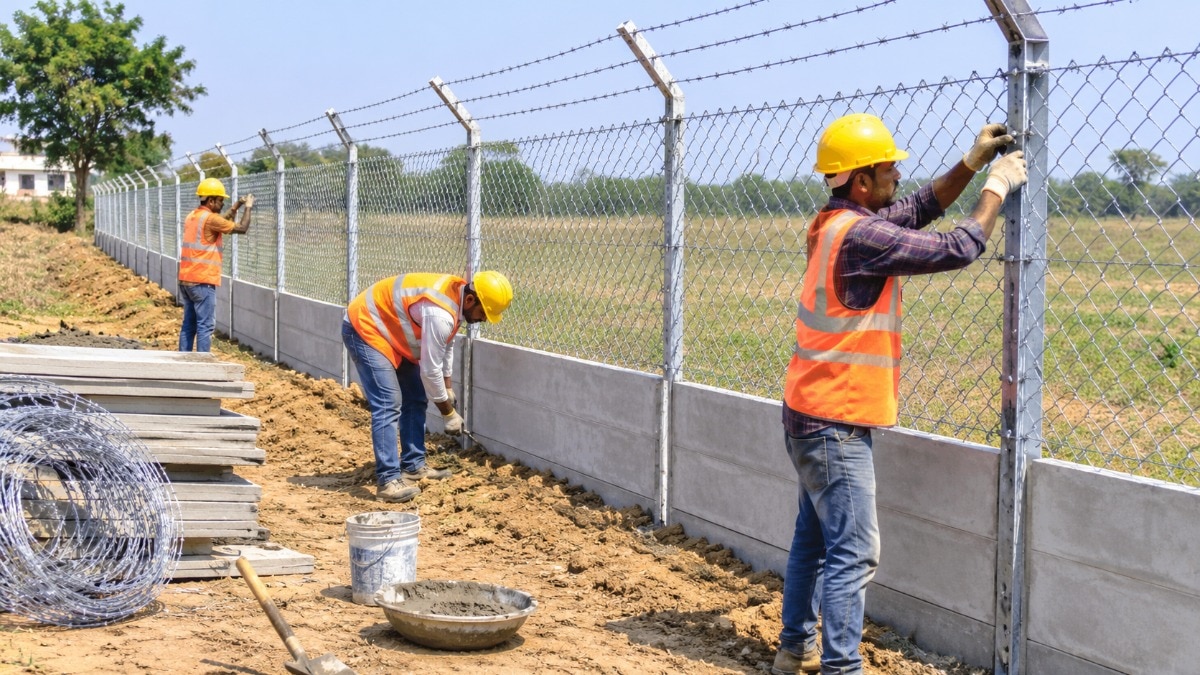
Hybrid boundary fencing, a mixed-material approach to property demarcation, has emerged as a practical solution for landowners seeking to secure vacant plots and agricultural land without incurring substantial expenses. The system typically combines precast cement slabs as a base foundation, topped with barbed wire and iron mesh screening, creating a visible and functional perimeter barrier.
Commonly spotted along highways and on the outskirts of urban areas, this fencing model addresses a key challenge faced by property owners: the need for cost-effective boundary protection. Traditional boundary walls constructed with bricks and mortar require significant capital investment and labor costs, making them prohibitively expensive for large land parcels, particularly in agricultural zones.
The hybrid approach reduces material and construction expenses while providing adequate security and demarcation. The cement slabs establish a sturdy base that prevents unauthorized entry at ground level, while the combination of barbed wire and mesh fencing serves as a visible boundary marker and deterrent to trespassers. The modular nature of the system also allows for easier installation and maintenance compared to conventional masonry walls.
Property owners across rural and semi-urban regions have increasingly adopted this fencing method to protect their investments from encroachment and unauthorized use while managing limited budgets. The solution has proven particularly popular among farmers and real estate developers holding land for future development.