Technology · India Bureau
IIT Guwahati develops brain-inspired AI model for low-power computing
Researchers at Indian Institute of Technology Guwahati have unveiled a novel artificial intelligence framework that mimics biological neural processes to dramatically reduce energy consumption in computing systems. The breakthrough technology combines spiking neural networks with advanced state space modelling techniques.
LSN India ·
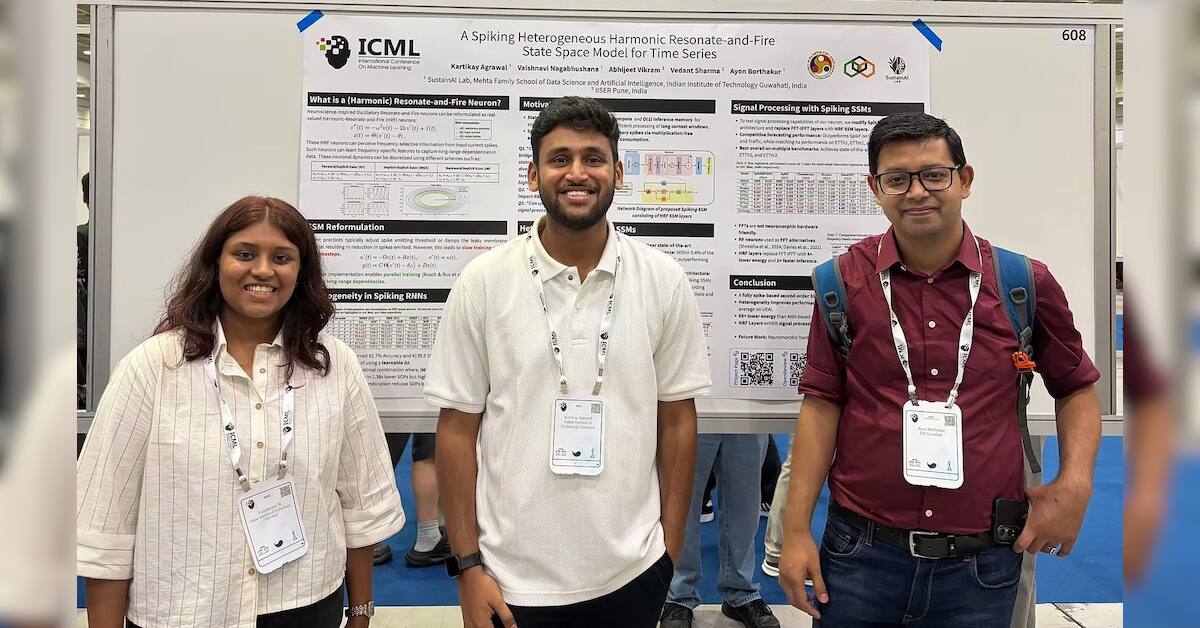
The new model, designated SH²RFSSM, represents a significant advancement in neuromorphic computing—a field focused on designing AI systems that operate similarly to the human brain. By leveraging spiking neural networks, which process information through discrete electrical pulses rather than continuous signals, the system achieves substantially lower power requirements compared to conventional deep learning architectures.
A key innovation of the IIT Guwahati framework is its integration of state space modelling, which enables the system to efficiently handle and process long sequences of data. This capability addresses a critical limitation in many current neural network designs, particularly when dealing with temporal or sequential information that requires understanding of extended contexts.
The research team identified edge AI devices as a primary application domain for their technology. Edge computing systems—which process data locally on devices rather than relying on distant cloud servers—face significant constraints in power availability and computational capacity. The brain-inspired model's efficiency characteristics make it particularly suited for deployment in smartphones, IoT sensors, wearable devices, and autonomous systems operating in remote or resource-limited environments.
The development aligns with India's broader push to establish indigenous capabilities in advanced AI research and neuromorphic computing. As edge AI adoption accelerates across manufacturing, healthcare, and consumer electronics sectors, efficient computing models could provide Indian technology companies with competitive advantages in developing next-generation intelligent applications.