World · India Bureau
India Sets Quantum Key Distribution Record in Free-Space Experiment
India has achieved a significant milestone in quantum communications technology, successfully demonstrating quantum key distribution over 5.56 kilometres in free-space. The achievement, involving collaboration between QNU Labs, BISAG-N, and IIT Gandhinagar, marks an important step toward India's National Quantum Mission objectives.
LSN India ·
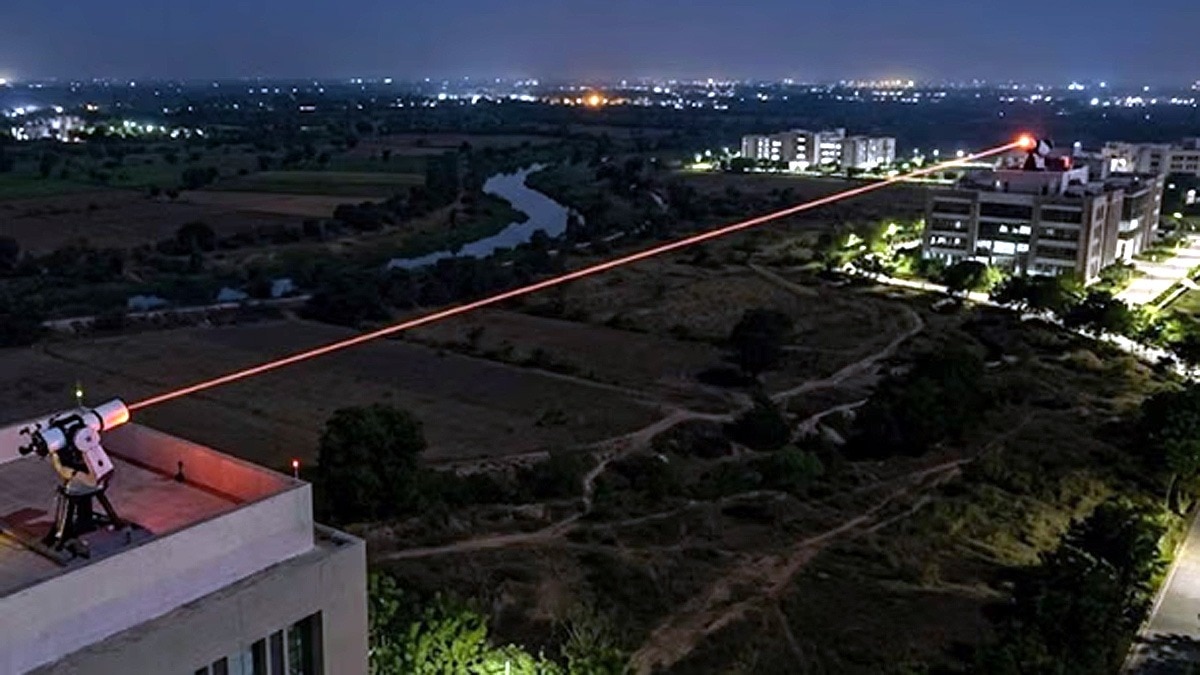
India has established a new record in quantum key distribution technology through a free-space experiment spanning 5.56 kilometres, a development that underscores the nation's growing capabilities in quantum communications infrastructure.
The breakthrough was achieved through a collaborative effort involving QNU Labs, BISAG-N (Bhaskaracharya Institute for Space Applications and Geo-informatics – National), and the Indian Institute of Technology Gandhinagar. The successful demonstration of quantum key distribution in free-space conditions represents a critical advancement for India's emerging quantum technology sector.
Quantum key distribution technology is considered foundational for next-generation secure communications systems. By enabling the distribution of encryption keys through quantum channels, the technology promises theoretically unbreakable security protocols that are increasingly vital as cyber threats evolve globally.
The achievement aligns with India's broader National Quantum Mission, which aims to position the country as a significant player in quantum technologies. Free-space quantum communication systems are particularly valuable for applications including secure government communications and financial transactions, while also laying groundwork for future quantum internet infrastructure.
Industry experts view such domestic demonstrations as essential for developing indigenous quantum technology capabilities and reducing dependence on foreign systems for critical security infrastructure.