Technology · India Bureau
Indian-origin student's AI model discovers 1.5 million celestial objects
Matteo Paz, a high school senior, has developed an artificial intelligence system that identified previously unknown celestial objects in NASA telescope data, earning him top honours at a prestigious science competition.
LSN India ·
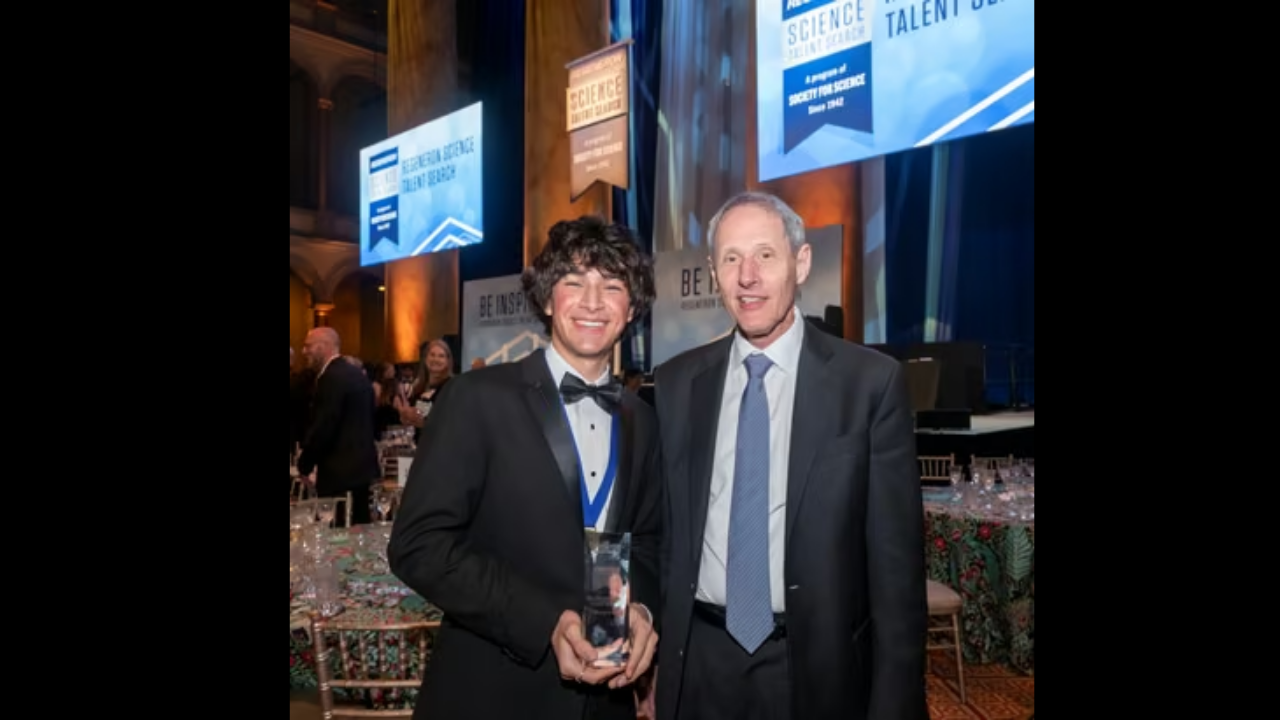
Matteo Paz, a dedicated high school student, has leveraged artificial intelligence to make a significant contribution to astronomical research. The student created VARnet, an AI model designed to analyse vast datasets from NASA's NEOWISE mission, a space telescope that has been surveying the cosmos since 2009.
The system successfully identified approximately 1.5 million celestial objects that had not been previously recorded in scientific databases. This discovery represents a substantial addition to humanity's catalogue of known astronomical phenomena and demonstrates the potential of machine learning in accelerating scientific discovery.
Paz's achievement earned him the top prize at the Regeneron Science Talent Search, one of the United States' most prestigious science competitions for high school students. The recognition underscores the significance of his work within the broader scientific community.
Following his success, Paz is now engaged in collaborative research with Davy Kirkpatrick, an accomplished astronomer at the California Institute of Technology. This partnership is expected to deepen the analysis of the newly discovered objects and potentially uncover further insights into the composition and distribution of celestial bodies in observable space.
The project highlights how computational methods and artificial intelligence are increasingly instrumental in processing the massive volumes of data generated by modern astronomical surveys, enabling researchers to identify patterns and objects that might otherwise remain hidden.