Business · Indonesia Bureau
Indonesia and EU sign trade and investment pacts after a decade of talks, aiming for early-2027 start
Most Indonesian exports, including palm oil, footwear and textiles, would enter the EU duty-free once the CEPA takes effect, while Indonesia would scrap duties on 98.5% of tariff lines for EU goods.
LSN Indonesia ·
<p>Indonesia and the European Union signed their Comprehensive Economic Partnership Agreement (CEPA) and a separate Investment Protection Agreement in Brussels on Saturday (21 November), closing negotiations that began in July 2016.</p>
<p>Indonesia's Trade Ministry said Trade Minister Budi Santoso signed the CEPA with EU trade commissioner Maroš Šefčovič, witnessed by European Commission President Ursula von der Leyen and Coordinating Minister for Economic Affairs Airlangga Hartarto. Antara reported that Airlangga and Šefčovič signed the investment protection agreement. President Prabowo Subianto and von der Leyen spoke by phone on the same day about speeding up the deal's implementation, according to Antara.</p>
<p>According to Indonesian officials, 90.4% of EU tariff lines will fall to zero for Indonesian goods when the agreement takes effect, covering products such as palm oil and its derivatives, rubber, footwear, and textiles and garments. A further 8.37% will be cut gradually over three to 15 years or handled through tariff-rate quotas.</p>
<p>The European Commission said Indonesia will remove import duties on 98.5% of tariff lines for EU goods, saving EU exporters more than €600 million a year, and will open sectors such as electric vehicles, electronics and pharmaceuticals to EU investment. The Commission projects EU exports to Indonesia rising by almost 40% within 15 years and Indonesian exports to the EU by more than 14%, with Indonesia's GDP about €27 billion higher than it would otherwise be. The deal includes a chapter on trade and sustainable development and a dedicated protocol on palm oil.</p>
<p>The agreements still need the consent of the European Parliament and ratification in Indonesia. The Commission said they are likely to be applied provisionally in early 2027, while Airlangga said Jakarta is aiming for January 2027 and that the government would move quickly on ratification.</p>
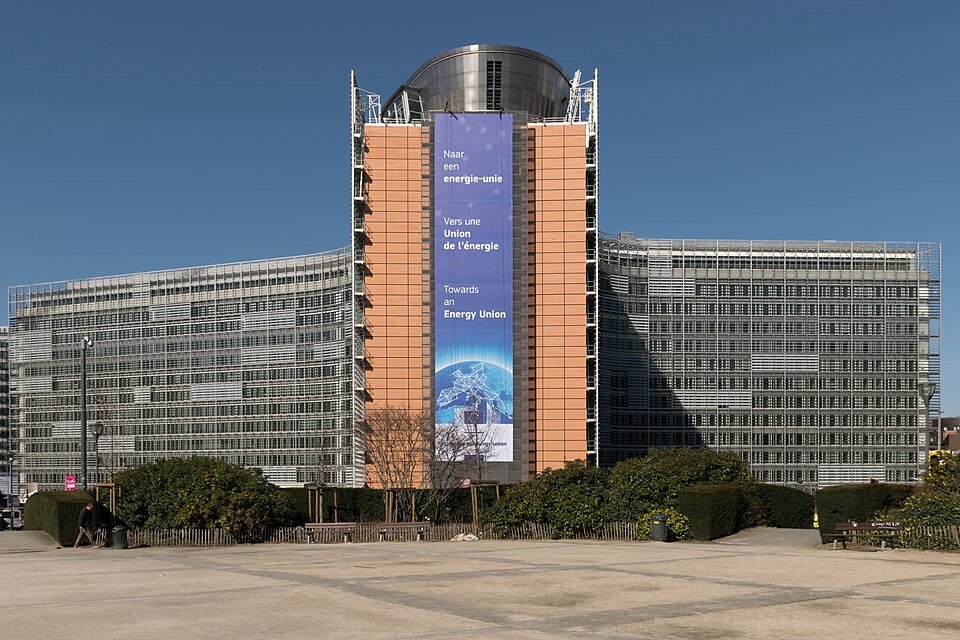
<p>File photo: the Berlaymont building in Brussels, headquarters of the European Commission. Photo: Andersen Pecorone, CC BY 2.0, via Wikimedia Commons.</p>