World · India Bureau
Injured Octopus Grows Two Arms From One, Scientists Study Remarkable Regeneration
An octopus with a severed limb has developed two functional arms in place of one, challenging conventional understanding of the creature's regenerative abilities. The animal has since demonstrated coordinated use of both limbs for hunting and exploration.
LSN India ·
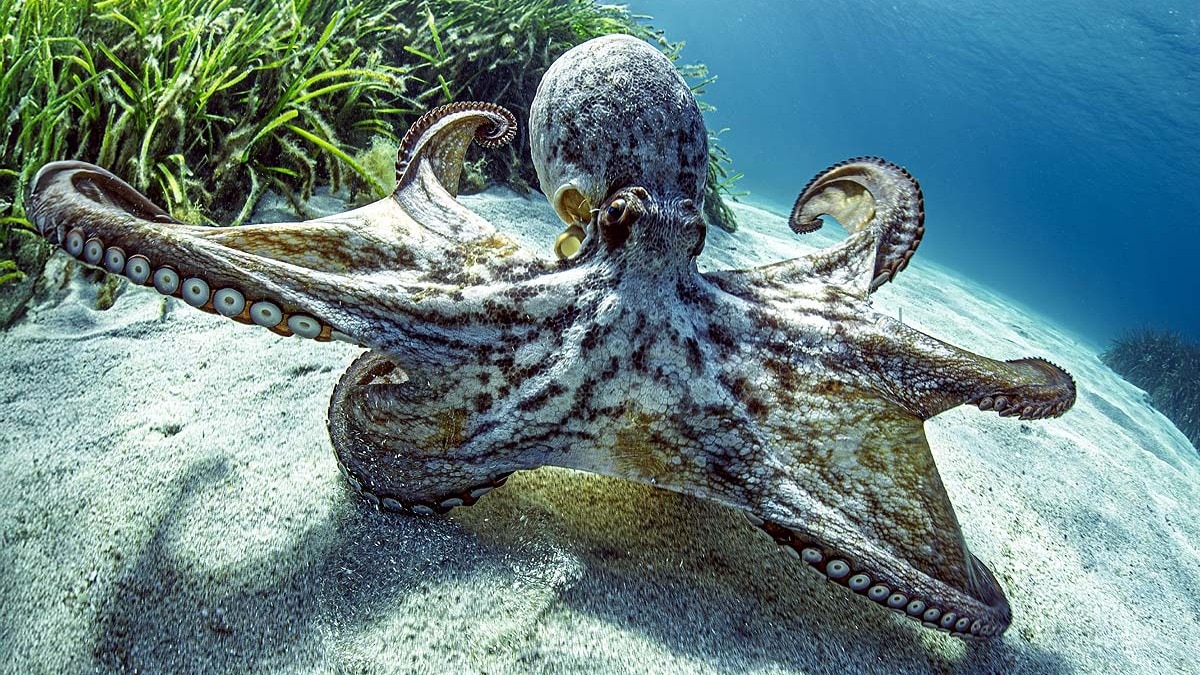
Marine biologists have documented an unusual case of limb regeneration in an octopus, where a single damaged arm bifurcated into two separate, functioning appendages. The phenomenon offers fresh insights into the adaptive capabilities of cephalopods, which possess eight arms distributed across their bodies in typical specimens.
Following the injury, the octopus did not simply regrow a single replacement limb. Instead, the healing process resulted in the formation of two distinct arms where one had been lost. Over time, the creature adapted to its modified anatomy with remarkable efficiency.
Observers have noted that the octopus successfully employs both regenerated arms for essential survival activities, including capturing prey and tactile exploration of its environment. This adaptation demonstrates the species' neurological flexibility, particularly given that each of an octopus's arms possesses semi-autonomous control systems, with a substantial portion of its nervous system distributed throughout its limbs rather than centralized in its brain.
The case raises compelling questions about the nature of octopus consciousness and limb autonomy. Scientists continue to study whether each arm functions as a semi-independent decision-maker, and how the creature's central nervous system coordinates control when limb regeneration produces anatomically unexpected configurations.
Such observations contribute to the growing body of research highlighting the extraordinary resilience and adaptive mechanisms of cephalopods, organisms increasingly recognized for their complex neural organization and problem-solving capabilities.