World · India Bureau
Invasive aquatic weed threatens Florida's water systems in four decades
Hydrilla, an aggressive invasive plant species, has colonised approximately 70 per cent of Florida's watersheds over the past 40 years, raising concerns about ecosystem damage and water management challenges across the American state.
LSN India ·
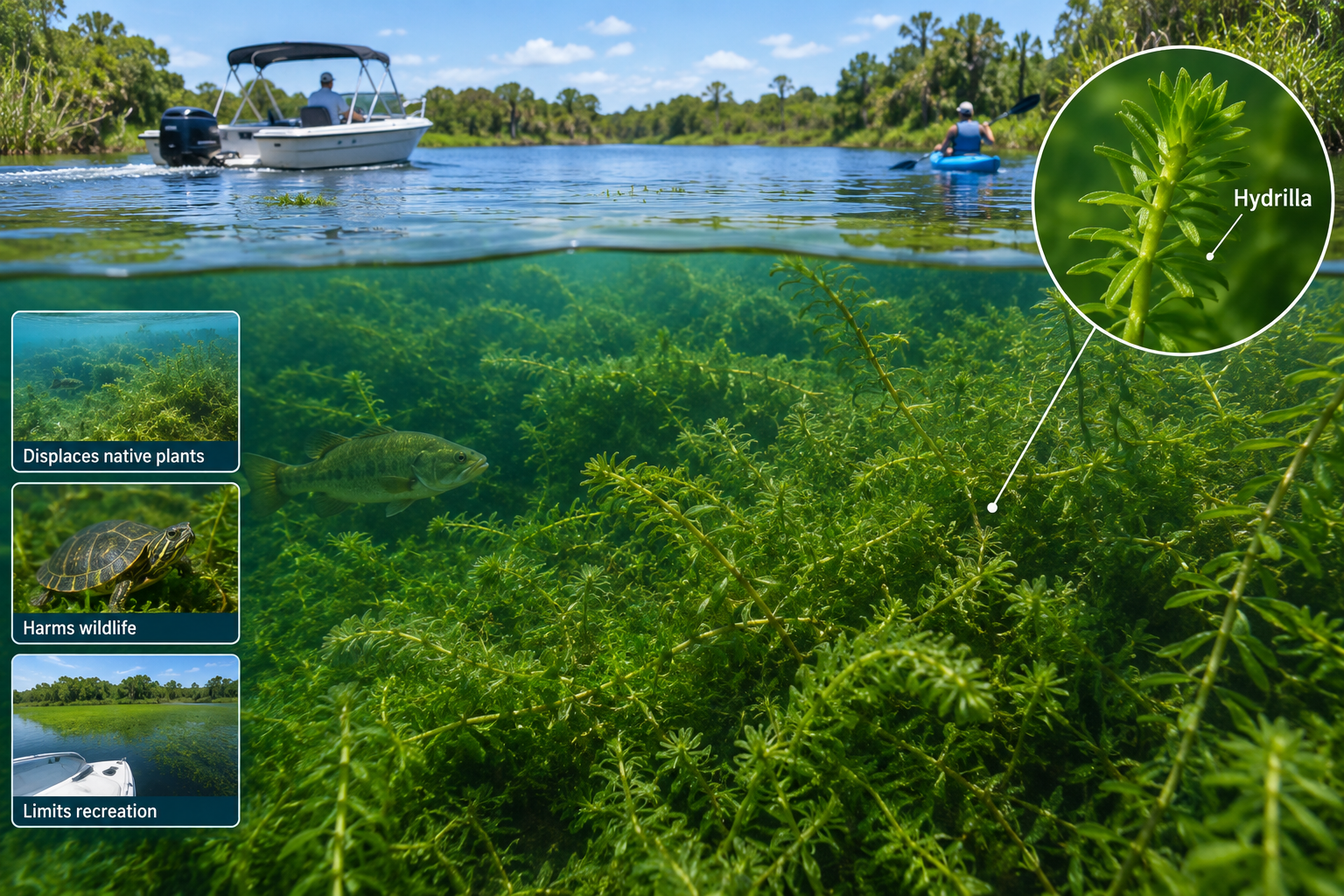
The rapid spread of hydrilla verticillata, a submerged aquatic plant native to Asia, has become one of Florida's most significant environmental challenges. The invasive species, which thrives in freshwater environments, has expanded from isolated patches to dominate vast stretches of the state's waterways, disrupting native ecosystems and complicating water resource management.
Water management authorities have documented the plant's presence across multiple major watershed systems, where it forms dense mats that obstruct waterways, reduce oxygen levels, and prevent sunlight from reaching native aquatic vegetation. The rapid colonisation has forced state officials to intensify control efforts, deploying mechanical removal techniques, herbicide treatments, and biological management strategies to contain its spread.
The hydrilla invasion carries significant economic implications for Florida, affecting recreation, agriculture, and municipal water supplies. Tourism-dependent activities such as boating and fishing face obstacles from dense plant growth, while water treatment facilities must invest additional resources to manage contamination risks and maintain water quality standards.
Environmental scientists attribute the species' success to its ability to propagate rapidly through fragmentation and its resilience in various water conditions. Efforts to prevent further expansion now focus on early detection systems and public awareness campaigns to reduce the accidental transportation of plant fragments between waterways, a primary vector for its continued spread across the state.