World · India Bureau
Invasive pythons reshape Florida wetlands, trigger unexpected ecological shifts
The rapid expansion of Burmese pythons in the Everglades has fundamentally altered the region's ecosystem, decimating native wildlife populations and triggering cascading environmental changes including shifts in mosquito populations.
LSN India ·
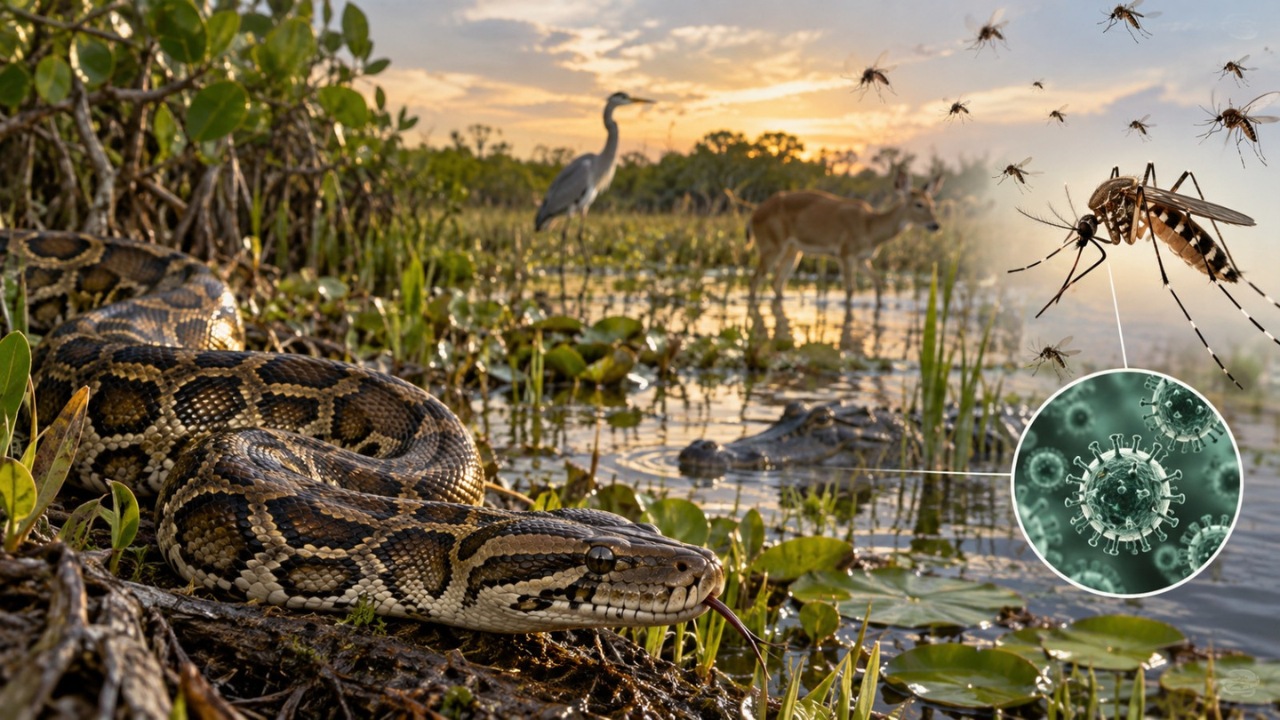
Burmese pythons, which established themselves as an invasive species in Florida's Everglades over the past two decades, have become a dominant predator reshaping the wetland ecosystem with far-reaching consequences. The snakes have decimated populations of native mammals and birds, creating a ecological vacuum that has prompted unexpected secondary changes throughout the region's food web.
Ecologists tracking the pythons' impact have documented severe declines in raccoon, opossum, and rabbit populations—species that traditionally served as important prey for native predators and natural controllers of smaller animal populations. The removal of these mid-sized mammals from the ecosystem has had ripple effects throughout the region's biodiversity.
In a particularly unexpected development, researchers have identified significant shifts in mosquito populations as a consequence of the python invasion. With native predators declining due to increased python predation, the balance of species that feed on mosquito larvae and adult insects has been disrupted, allowing mosquito populations to expand in certain areas of the Everglades.
The situation underscores how invasive species can trigger complex ecological transformations that extend far beyond their direct predation, affecting disease vectors and public health considerations. Scientists continue to monitor the evolving situation as managers grapple with controlling the python population through various removal and research initiatives.