World · India Bureau
Italy's Sunken Marble Sculptures Evolve Into Artificial Reef Ecosystems
A new study reveals that underwater marble sculptures off Italy's coast are unexpectedly fostering marine biodiversity by functioning as artificial reef habitats. The finding highlights an unintended ecological benefit of submerged artistic installations.
LSN India ·
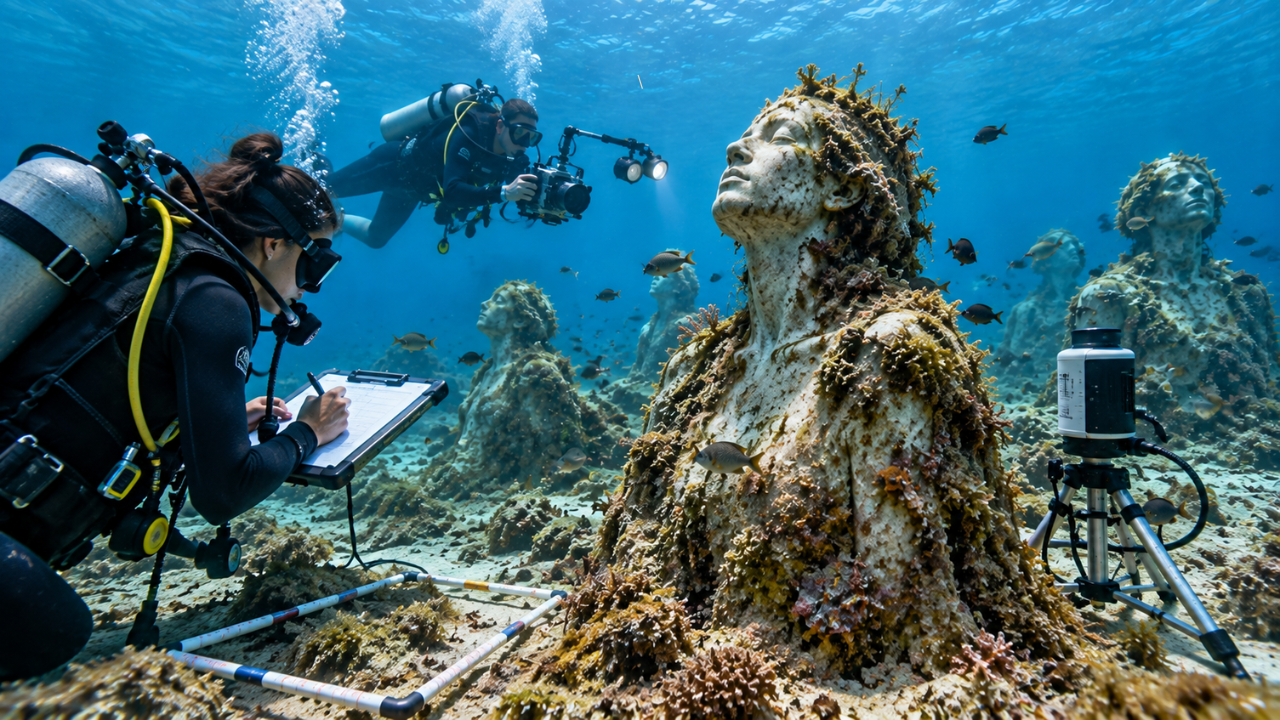
Researchers studying marble sculptures deliberately placed on the seabed off the Italian coast have discovered that these artistic installations are creating thriving micro-ecosystems for marine organisms. Rather than remaining inert monuments, the marble structures are accumulating algae, corals, and other marine life that typically colonize hard surfaces underwater, according to the study.
The sculptures, submerged as part of underwater art installations, provide a substrate similar to natural rocky reefs where sessile organisms can attach and establish communities. Over time, the marble surfaces have attracted fish and invertebrates seeking shelter and food sources, effectively transforming the artworks into functioning artificial reef habitats.
This unexpected ecological role demonstrates how human-made structures in marine environments can inadvertently support biodiversity when conditions are favourable. The study suggests that sunken artwork may contribute positively to local marine ecosystems, adding a conservation dimension to underwater artistic endeavours.
Marine scientists note that understanding how submerged structures interact with ocean life remains important as coastal development and artistic installations continue. The Italian findings could inform discussions about minimising negative impacts and potentially maximising ecological benefits of future underwater projects. The research underscores the complex ways human interventions in marine environments can produce unintended ecological consequences.