World · World News Bureau
Japan launches ambitious mission to collect samples from Mars moon
Japan's space agency is embarking on an unprecedented journey to Phobos, one of Mars's two moons, in a bid to gather crucial scientific data about the Red Planet's origins. The Martian Moons eXploration mission represents a significant step forward in understanding planetary formation and the potential for future human exploration.
LSN World News ·
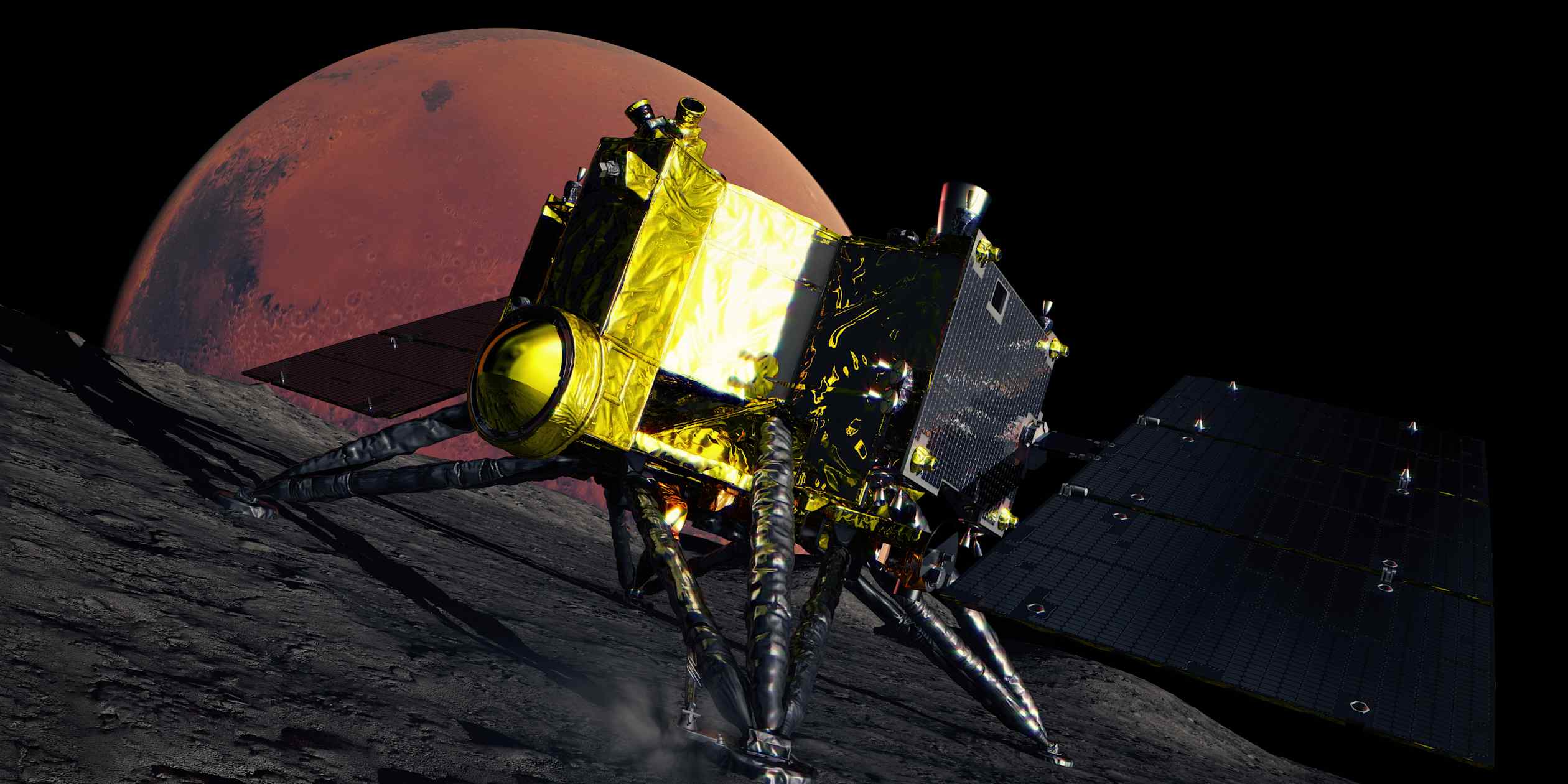
The Japan Aerospace Exploration Agency's Martian Moons eXploration, or MMX, mission marks the first Japanese effort to venture beyond Earth's orbit to another planet's satellite system. Scheduled for launch in the coming years, the spacecraft will travel to Phobos, Mars's larger and inner moon, to conduct detailed observations and collect samples for return to Earth. This ambitious undertaking reflects Japan's growing role in deep-space exploration and scientific research.
Phobos, roughly 22 kilometers across, orbits Mars at a distance of just 9,000 kilometers from the planet's surface, making it an ideal target for sample collection missions. Scientists believe the moon may contain material ejected from Mars following asteroid impacts, potentially offering valuable insights into the Martian geology and atmosphere. Understanding Phobos's composition could also shed light on the early formation of the solar system and the processes that shaped terrestrial planets.
The MMX spacecraft will employ cutting-edge technology to navigate the challenging environment near Mars and safely land on Phobos's surface. Once there, it will conduct comprehensive geological surveys, take high-resolution images, and collect rock and soil samples. The collected material will be sealed in a return capsule designed to safely transport the samples back to Earth, where researchers can conduct detailed laboratory analysis.
This mission also serves as a technological proving ground for future human exploration of Mars and its moons. By demonstrating the capability to reach, study, and sample a Martian satellite, Japan contributes essential knowledge that international space agencies can leverage for more ambitious ventures. The data gathered could inform decisions about establishing research outposts or conducting crewed expeditions to the region in the decades to come.