Technology · India Bureau
Japan's floating solar farm redesigned after typhoon damage
Japan's largest floating solar installation suffered extensive damage during Typhoon Faxai in 2019, with dozens of panels catching fire after anchor systems failed. The incident prompted a comprehensive redesign to strengthen the facility against extreme weather events.
LSN India ·
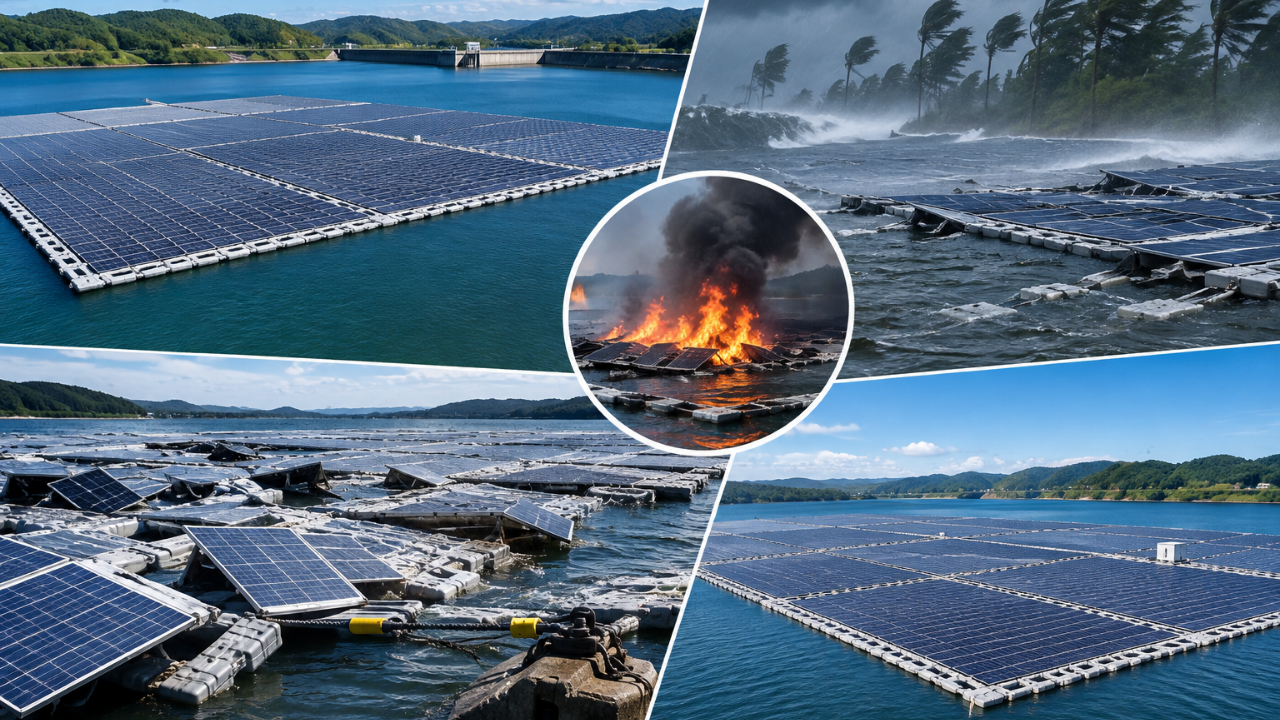
Japan's largest floating solar farm experienced significant damage during Typhoon Faxai in 2019, when severe weather conditions caused structural failures that left the installation heavily compromised. Investigators determined that anchor system failures were the primary cause of the damage, allowing solar modules to break loose during the storm. The incident resulted in approximately 50 solar panels catching fire, underscoring the vulnerability of floating solar infrastructure to extreme weather conditions.
The typhoon exposed critical engineering weaknesses in the original floating solar design, prompting operators to undertake a complete restructuring of the facility. Engineers implemented a new approach using smaller, more resilient floating modules designed to better withstand powerful storm systems. The modifications prioritized enhanced stability and storm resistance across all components of the installation.
The reconstruction of Japan's floating solar farm has established important benchmarks for the global solar energy industry. The redesigned facility now serves as a reference point for improving the weather resilience of floating solar technology. As renewable energy projects increasingly adopt floating installations in coastal and inland water bodies across Asia, lessons learned from the Japanese facility's experience are informing engineering standards and safety protocols for similar developments.