Culture & Entertainment · India Bureau
Kazi Nazrul Islam's Durga Puja songs echo Bengal's secular heritage
The revolutionary poet's Agomoni compositions remain central to autumn festivities across Bengal, blending devotional fervor with messages of social reform and communal harmony that reflect the region's pluralistic traditions.
LSN India ·
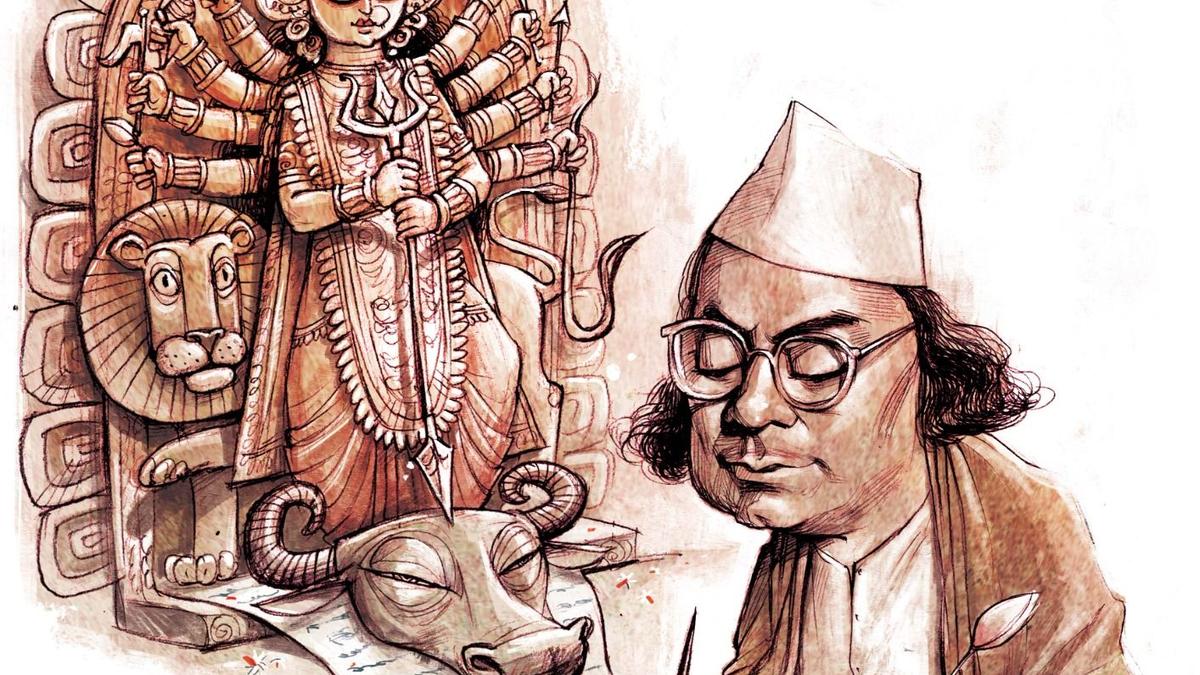
Kazi Nazrul Islam, one of Bengal's most celebrated literary figures, left an indelible mark on the region's cultural landscape through his vast body of work known as Nazrulgeeti. Among his most enduring contributions are the Agomoni songs—devotional compositions that welcome the goddess Durga during the annual autumn festival. Yet these pieces represent far more than religious observance; they encapsulate the poet's vision of a progressive, inclusive society.
The Agomoni genre, traditionally sung as part of Durga Puja preparations, takes on deeper significance through Nazrul's interpretations. While maintaining the devotional framework essential to the festival, his compositions weave in powerful social commentary and cultural messages. The songs celebrate spiritual reverence while simultaneously advocating for social justice, women's empowerment, and communal solidarity—themes that defined much of the rebel poet's revolutionary output.
Nazrul's approach to the Durga Puja tradition exemplifies Bengal's long-standing commitment to religious pluralism and cultural synthesis. His work demonstrates how devotional expression need not remain confined to purely spiritual dimensions but can serve as a vehicle for articulating broader societal aspirations. The Agomoni songs continue to resonate during Puja season, performed in homes and pandals across Bengal and beyond.
Despite his monumental contributions to Bengali literature and music, Nazrul's legacy remains underappreciated in contemporary discourse. His Durga Puja compositions, however, persist as living testimony to his artistic vision, reminding each generation of the inextricable link between cultural tradition and social progress. Through these autumn songs, the poet's voice continues to echo across Bengal's pluralistic cultural terrain.