World · India Bureau
Kenya's tree cover declines as mega-fauna returns after two decades
A Kenyan wildlife sanctuary has experienced a significant reduction in savanna tree cover following the reintroduction of elephants and giraffes after an 18-year absence. The return of these large herbivores is reshaping the landscape's ecological balance.
LSN India ·
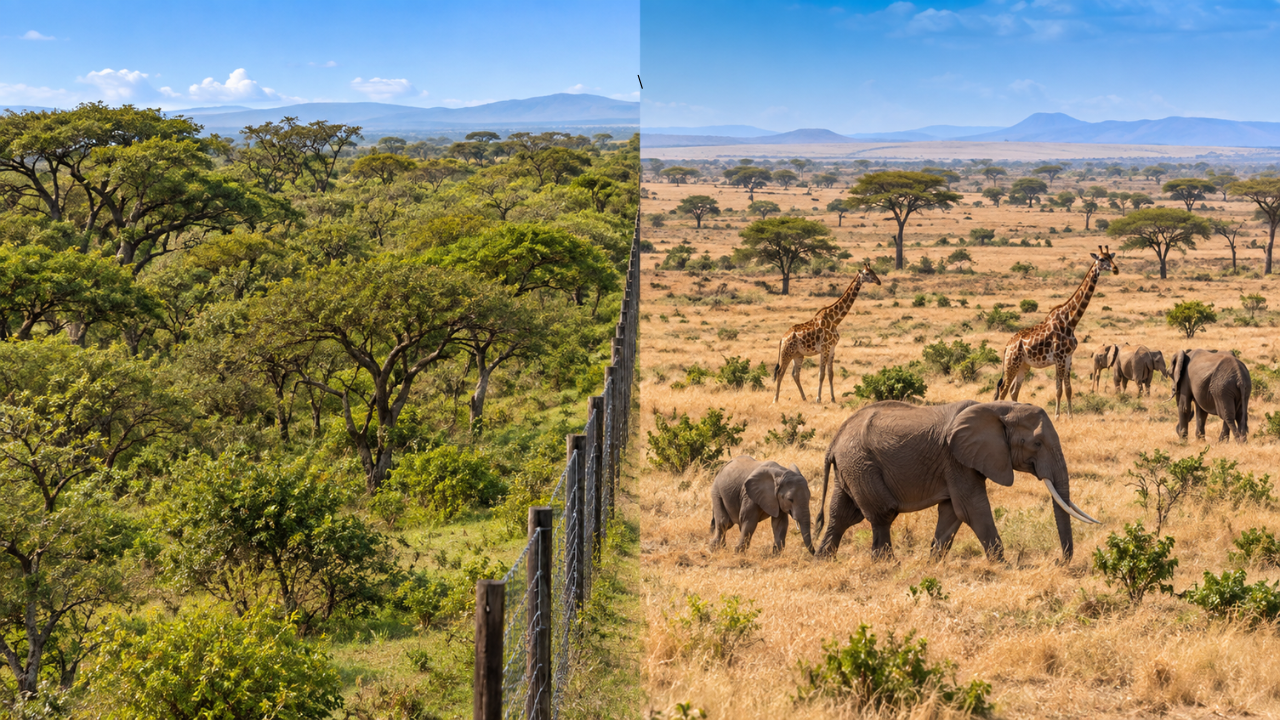
A wildlife conservation area in Kenya has documented notable changes to its vegetation patterns after elephants and giraffes were reintroduced to the ecosystem following nearly two decades of exclusion. The large herbivores, which had been absent from the region since the early 2000s, have resumed their natural foraging patterns across the savanna landscape.
Scientists monitoring the sanctuary have observed a measurable decline in tree cover since the return of these megafauna. The elephants and giraffes, which feed extensively on acacia trees and other woody vegetation, have resumed their historical browsing patterns that significantly impact the savanna's plant composition.
The phenomenon demonstrates the complex relationships within African ecosystems, where large herbivores play a crucial role in shaping vegetation structure. While the reduced tree cover represents a dramatic ecological shift, wildlife managers are assessing whether this represents a return to natural historical conditions or requires management intervention.
Conservationists note that the changes provide valuable data on how megafauna influence habitat composition. The reintroduction project, while successful in restoring animal populations, has revealed the substantial ecological footprint these species exert on their environment, prompting ongoing research into balancing conservation goals with landscape management.