World · India Bureau
LA's Deep Aquifers Lag Far Behind in Water Recovery
While record storms in 2023 replenished Los Angeles's shallow groundwater and reservoirs, deeper aquifers beneath fifty metres recovered only a quarter of their lost water reserves. The disparity underscores how surface-level water gains mask persistent underground depletion.
LSN India ·
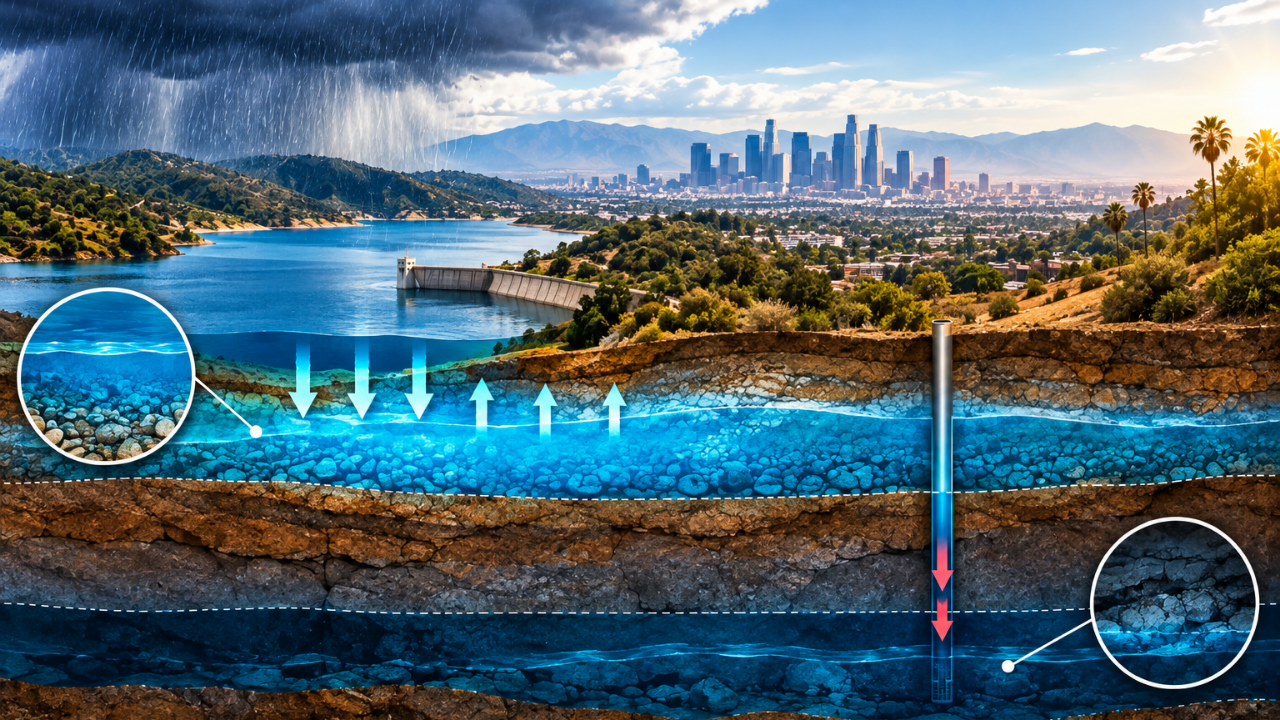
LOS ANGELES — Los Angeles experienced significant hydrological gains in 2023 as record-breaking storms bolstered both surface reservoirs and shallow groundwater levels across the region. However, the recovery masked a troubling reality for the city's deeper aquifers, which showed only marginal improvement despite the wet season's intensity.
Deep aquifer systems lying beneath fifty metres—critical reserves that supply substantial portions of the city's water demand—recovered only twenty-five percent of groundwater lost during preceding drought years. This stark contrast to the recovery seen in shallow aquifers and surface water bodies reveals a fundamental vulnerability in Los Angeles's water management infrastructure.
Hydrogeologists attribute the disparity to decades of prolonged drought conditions combined with intensive water extraction from deep underground reserves. Shallow groundwater systems, being closer to surface recharge zones, benefit more readily from seasonal precipitation. Deep aquifers, by contrast, depend on slower natural filtration processes that take considerably longer to restore depleted stocks.
The findings highlight a critical challenge facing water managers in drought-prone regions: surface-level improvements in water availability do not necessarily translate to long-term sustainability of deeper aquifer systems. Experts suggest that addressing the deficit in deep groundwater recovery will require sustained wet periods or intervention through managed recharge programmes to ensure adequate supplies for future demand.