World · India Bureau
Lab-bred sea stars released to revive US kelp forests
Twenty laboratory-raised sunflower sea stars have been released into Washington's Salish Sea as part of a conservation effort to restore kelp forest ecosystems decimated by disease. The initiative marks a significant step in species recovery and ecological restoration.
LSN India ·
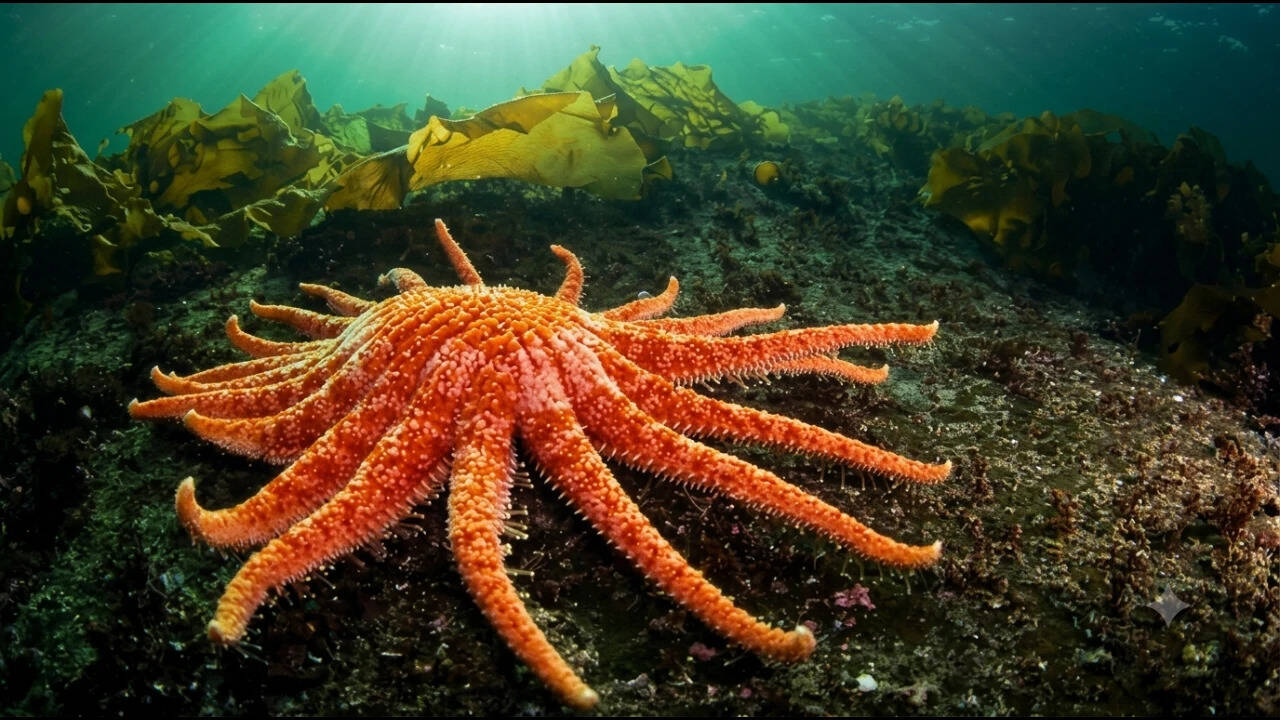
A collaborative conservation project has released twenty sunflower sea stars bred in laboratory conditions into the Salish Sea near Washington state, signalling renewed efforts to restore one of the region's most degraded marine ecosystems. The species, which plays a critical role in maintaining healthy kelp forests, has been devastated by a wasting disease that swept through coastal populations in recent years.
The initiative represents a partnership between regional authorities, the Samish Indian Nation, and marine research institutions working to reverse ecological damage in the Salish Sea. Kelp forests provide essential habitat for numerous fish species and marine organisms, supporting the broader health of the marine environment. The sunflower sea star, as a key predator and ecosystem regulator, is fundamental to maintaining the balance of these underwater habitats.
The release of captive-bred specimens addresses the near-collapse of wild populations caused by sea star wasting syndrome, a disease that triggered mass die-offs beginning in 2013. Laboratory breeding programmes have enabled researchers to produce disease-resistant or healthy individuals capable of thriving in natural conditions. This approach circumvents the challenges of relying solely on wild populations for restoration.
The project underscores growing recognition among conservation experts that species recovery often requires coordinated, multi-faceted approaches combining research, indigenous knowledge, and habitat restoration. As the released sea stars establish themselves in the Salish Sea, researchers will monitor their survival rates and ecological impact to assess the programme's long-term effectiveness in revitalizing the region's kelp forest ecosystems.