World · India Bureau
Los Angeles deployed 96 million plastic balls to combat water loss
The Los Angeles water authority experimented with millions of floating shade balls to reduce evaporation from its reservoir, though the initiative came with environmental trade-offs. The plastic spheres served dual purposes but required years to offset their own water consumption costs.
LSN India ·
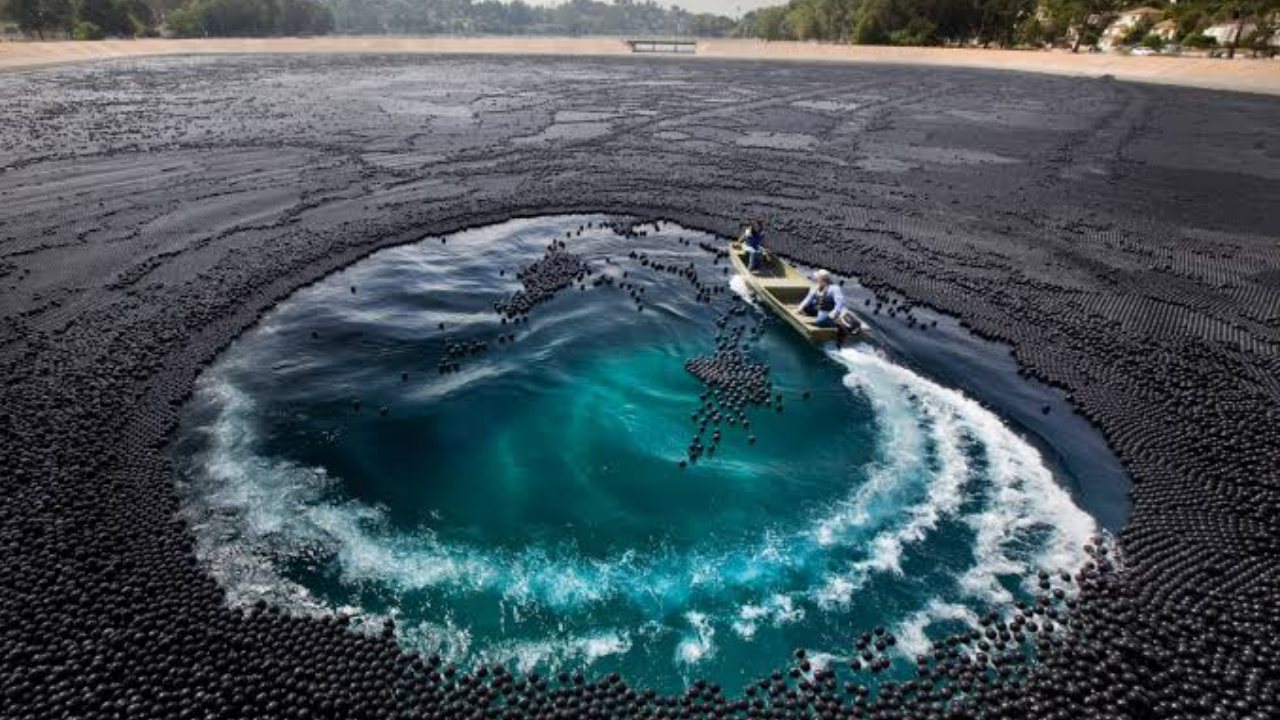
Los Angeles turned to an unconventional strategy in its battle against drought by deploying approximately 96 million small plastic balls across its water reservoir. The shade balls, designed to float on the water's surface, were intended to address the significant problem of evaporation that depletes freshwater supplies in the arid region.
Beyond reducing water loss to the atmosphere, the floating barriers provided secondary benefits for water quality. The balls shielded the reservoir from direct sunlight, preventing dangerous chemical reactions that can occur when chlorine and other organic compounds interact under ultraviolet radiation. This protection of drinking water supplies from contamination represented an important public health advantage.
However, the initiative highlighted an environmental paradox. The manufacture of nearly 100 million plastic balls required substantial quantities of water, creating an initial water deficit that took approximately two and a half years for the system to offset through evaporation prevention. Environmental analysts have noted that while the shade ball project demonstrated innovation in water conservation, it also underscored the complexities of attempting technological solutions to drought management without considering broader resource implications.
The experiment reflected growing concerns across water-stressed regions about finding sustainable approaches to water scarcity amid climate pressures and population demands.