Technology · India Bureau
Machine Learning Unlocks Secrets of 45 Million Years of Bird Evolution
Researchers have employed artificial intelligence to analyse thousands of bird skeletons spanning tens of millions of years, revealing new insights into avian evolutionary patterns. The comprehensive study examined 15,000 skeletal specimens to trace how birds adapted and diversified over deep time.
LSN India ·
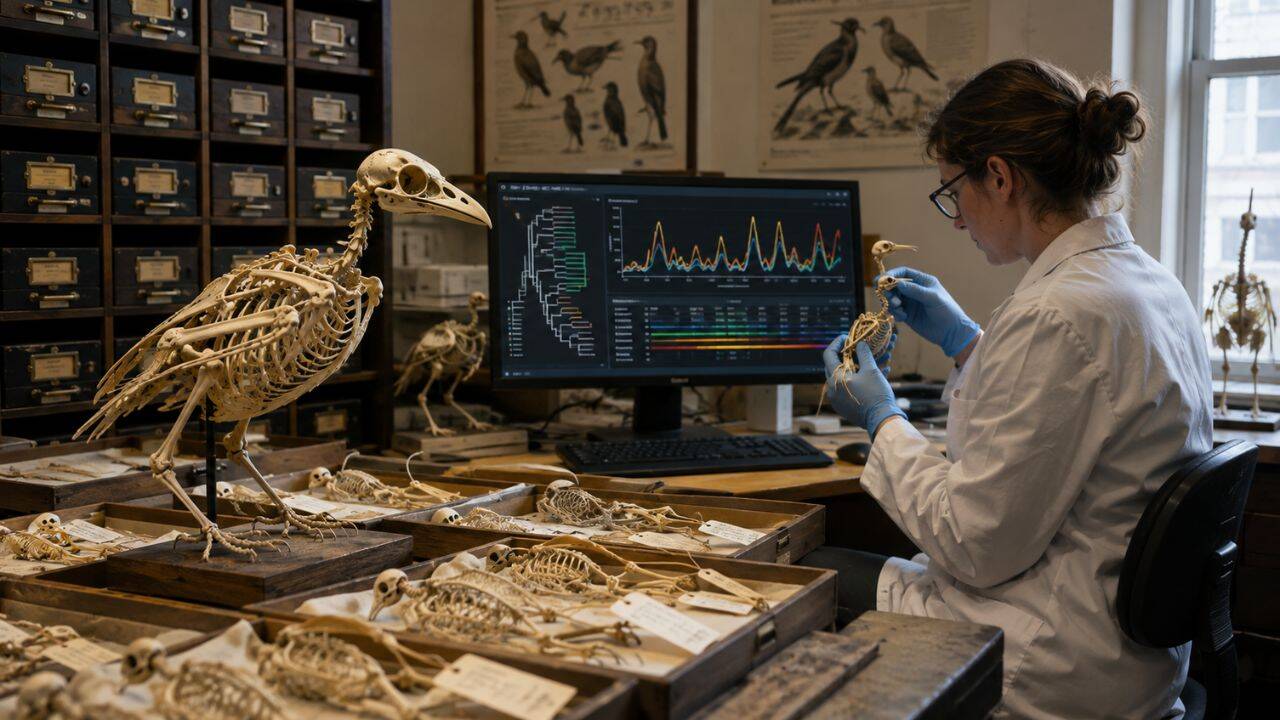
Scientists have leveraged artificial intelligence technology to conduct an unprecedented analysis of avian skeletal structure across 45 million years of evolutionary history. The study examined 15,000 bird skeletons housed in museum collections worldwide, using machine learning algorithms to identify patterns and relationships that would be difficult to discern through traditional comparative anatomy methods.
The AI-driven approach allowed researchers to process vast amounts of morphological data simultaneously, comparing skeletal characteristics across different species and time periods. By analysing bone structure, size, and shape variations, the algorithms were able to track how bird populations responded to environmental changes and adaptive pressures over millions of years.
This methodology represents a significant advancement in paleontological research, demonstrating how computational tools can accelerate the pace of discovery in evolutionary biology. The findings provide new understanding of the major transitions in bird anatomy and suggest potential mechanisms driving diversification within avian lineages during key periods in Earth's history.
The research highlights the growing intersection of artificial intelligence and natural science research, where machine learning can process complex anatomical datasets with greater speed and consistency than traditional manual analysis. Such approaches are expected to become increasingly valuable as museums continue digitising their collections and making specimen data more accessible to the global scientific community.