World · Sri Lanka Bureau
Miss Universe 2026 in Puerto Rico: the bitter ownership feud splitting the pageant
As 116 contestants, including Sri Lanka's Nimhara Sasindi, compete in San Juan, a war between the pageant's co-owners has kept six Southeast Asian countries away and clouded the brand's future.
LSN Sri Lanka ·
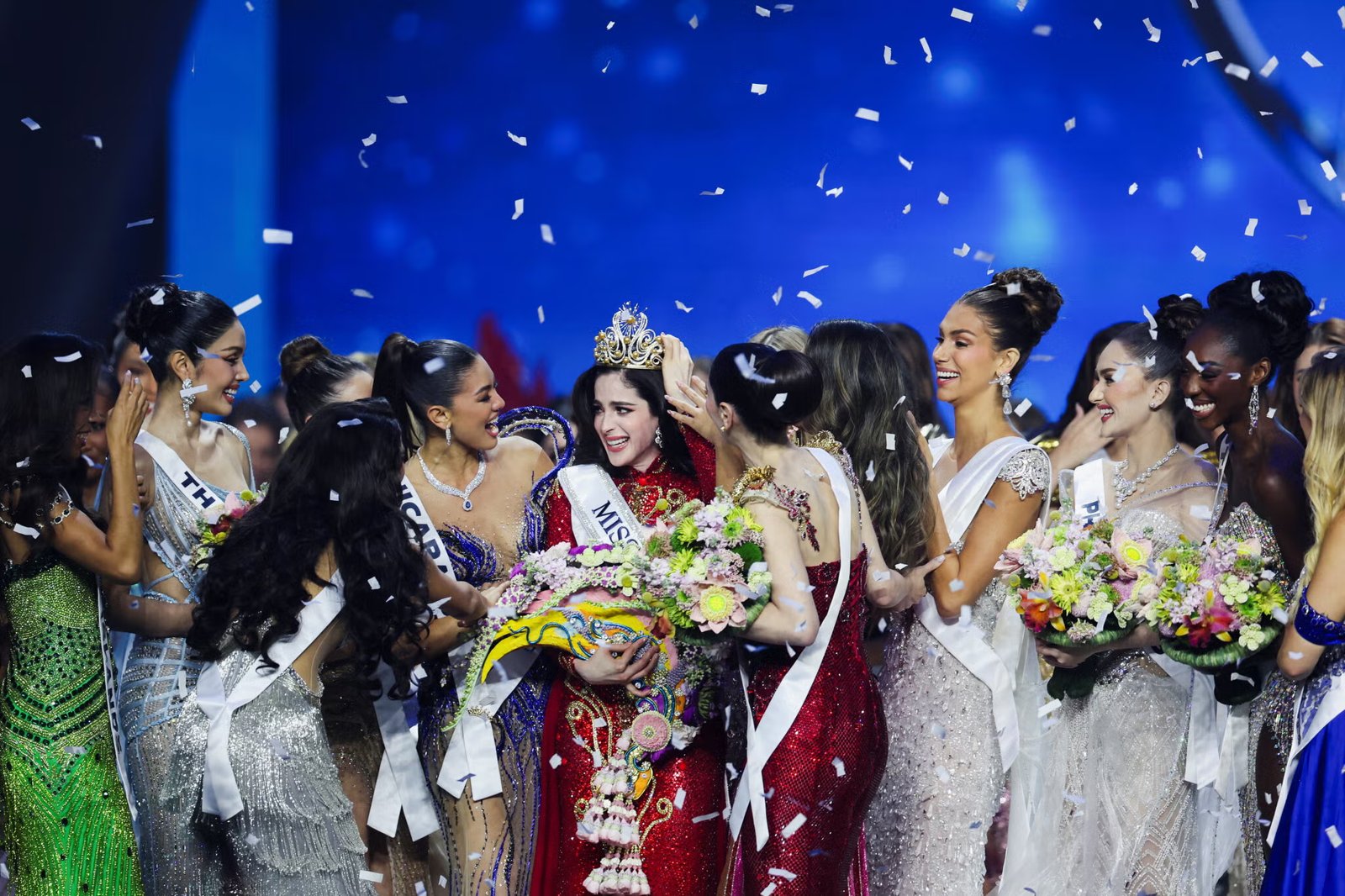
<p>Miss Universe is one of the world's biggest and oldest beauty pageants, with young women from more than 100 countries competing for the crown each year.</p>
<p>This year's contest, the 75th edition, is being held in San Juan, Puerto Rico, a US territory. The grand final is scheduled for today, 24 November 2026, with about 116 contestants taking part. Sri Lanka is represented by 25-year-old Nimhara Sasindi, an actress, model and social media content creator.</p>
<p>Sri Lanka is hopeful about its contestant. But a New York Times report shows that the issues drawing global attention to this year's pageant are far more complicated.</p>
<p>According to leading international media, the event is overshadowed less by excitement than by a fierce and public dispute between its owners, one that many describe as a "civil war" inside the organisation.</p>
<p>How the ownership split</p>
<p>In 2022, Thai businesswoman Jakkaphong "Anne" Jakrajutatip, a well-known transgender entrepreneur and activist in Thailand, bought the Miss Universe Organization through her company, JKN Global Group.</p>
<p>In early 2024 she sold 50 per cent of the company to Mexican businessman Raúl Rocha Cantú, through his company Legacy Holding. Since then the organisation has been split into two equal camps: "MU West", controlled by Rocha, and "MU East", linked to Anne and her company.</p>
<p>The two sides have been in open conflict ever since. They disagree over who holds real power, which contracts are valid and how the pageant should be run, and both have issued statements accusing each other.</p>
<p>Serious legal trouble on both sides</p>
<p>Court cases against both principal owners have deepened the conflict.</p>
<p>Raúl Rocha Cantú faces serious accusations in Mexico, where authorities have issued arrest warrants against him on allegations of organised crime, money laundering and illegal fuel-related activities. He denies the charges, but Mexican authorities recently moved to freeze some of his bank accounts.</p>
<p>Anne Jakrajutatip has also faced a series of legal problems in Thailand. She has been found guilty in a fraud case linked to a corporate bond investment of about 30 million baht, and is regarded as a fugitive because she did not appear in court. Her company, JKN, has also run into financial difficulties and has been placed under court supervision.</p>
<p>With both owners facing such problems, many are questioning the credibility and future of the Miss Universe brand.</p>
<p>Ban on Southeast Asian countries</p>
<p>One of the biggest consequences of the feud is that six Southeast Asian countries are not taking part this year: Thailand, Indonesia, Vietnam, Malaysia, Singapore and Laos.</p>
<p>These countries traditionally perform strongly in pageants. Their national contests were organised through Nawat Itsaragrisil, a powerful Thai organiser who also runs the Miss Grand International pageant and who works closely with the eastern (Thai) side in the Miss Universe ownership dispute.</p>
<p>In September 2026, the Miss Universe Organization, now largely controlled by Mexican co-owner Raúl Rocha Cantú, announced that the licence agreements for these six countries were "not legitimate" because Nawat Itsaragrisil was involved, and declared their contestants ineligible to compete in Puerto Rico.</p>
<p>Nawat and his camp rejected this, saying the agreements were valid and the contestants had the right to take part. His side later announced formally that, given the circumstances, the six countries would not travel to Puerto Rico, describing the move not as giving up their rights but as a step to protect the contestants from the dispute.</p>
<p>As a result, this year's pageant has lost half of Southeast Asia.</p>
<p>Puerto Rico's role and the money dispute</p>
<p>The Puerto Rican government has invested public money in hosting the pageant, reported to be about US$8.7 million, with the aim of promoting tourism and raising the island's international profile.</p>
<p>Nawat Itsaragrisil publicly questioned how this money was being handled. Raising doubts about the contracts and payments, he asked Puerto Rican officials to investigate.</p>
<p>In response, the Puerto Rico Tourism Company sent him a cease-and-desist letter, saying he was spreading false and misleading information about public funds and contract procedures.</p>
<p>Meanwhile, Puerto Rican lawmakers have asked the island's authorities to produce reports on the spending. While the local government wants the event to succeed, the conflict inside the pageant has brought added pressure and criticism.</p>
<p>Other problems adding to the chaos</p>
<p>Several other problems have surfaced alongside the ownership fight.</p>
<p>Contestants from several African countries, including Congo and Zambia, were unable to attend because they could not obtain visas. As a US territory, Puerto Rico applies US visa rules, which cost some countries their representation.</p>
<p>Videos also spread on social media of several contestants in high heels stumbling at a pre-pageant swimwear showcase called "Beauty on the Beach", where carpets had been laid unevenly on the sand. The main Miss Universe Organization said straight away that it had not organised the event, and the local organiser apologised.</p>
<p>Last year's (2025) pageant was also marked by major controversy. There were allegations of vote-counting fraud in favour of the winner, Miss Mexico Fátima Bosch, and several judges resigned.</p>
<p>A group of contestants walked out after an argument involving Nawat Itsaragrisil.</p>
<p>Miss Jamaica, who was seriously injured after falling through an opening in the stage, is still recovering and has filed a lawsuit against the organisation.</p>
<p>A documentary titled "Crown of Deceit", recalling many of these problems, was also recently broadcast on television.</p>
<p>What it means</p>
<p>To ordinary viewers, the pageant appears to be carrying on as usual, with the national costume show, the preliminary rounds and today's grand final. Last year's winner, Fátima Bosch, will crown her successor, and tickets for the final sold out very quickly.</p>
<p>Behind the glamour, however, the organisation is deeply divided. Its two co-owners are locked in a feud, and both face legal problems in their home countries.</p>
<p>Several major countries are absent, and repeated controversies have damaged public trust. The organisation behind it all looks highly unstable.</p>
<p>The grand final will still decide who wins the crown, and a new Miss Universe will be crowned today one way or another. The bigger question is whether the Miss Universe Organization can survive its own owners' war.</p>
<p>Based on reporting by The New York Times.</p>
<p>Translated from the LSN Sinhala edition. Image: The New York Times.</p>