World · India Bureau
Moon reaches farthest point from Earth this Friday
The Moon will be at its maximum distance from Earth on Friday, positioned approximately 403,945 kilometres away. The lunar apogee will result in weakened tidal activity and a noticeably smaller appearance of Earth's satellite.
LSN India ·
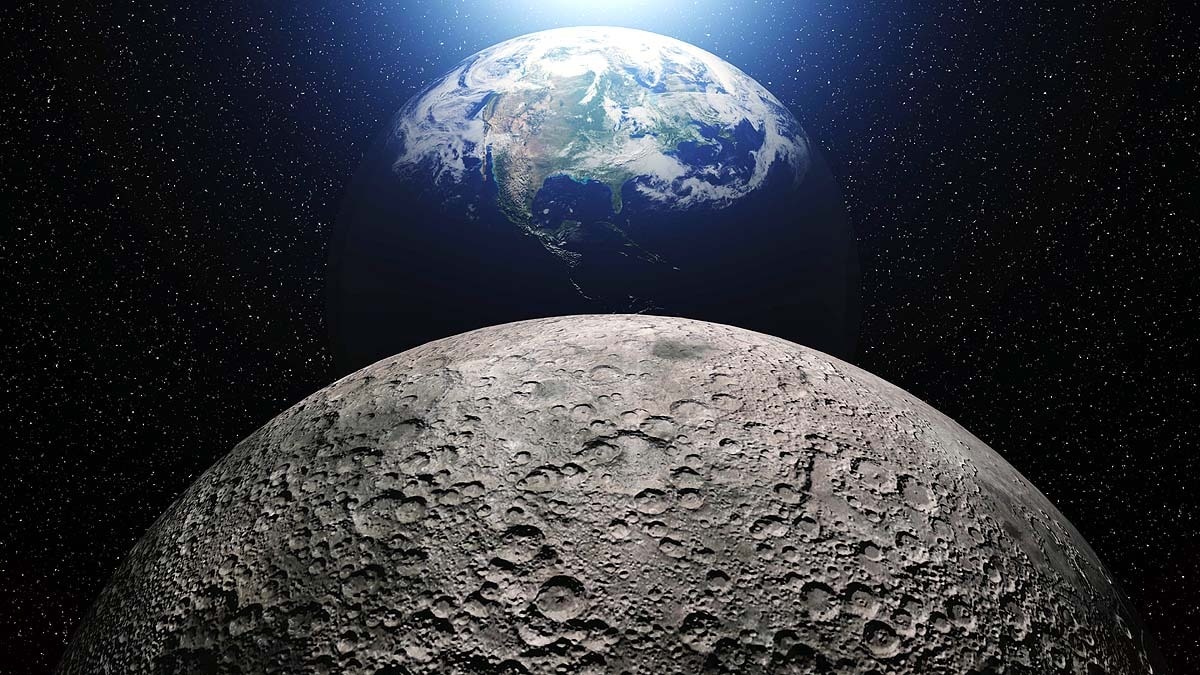
The Moon will reach apogee—its farthest point in its elliptical orbit around Earth—this Friday, placing it at a distance of roughly 403,945 kilometres. At this point in its lunar cycle, the natural satellite will appear diminished in size to observers on Earth's surface.
The increased distance is expected to produce measurably weaker tidal forces on Earth's oceans. Tidal movements, which are primarily governed by gravitational interaction between the Moon and Earth's water bodies, will be noticeably subdued during this period compared to times when the Moon is closer to the planet.
Astronomers note that the Moon's varying distance from Earth—oscillating between perigee, its closest approach, and apogee, its farthest point—has gradual long-term consequences for terrestrial systems. Should the Moon to permanently recede from its current orbital trajectory, tidal ranges would diminish significantly over geological timescales. Such changes could theoretically result in extended daylight hours, as the Moon's gravitational influence contributes to Earth's rotational dynamics.
The Moon's elliptical orbit is a well-established astronomical phenomenon, with the celestial body reaching apogee approximately once every lunar month as part of its regular orbital cycle.