Business · Myanmar Bureau
Myanmar's kyat slides past 5,400 to the dollar as government plans to borrow over 2 trillion kyats from central bank
The currency's market rate weakened sharply this week, local media report, as traders point to central bank financing of the budget deficit, new import licences and a looser remittance rate. Food prices have climbed steeply.
LSN Myanmar ·
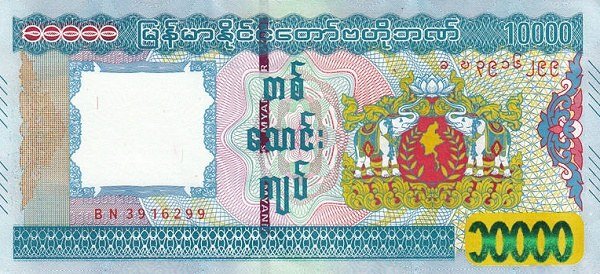
<p>Myanmar's kyat fell past 5,400 to the US dollar on the market on Thursday, 26 November, according to The Irrawaddy, extending a slide that began last month. Business outlets AD Shofar and Myanmar Japon reported rates of about 5,420 and in the 5,500 range respectively.</p>
<p>The Irrawaddy and the Independent Mon News Agency (IMNA) both reported that the military-backed government plans to borrow more than 2.1 trillion kyats from the Central Bank of Myanmar to cover its budget deficit for the 2026-27 fiscal year. According to IMNA, a report submitted to parliament shows the central bank has also asked for an additional 50.564 billion kyats to cover the cost of printing banknotes in the same fiscal year. The central bank has not said how many notes it has printed in recent years.</p>
<p>Traders quoted by The Irrawaddy also blamed new import licences, which have raised demand for dollars, planned salary increases for civil servants next fiscal year, and the government's decision to relax the fixed rate for overseas workers' remittances from 3,600 to 4,600 kyats to the dollar, which the market read as a sign of weakness.</p>
<p>Exporters told The Irrawaddy that although they are allowed to exchange 85 percent of their export earnings at market rates, banks often cannot supply them, while the remaining 15 percent must be converted at the fixed rate of 2,100 kyats. Some say they are cutting overseas shipments, and importers say the unstable rate makes it hard to price goods.</p>
<p>Households are feeling the squeeze. IMNA reported that a bag of basic-grade rice that cost about 80,000 kyats in early 2026 now sells for more than 120,000 kyats, and palm oil has risen from about 9,000 to more than 15,000 kyats per viss. Economist U Sein Htay told IMNA the central bank may have to print more money because it does not have enough cash to lend the government what it has asked for.</p>
<p>The government has not publicly commented on the latest fall in the market rate.</p>