World · World News Bureau
NASA launches $4.3 billion Roman Space Telescope on dark universe mission
A SpaceX Falcon Heavy rocket has successfully deployed NASA's Nancy Grace Roman Space Telescope, marking a major step in the agency's effort to unlock mysteries of dark energy and dark matter. The $4.3 billion observatory is expected to revolutionize understanding of the cosmos.
LSN World News ·
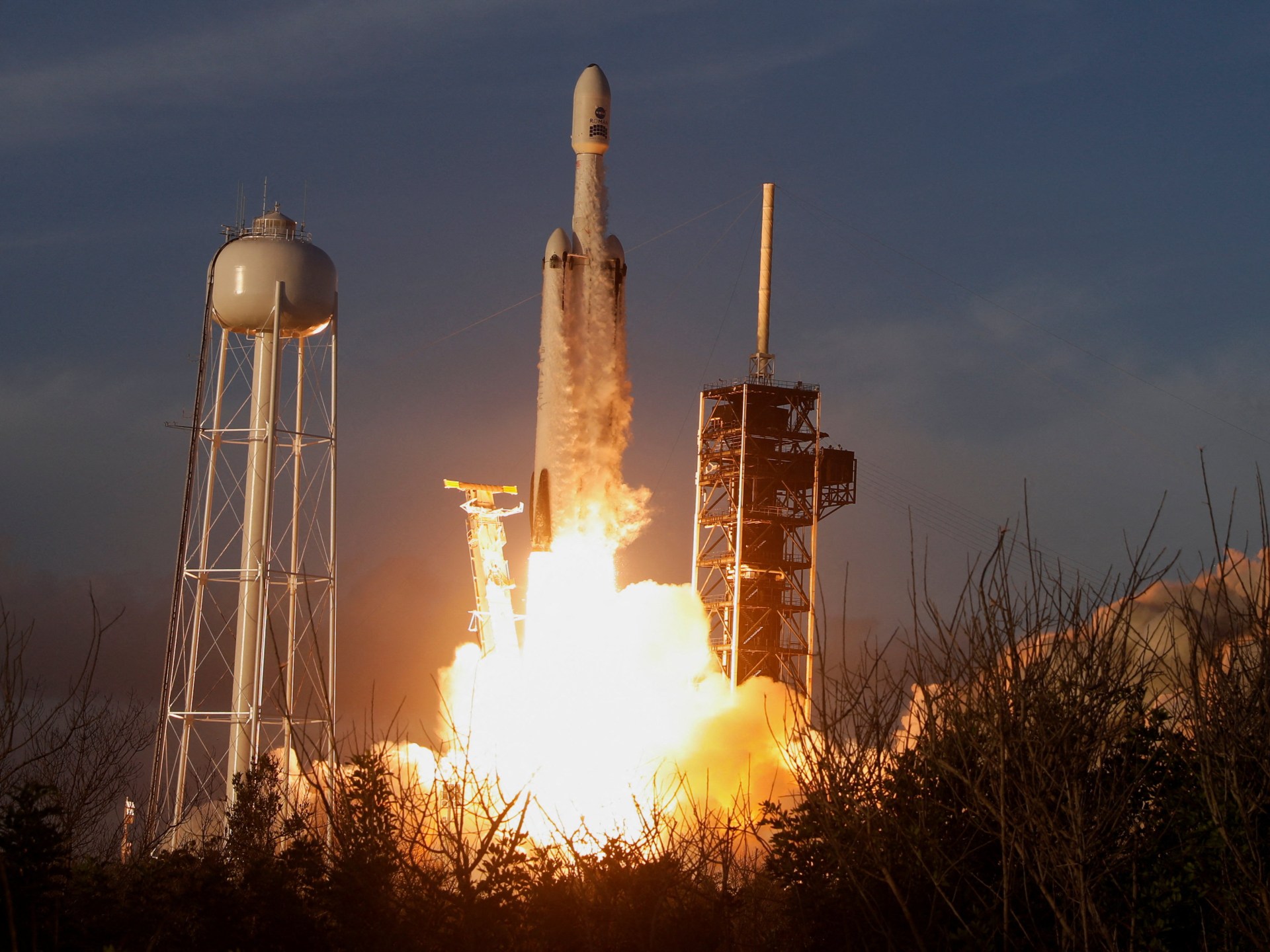
The Nancy Grace Roman Space Telescope lifted off aboard a SpaceX Falcon Heavy rocket, beginning its journey to a vantage point nearly one million miles from Earth. Once positioned at the Sun-Earth Lagrange Point 2, the infrared observatory will conduct observations designed to probe fundamental questions about the universe's composition and expansion.
NASA's ambitious mission centers on investigating dark energy and dark matter, which together comprise approximately 95 percent of the universe yet remain poorly understood. The Roman telescope's advanced imaging capabilities will enable astronomers to measure the expansion history of the cosmos with unprecedented precision, potentially providing insights into the nature of these mysterious components.
The space agency has described the mission as transformative for multiple fields of astronomical research. Beyond dark energy studies, Roman will conduct surveys of exoplanets, perform detailed observations of distant galaxies, and contribute to broader efforts to map the universe's structure and evolution.
The launch represents a significant investment in space science infrastructure and reflects growing international collaboration in astronomical research. The telescope is named after Nancy Grace Roman, a pioneering astronomer who played a crucial role in developing the Hubble Space Telescope concept during her tenure at NASA.