World · India Bureau
NASA's 1962 water experiment probed life support for space exploration
Decades before plans for lunar and Martian habitats, NASA conducted atmospheric research that contributed to understanding how humans could sustain themselves beyond Earth. The agency's early investigations into biological systems would inform decades of space exploration strategy.
LSN India ·
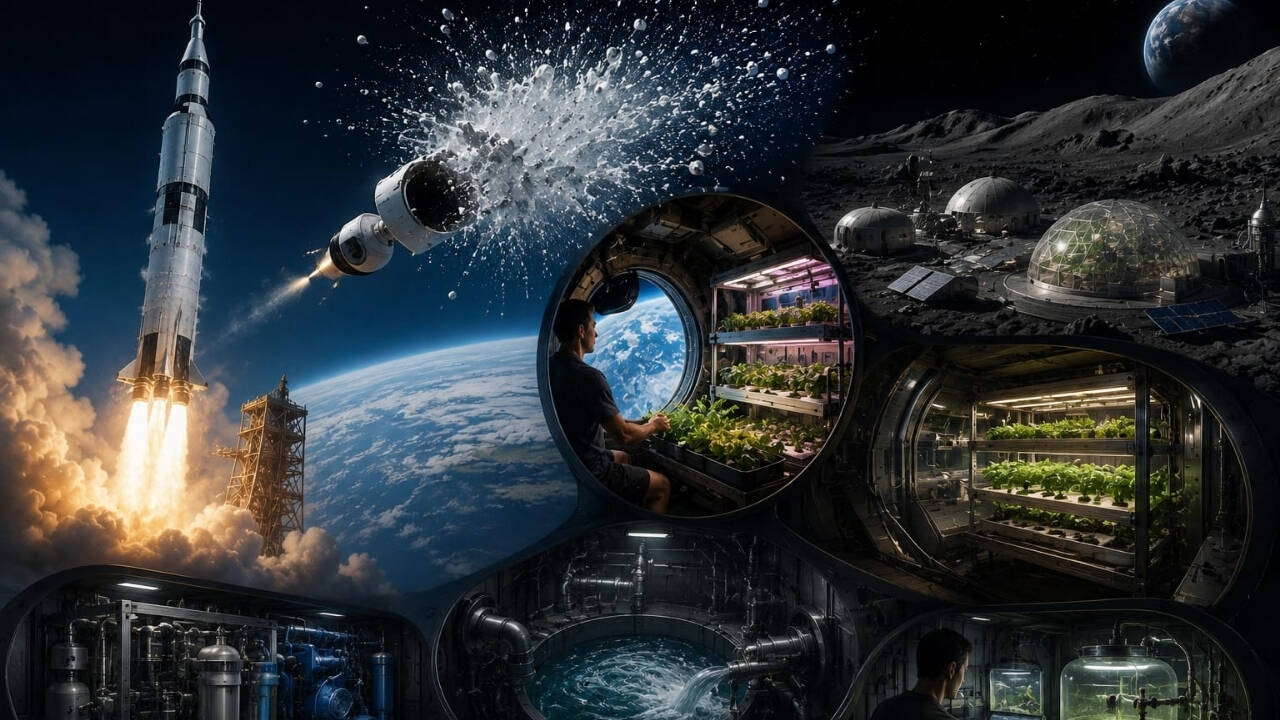
In the early 1960s, as NASA prepared for extended space missions, researchers conducted experiments to understand how living systems could support human life in the harsh environment beyond Earth's atmosphere. One such effort involved releasing substantial quantities of water at extreme altitudes, generating data that would inform the development of life-support technologies for future space travel.
These pioneering studies examined the potential of biological recycling systems to sustain astronauts during prolonged missions. Researchers explored how plants and microorganisms could be engineered to process waste materials and regenerate essential resources—oxygen, water, and nutrients—creating closed-loop systems capable of functioning in extraterrestrial environments.
The work reflected NASA's recognition that long-duration spaceflight would require fundamentally different approaches to resource management than brief orbital missions. Rather than relying solely on supplies launched from Earth, future explorers would need systems capable of sustaining human life through biological processes.
These foundational investigations established research pathways that continue to influence space exploration planning today. As space agencies worldwide develop architectures for lunar bases and eventual Mars missions, the principles examined in these early experiments remain central to designing habitable, self-sustaining environments beyond Earth. Creating closed-loop life-support systems remains one of the most significant engineering challenges facing human space exploration.