World · India Bureau
NASA's 1992 Space Frog Mission Studied Embryonic Development in Orbit
Three decades ago, the US space agency launched amphibians into space to understand how microgravity affects reproductive biology. The pioneering experiment provided crucial insights into developmental processes beyond Earth's atmosphere.
LSN India ·
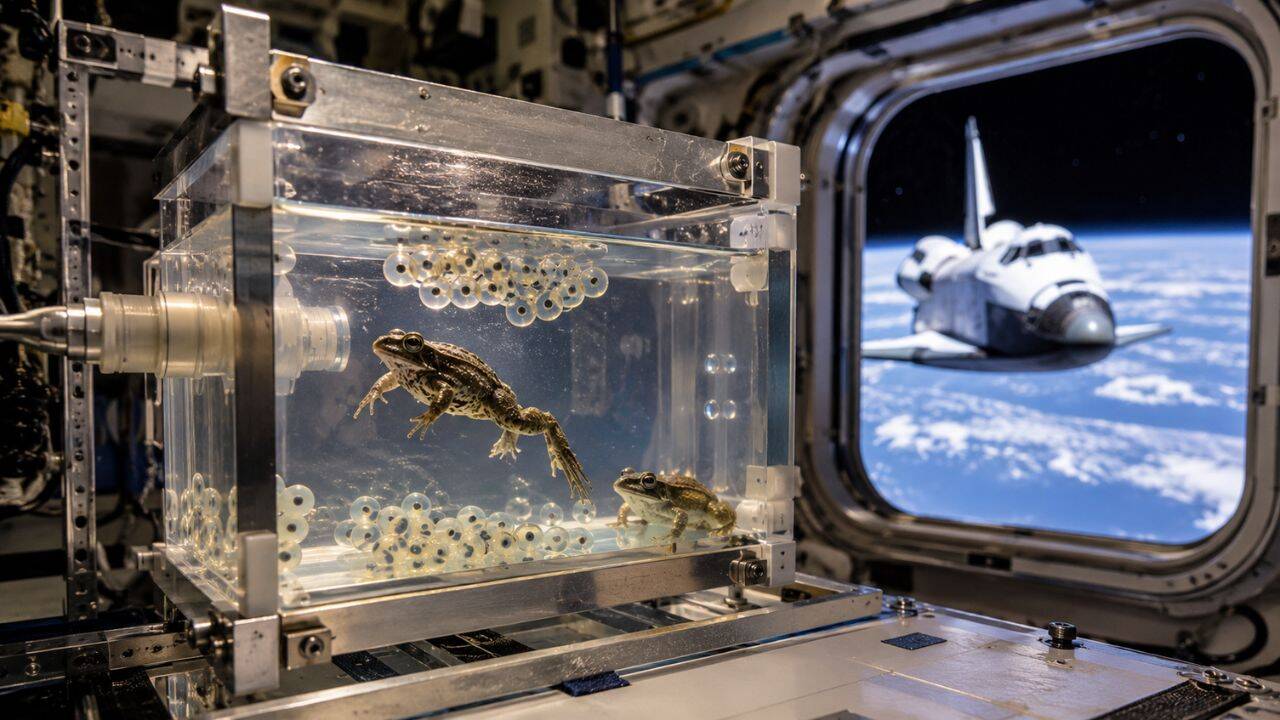
In a landmark scientific endeavour, NASA dispatched a group of frogs into orbit during 1992 to conduct a unique biological experiment. The mission aimed to observe how embryonic development proceeds in microgravity conditions, representing one of the early attempts to study reproductive processes in space.
The frogs were selected as test subjects because their eggs develop externally and their embryonic stages are well-documented on Earth, making them ideal candidates for comparative research. By observing how frog eggs developed aboard the spacecraft, scientists could gather baseline data on how the absence of gravity influences fundamental biological processes.
The experiment formed part of broader NASA research initiatives to understand how living organisms adapt to space environments. Such studies were essential for future long-duration human spaceflight missions and establishing whether humans could safely reproduce in space or maintain normal biological functions during extended orbital stays.
The 1992 mission contributed valuable knowledge to astrobiology and developmental biology, laying groundwork for subsequent investigations into life sciences in space. These pioneering experiments demonstrated that controlled biological research in orbit could yield significant scientific insights applicable to understanding both space adaptation and fundamental developmental mechanisms.